
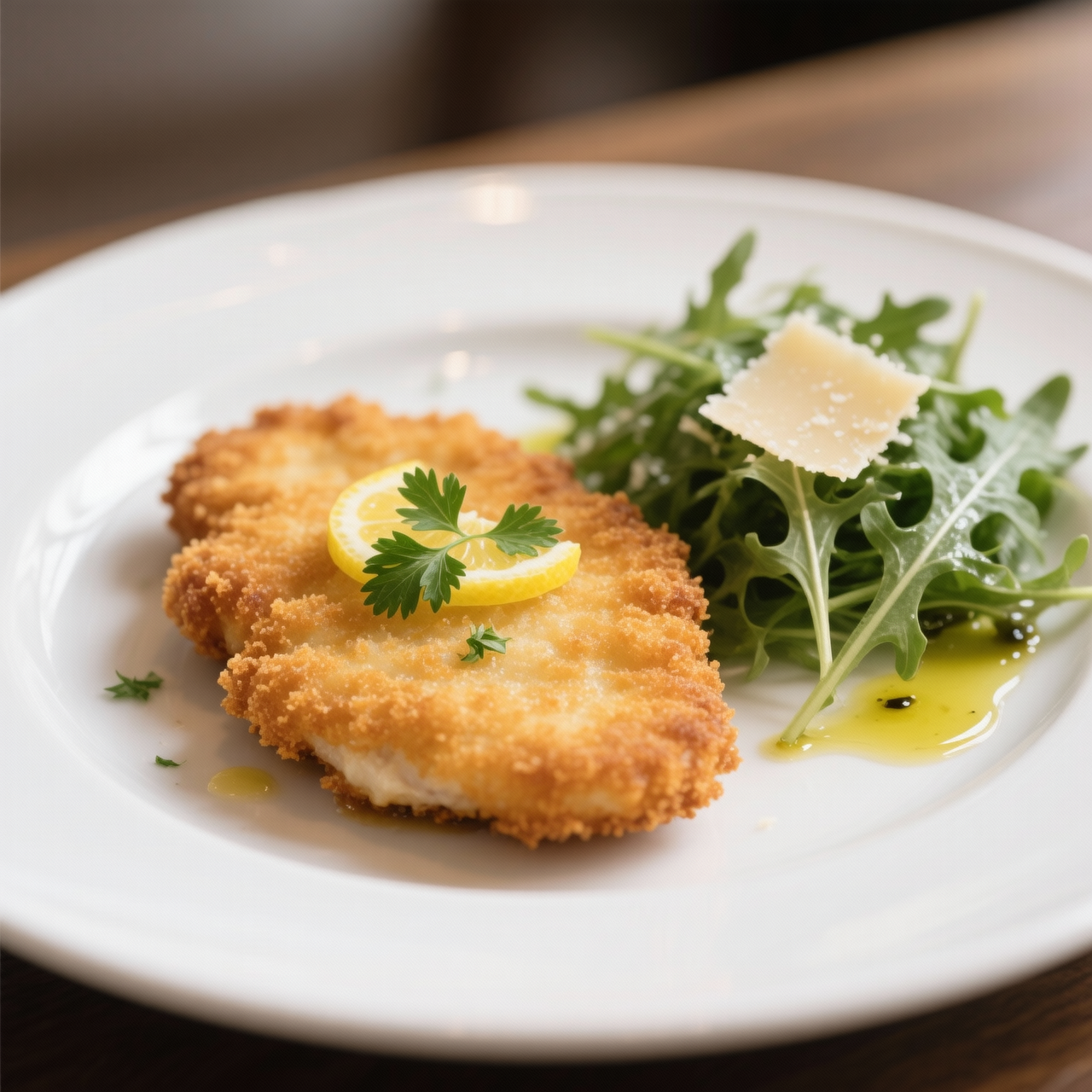
Chicken cotoletta
I’ve always believed that a true cotoletta alla milanese is a quiet rebellion against the factory-made chicken cutlets that now crowd supermarket freezers. Those pale, pre-breaded slabs usually cost a few euros per pack, but they’re padded with cheap fillers, drowned in artificial seasonings, and coated with stale, dust-like crumbs that fry up into a brittle, lifeless shell. Making it from scratch isn’t just about skipping the processing aisle; it’s about reclaiming a dish that has anchored northern Italian home cooking since at least the nineteenth century. The cotoletta’s origins trace back to Milan, where it was historically made with bone-in veal, but modern Italian kitchens have gracefully adapted it to chicken, keeping the soul of the technique intact while honoring dietary preferences. What matters here is the rhythm: pounding the meat to an even quarter-inch, seasoning simply with sea salt and pepper, then building a dry-to-wet-to-dry breading station that actually adheres. The most common pitfall I see is rushing the dredge. If the chicken is damp, the flour turns gummy. If the eggs are under-whisked, the crumbs slide off. And if the oil isn’t hot enough, you’ll steam the breading into a greasy sponge rather than achieving that signature glass-like crunch. Freeze it before frying for a reliable pantry staple, or cook it fresh for immediate comfort. Either way, you’re trading hollow convenience for a golden, deeply savory crust that shatters under the knife. That’s the difference between feeding yourself and truly nourishing a meal.
Nutrition
| Per serving | Calories | Protein | Carbs | Fat | Sat fat | Fibre | Sugar | Sodium |
|---|---|---|---|---|---|---|---|---|
| beginner | 485kcal | 34g | 36g | 20g | 4g | 2g | 1g | 680mg |
| intermediate | 540kcal | 40g | 36g | 22g | 4g | 2g | 1g | 620mg |
| expert | 590kcal | 38g | 30g | 30g | 13g | 2g | 1g | 580mg |
Per serving · Ava-estimated — a guide, not a clinical figure.
- 600 gchicken breast— Pounded to even thickness
- 2 pcsegg— Lightly beaten
- 150 gbreadcrumb— Fine dry or fresh
- 5 gsalt— Fine or kosher
- 2 gblack pepper— Freshly ground
- 100 mlolive oil— For shallow frying
- 1 wholelemon(optional)— Cut into wedges for serving
This beginner version strips away the intimidation of traditional Italian cotoletta while staying strictly from scratch. Supermarket frozen breaded cutlets cost roughly eight dollars for four, yet they rely on industrial binders, stale pre-processed crumbs, and cheap seed oils that leave a heavy, greasy aftertaste. Here, you will build the breading yourself using pantry staples, ensuring a crisp, golden crust without the artificial mouthfeel. The technique focuses on a forgiving three-bowl dredge system that guarantees even coating every time. Instead of wrestling with thick breast meat, you will use a simple rolling pin method to reach a uniform thickness, which cooks quickly and evenly without drying out. We skip the traditional clarified butter finish in favor of a neutral high-heat oil that is easier to manage at home and less prone to burning. Watch your pan temperature carefully; if the oil shimmers but does not smoke, your cutlets will fry rather than steam. Keep a cooling rack ready beside the stove so the crust stays crisp instead of trapping moisture underneath. This approach yields reliable texture with zero guesswork, perfect for weeknight meals or prepping a freezer stash.
Equipment
- Heavy-bottomed skillet— Cast iron or stainless steel holds heat best
- Rolling pin— Clean or covered in plastic wrap for pounding
- Three wide bowls— Shallow plates work equally well
- Wire cooling rack— Prevents soggy bottoms during resting
Method
- 1
Place each chicken breast between two sheets of parchment paper and roll firmly until uniformly 1/4 inch thick.
Work from the center outward to avoid tearing the meat.
pounding~ 2 min - 2
Set up three shallow bowls side by side with flour in the first, beaten eggs in the second, and breadcrumbs mixed with salt and pepper in the third.
Keep one hand dry for flour and one wet for egg to prevent clumping.
mise en place~ 2 min - 3
Dredge each cutlet in flour, dip into egg, and press firmly into the breadcrumb mixture until completely coated.
Pat gently so the crust adheres without falling off during frying.
dredging~ 5 minTricky bit - 4
Pour enough neutral oil into a heavy skillet to coat the bottom by 1/4 inch and heat over medium until a dropped crumb bubbles instantly.
Aim for roughly 350 degrees Fahrenheit.
shallow-frying~ 4 minTricky bit - 5
Carefully lay two cutlets in the hot pan and cook until golden and crisp, flipping exactly once halfway through.
Do not crowd the pan or the crust will steam instead of fry.
pan-frying~ 8 min - 6
Transfer the fried cutlets to a wire cooling rack set over a tray and rest for three minutes before slicing or serving.
This keeps the bottom crust from getting soggy.
resting~ 3 min
Cooking from frozen
Thaw overnight in the refrigerator, then crisp on a baking sheet at 190°C for 10 minutes.
Storage times are a guide — always use your judgement and store food safely.