
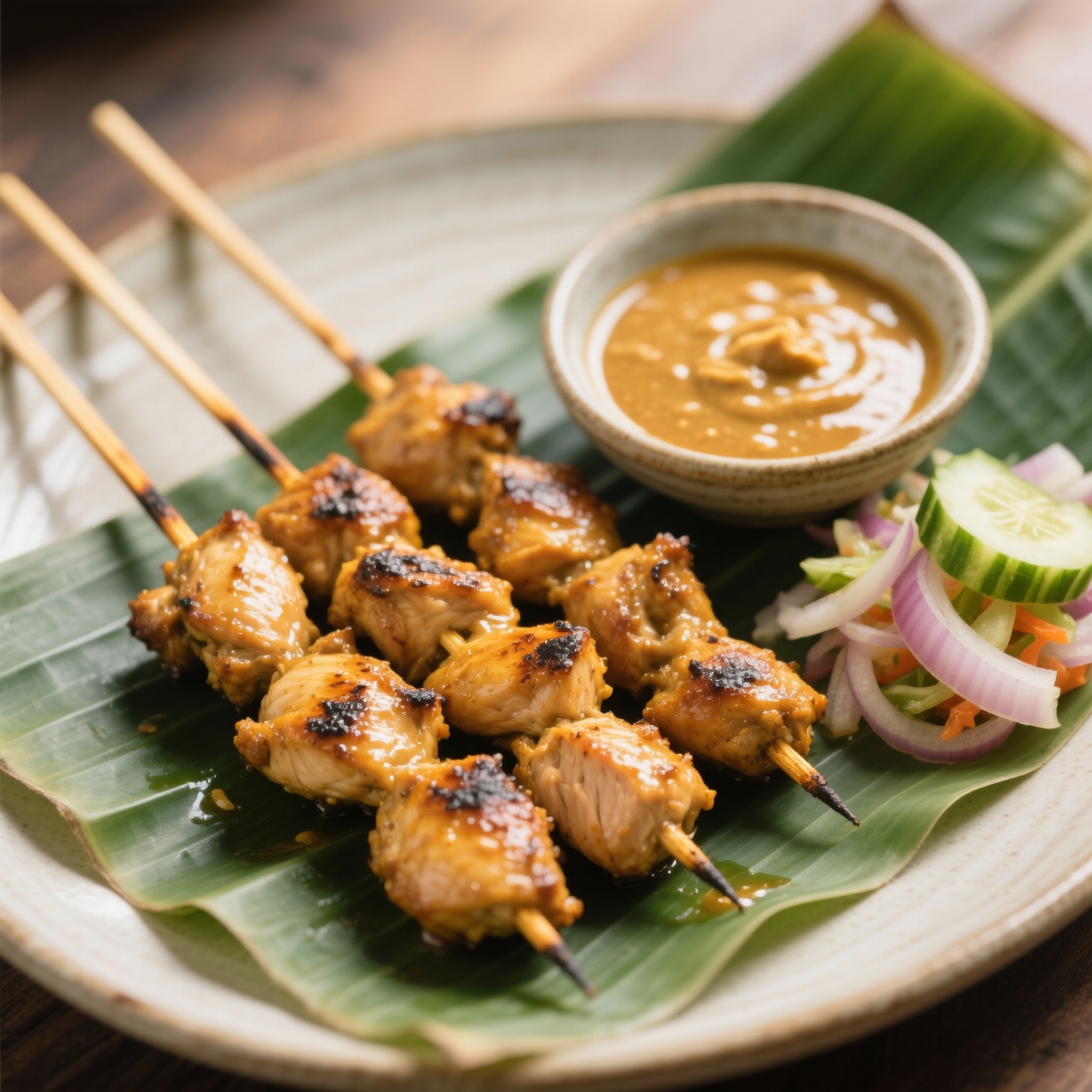
Chicken Satay (Sate Ayam)
When I first encountered sate ayam on the bustling streets of Yogyakarta, it wasn’t just a snack—it was a masterclass in patience. True Indonesian chicken satay traces its roots to the sixteenth-century Javanese adaptation of Middle Eastern and Indian kebabs, refined over generations into something distinctly archipelagic. Making it from scratch matters because the shop-bought alternatives, usually hovering around seven pounds for a plastic tray of twelve, are essentially an insult to the craft. They’re drenched in synthetic smoke flavor, coated in waxy binders, and served with a cloyingly sweet peanut sauce that tastes more of stabilizers than roasted nuts. The real magic happens when you marinate fresh chicken thigh strips in a paste of toasted shallots, galangal, lemongrass, and turmeric, then thread them onto bamboo skewers you’ve soaked yourself. The most common pitfall I see is rushing the marinade or relying on jarred peanut butter and stock cubes for the sauce. You simply cannot shortcut the toasting of the spices or the slow simmering of the coconut milk into the peanut mixture. If the meat is too lean, it turns to leather on the grill; if the sauce isn’t balanced between palm sugar, tamarind, and fresh chilies, it masks the delicate char. This dish demands your time, but the reward is a deeply aromatic, caramelized bite that carries centuries of trade route history and street-corner wisdom. Skip the supermarket freezer aisle, buy whole ingredients, and let the skewers rest while the coals glow.
Nutrition
| Per serving | Calories | Protein | Carbs | Fat | Sat fat | Fibre | Sugar | Sodium |
|---|---|---|---|---|---|---|---|---|
| beginner | 495kcal | 32g | 26g | 24g | 7g | 4g | 13g | 710mg |
| intermediate | 495kcal | 32g | 14g | 31g | 8g | 3g | 8g | 720mg |
| expert | 465kcal | 29g | 19g | 31g | 8g | 3g | 11g | 540mg |
Per serving · Ava-estimated — a guide, not a clinical figure.
- 500 gchicken thigh— Boneless, skinless, cut into uniform strips
- 40 gshallot— Peeled and finely minced
- 15 ggarlic— Peeled and crushed into a paste
- 5 gturmeric powder— Ground dried turmeric root
- 5 gcoriander seed— Dry toasted and ground
- 20 glemongrass stalk— Tender lower portion only, finely bruised
- 45 mlkecap manis— Indonesian sweet soy sauce
- 20 gpalm sugar— Finely grated or dissolved
- 5 gsalt
- 30 mlvegetable oil— Neutral oil for basting
- 10 piecebamboo skewer— Soaked in water for at least 30 minutes
Shop-bought frozen satay typically runs $8–12 for a small pack, relying on mechanically separated meat, heavy sodium, artificial smoke flavor, and stabilizers that dull the authentic aroma. This beginner-friendly from-scratch version strips away the intimidation while keeping every ingredient whole and recognizable. Instead of hunting for rare pastes, you will blend a quick, aromatic marinade using common kitchen tools and toast whole spices in a dry pan before blending. The peanut sauce simmers gently on the stovetop, thickening naturally without cornstarch shortcuts. What sets this level apart is the forgiving technique: chicken thighs are cut into uniform strips for even cooking, soaked skewers prevent burning, and a standard oven broiler or grill pan replaces a charcoal pit without sacrificing flavor. Watch your heat closely; sugar in the marinade and sauce scorches quickly, so keep the flame medium-low and turn the skewers frequently. The goal is a confident first attempt that delivers tender, char-kissed meat and a rich, balanced peanut dip. Prep is streamlined into logical blocks, and every step includes clear visual cues so you know exactly when to move forward.
Equipment
- Food processor or blender— A small chopper works for the spice paste
- Heavy-bottomed saucepan— Essential for gently simmering the peanut sauce
- Grill pan or baking sheet— Line with foil for easier cleanup
- Wooden or bamboo skewers— Soak in cold water for 30 minutes to prevent burning
Method
- 1
Toast coriander seeds and cumin seeds in a dry pan over medium heat until fragrant.
Swirl constantly to prevent burning.
dry_toasting~ 1 min - 2
Combine toasted spices, garlic, shallots, turmeric, soy sauce, oil, and a splash of water in a blender until a smooth paste forms.
Add water one tablespoon at a time if blades stall.
emulsifying~ 2 min - 3
Toss bite-sized chicken thigh strips with the spice paste until evenly coated, then cover and rest at room temperature.
Do not exceed 30 minutes to keep the meat tender.
marinating~ 30 min - 4
Thread three to four marinated strips onto each soaked skewer, leaving a small gap between pieces for heat circulation.
Pack snugly but not tightly to ensure even cooking.
threading~ 10 minTricky bit - 5
Simmer crushed peanuts, coconut milk, tamarind, and palm sugar in a heavy pan until thick and glossy, stirring constantly.
Lower the heat immediately once the oil begins to separate on the surface.
reducing~ 10 minTricky bit - 6
Broil or pan-grill skewers over medium-high heat, turning every two minutes until lightly charred and cooked through.
Baste with a little reserved marinade during the final minute for extra gloss.
searing~ 8 minTricky bit
Cooking from frozen
Thaw overnight in the fridge, then warm gently in a covered pan with a splash of water to prevent the chicken from drying out.
Storage times are a guide — always use your judgement and store food safely.