
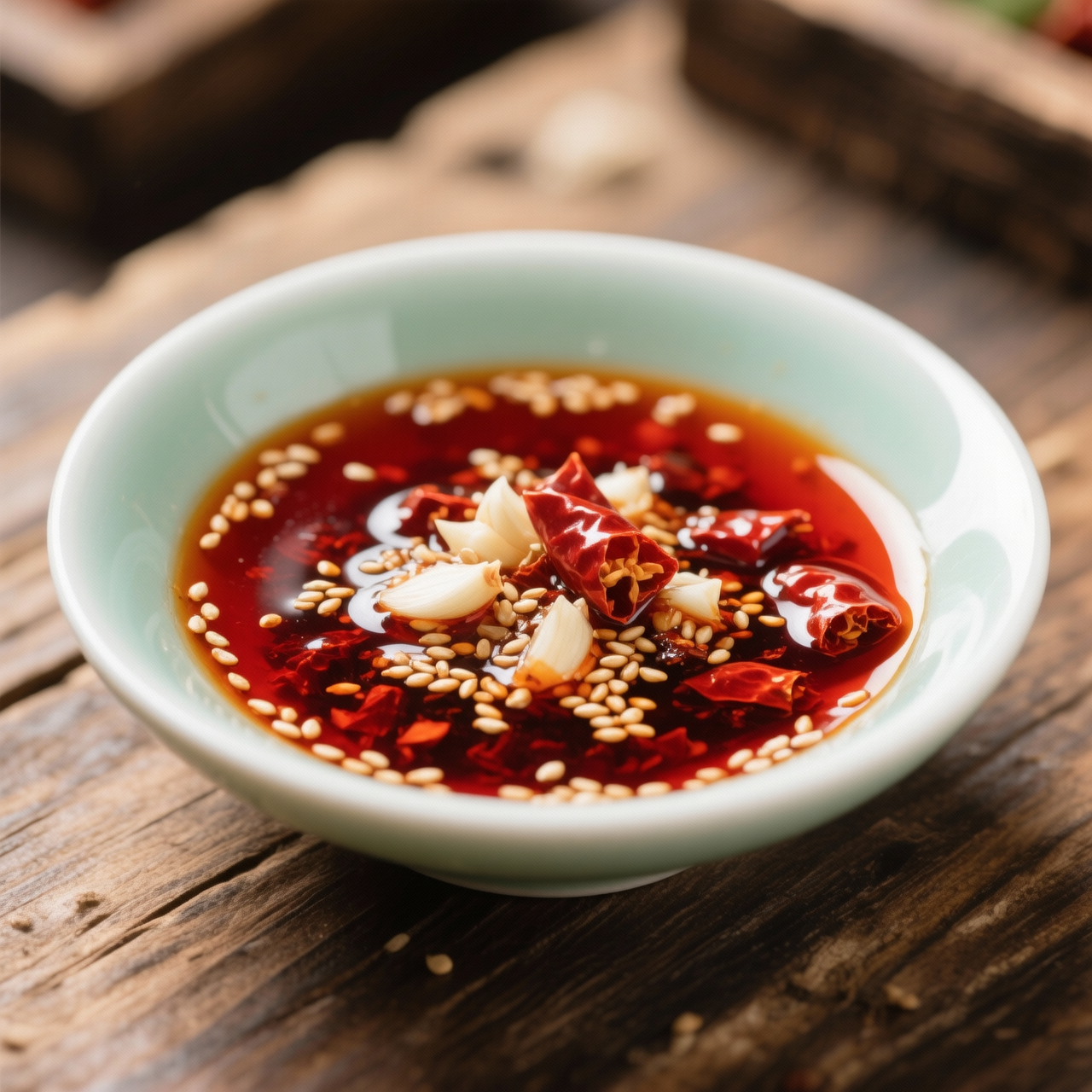
Chili Oil (La You)
I have always believed that a kitchen without a proper jar of la you is missing its true heartbeat. Originating in the fiery kitchens of Sichuan and Shaanxi, this humble emulsion of toasted chilies, aromatics, and oil has traveled far beyond its regional roots to become a global pantry essential. What makes it so vital is not just the heat it delivers, but the profound depth of flavor that comes from carefully coaxing out the natural sweetness and nuttiness of dried peppers through precise temperature management. When I first learned to make it, I quickly discovered that patience is the real secret ingredient. Too many home cooks rush the process, pouring scalding oil directly over raw chili flakes and expecting instant magic, only to end up with a scorched, bitter mess. The true art lies in the staged infusion: warming the oil gently with star anise, cinnamon, and ginger, then slowly raising the heat before dividing it into three separate pours over the chili base. Each pour unlocks a distinct flavor layer, ranging from bright and grassy to deeply caramelized. Another frequent mistake is using fine pre-ground powder instead of freshly crushed flakes, which sacrifices essential volatile oils and desirable texture. Managing the moisture content is equally crucial. A small pinch of toasted sesame seeds, a splash of black vinegar, or a touch of salt acts as a protective buffer, preventing delicate flakes from burning upon contact. When executed properly, la you transcends the role of a simple condiment. It becomes a transformative medium that elevates noodles, dumplings, roasted vegetables, and even fried eggs into something deeply comforting. Once you master that delicate balance between heat and timing, you will never return to commercial bottles.
Nutrition
| Per serving | Calories | Protein | Carbs | Fat | Sat fat | Fibre | Sugar | Sodium |
|---|---|---|---|---|---|---|---|---|
| beginner | 125kcal | 0g | 1g | 14g | 1g | 1g | 1g | 15mg |
| intermediate | 405kcal | 1g | 4g | 45g | 6g | 2g | 1g | 5mg |
| expert | 340kcal | 1g | 2g | 36g | 5g | 2g | 1g | 220mg |
Per serving · Ava-estimated — a guide, not a clinical figure.
- 30 gChili flake— Coarse grind preferred for optimal texture and infusion
- 200 gNeutral oil— Vegetable, canola, or peanut oil works best
- 8 gSichuan peppercorn— Whole
- 2 pieceStar anise— Whole
- 15 gGinger— Thinly sliced
- 30 gScallion— Cut into 2-inch pieces, white and green parts kept together
- 20 gGarlic— Lightly crushed
- 15 gSesame seed— White, untoasted
- 5 gSalt— Fine grain
- 3 gSugar— Granulated
- 3 gCinnamon stick— Broken into small pieces
- 2 pieceBay leaf— Dried
- 10 mlSesame oil(optional)— Toasted, stirred in after oil cools slightly
Traditional recipes require dry-toasting whole spices and grinding them fresh, but this beginner-friendly version swaps those labor-intensive steps for high-quality pre-crushed chilies and jarred garlic-ginger paste. This guarantees consistent flavor extraction without the risk of burning delicate powders. The absolute key technique is controlling oil temperature: heat your neutral oil until it just begins to shimmer, then remove it from the heat and wait thirty seconds before pouring. Beginners must watch for the visual cue of gentle bubbling rather than violent sputtering; too hot and the flakes scorch into bitter ash, while too cool leaves the oil pale and flavorless. We use a simple two-stage pour to manage this perfectly. First, splash a small amount over the dry ingredients to form a fragrant paste, then slowly stream in the rest while stirring constantly. This gentle approach yields a brilliantly red, deeply aromatic condiment with zero guesswork, ready to elevate any dish straight from the jar.
Equipment
- Small saucepan— heavy-bottomed to prevent hot spots
- Heatproof glass jar— must withstand sudden temperature changes
- Wooden spoon— for safe, non-reactive stirring
Method
- 1
Combine the chili flakes, sesame seeds, salt, sugar, and five-spice powder in a heatproof bowl or glass jar.
Stir until completely uniform.
dry mixing~ 1 min - 2
Pour the neutral cooking oil into a small saucepan and heat over medium until it just begins to shimmer.
Remove from heat immediately when you see the first wisps of smoke.
temperature control~ 3 minTricky bit - 3
Wait exactly thirty seconds off the heat to let the oil drop to a safe pouring temperature.
Test by dropping one flake in; it should sizzle gently, not violently.
tempering~ 1 min - 4
Slowly pour half of the warm oil over the spice mixture and stir vigorously to form a fragrant paste.
This first pour gently blooms the chilies without burning them.
blooming~ 1 min - 5
Stream the remaining hot oil into the bowl while stirring continuously to fully extract the color and aroma.
The mixture will bubble loudly at first, then settle into a calm simmer.
infusing~ 2 minTricky bit - 6
Let the chili oil cool completely to room temperature before covering tightly with a lid.
Sealing while warm will cause dangerous condensation and spoilage.
cooling~ 20 min
Cooking from frozen
Thaw in the refrigerator overnight, then whisk vigorously to recombine the separated oil and chili solids.
Storage times are a guide — always use your judgement and store food safely.