
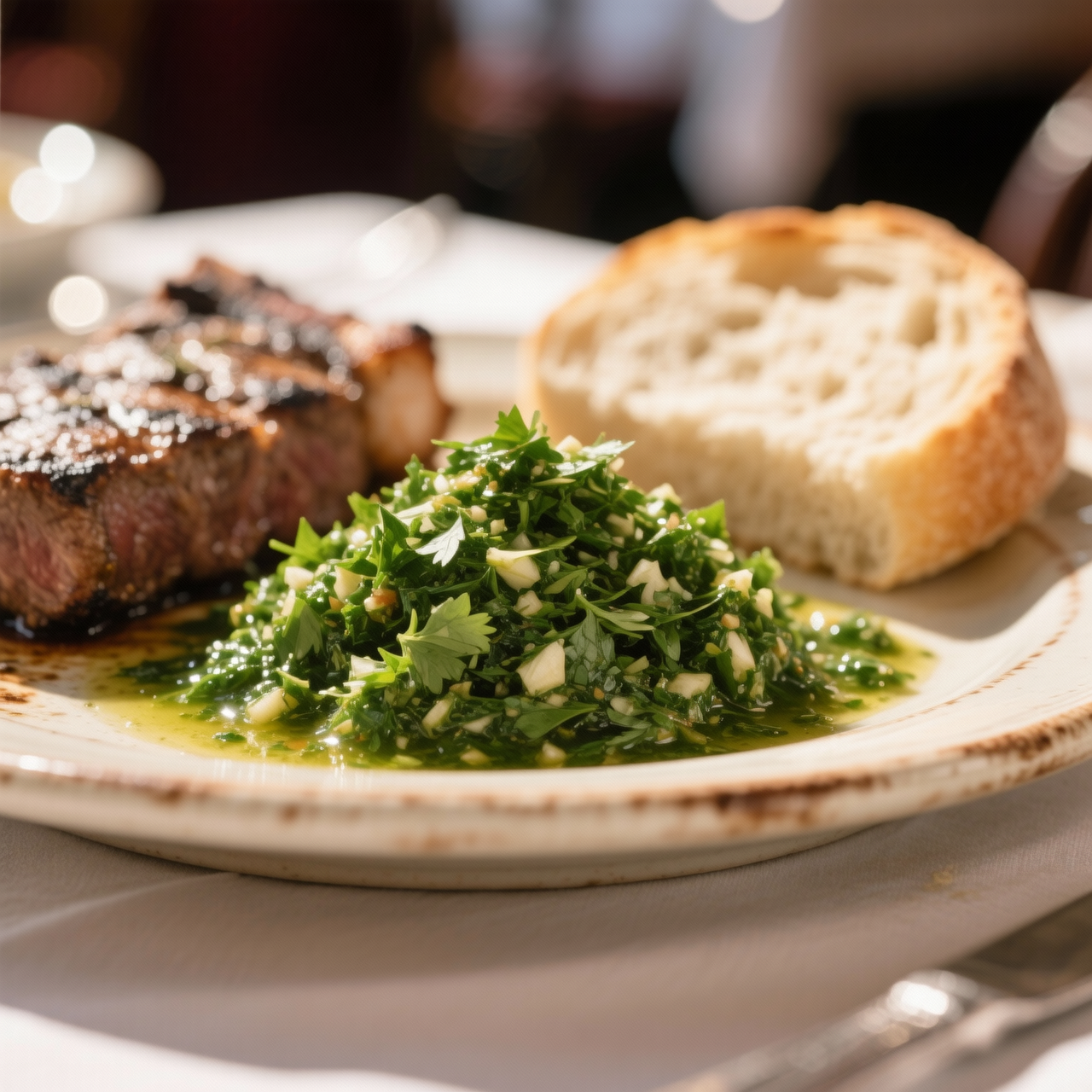
Chimichurri
When I think of Argentine cuisine, my mind immediately goes to the vibrant, unapologetic punch of chimichurri. It is far more than just a condiment; it is the soul of the asado, a living, breathing testament to the gaucho tradition of making do with what the land provides. Originating in the pampas of Argentina, this raw, uncooked sauce was born out of necessity. The gauchos needed a way to preserve meat and add flavor to their simple grilled fare, so they combined the abundant parsley and oregano with garlic, oil, and vinegar. What matters most to me about chimichurri is its radical simplicity and its ability to elevate almost anything it touches, from a perfectly seared steak to a humble roasted potato. However, I see so many people fall into common pitfalls when trying to recreate it at home. The most frequent mistake is treating it like a cooked sauce or a blended pesto. Chimichurri must be chopped by hand to maintain its rustic, distinct texture; a food processor will turn it into a muddy, bitter puree. Another critical error is rushing the resting time. The flavors need to marry, and the dried oregano needs time to rehydrate in the oil and vinegar. Finally, using the wrong vinegar is a tragedy—red wine vinegar is non-negotiable, as white vinegar lacks depth and balsamic is far too sweet. When you respect the ingredients and the technique, you are rewarded with a bright, herbaceous, and fiercely garlicky sauce that captures the very essence of Argentina.
Nutrition
| Per serving | Calories | Protein | Carbs | Fat | Sat fat | Fibre | Sugar | Sodium |
|---|---|---|---|---|---|---|---|---|
| beginner | 280kcal | 1g | 3g | 29g | 4g | 1g | 0g | 290mg |
| intermediate | 480kcal | 1g | 3g | 52g | 7g | 1g | 0g | 350mg |
| expert | 380kcal | 1g | 3g | 42g | 6g | 1g | 0g | 150mg |
Per serving · Ava-estimated — a guide, not a clinical figure.
- 60 gflat-leaf parsley— fresh leaves
- 20 ggarlic— peeled
- 60 mlred wine vinegar
- 120 mlextra virgin olive oil
- 5 gdried oregano
- 2 gcrushed red pepper
- 5 gkosher salt
- 2 gblack pepper— freshly ground
This beginner-friendly approach to traditional Argentine chimichurri removes the intimidation of hand-mincing herbs by utilizing a food processor for a quick, uniform blend. While purists might insist on knife work, this shortcut method guarantees a confident first attempt without sacrificing the vibrant, herbaceous essence of the sauce. The key difference at this skill level is the reliance on mechanical chopping to achieve the perfect coarse texture in minutes, rather than spending time with a chef's knife. Watch out for over-processing; you want a rustic, coarse chop, not a smooth puree, which can turn the herbs bitter and muddy the oil. We pulse the ingredients to maintain distinct flecks of parsley and oregano. Letting the sauce rest is non-negotiable, even for a quick version, as it allows the dried oregano to rehydrate and the garlic to mellow in the acidic vinegar and rich olive oil. This simple technique yields a bright, punchy condiment that instantly elevates grilled meats, roasted vegetables, or crusty bread, proving that authentic flavor doesn't require advanced culinary skills.
Equipment
- Food processor— A standard bowl attachment is perfect; ensure the blade is sharp for clean cuts.
- Mixing bowl— Glass or ceramic is ideal so it doesn't absorb the garlic odor.
Method
- 1
Add the fresh parsley, garlic cloves, red wine vinegar, dried oregano, red pepper flakes, and salt to the bowl of the food processor.
Ensure the parsley is completely dry after washing to prevent a watery sauce.
prepping~ 3 min - 2
Pulse the mixture 5 to 6 times until the herbs and garlic are coarsely chopped.
Do not run the processor continuously, or the herbs will turn into a bitter green paste.
pulsing~ 1 minTricky bit - 3
Transfer the chopped herb mixture to a mixing bowl and stir in the extra virgin olive oil until fully combined.
Folding the oil in by hand preserves the coarse texture better than blending it.
folding~ 1 min - 4
Cover the bowl and let the chimichurri rest at room temperature before serving.
Resting for at least 30 minutes allows the dried oregano to rehydrate and the flavors to meld.
resting~ 30 min
Cooking from frozen
Thaw overnight in the fridge and stir vigorously to recombine the oil and vinegar before serving.
Storage times are a guide — always use your judgement and store food safely.