
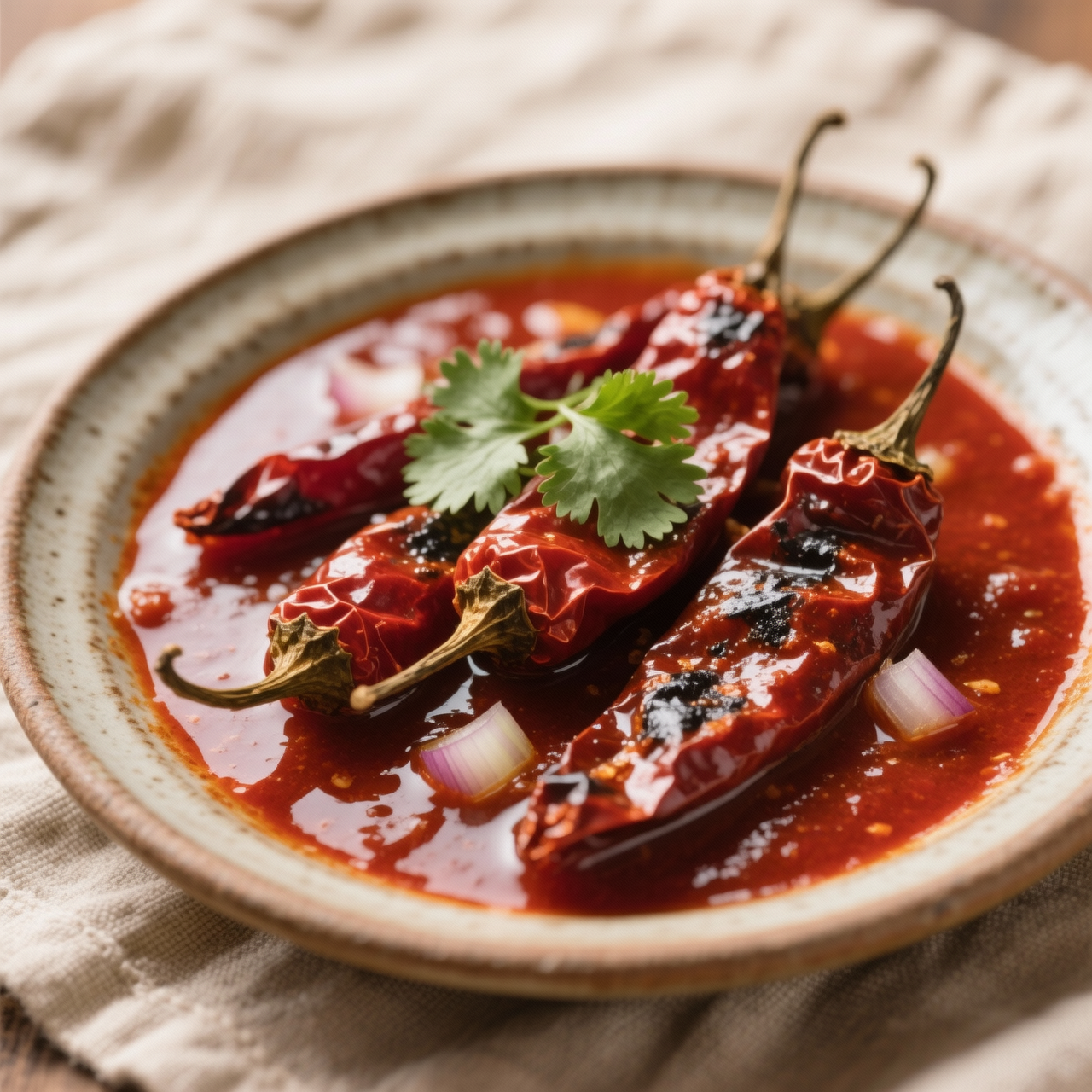
Chipotles in Adobo
When I first learned to make chipotles in adobo, I realized I had been missing out on one of Mexico’s most profound flavor builders. This isn't just a condiment; it’s a cornerstone of Mexican cuisine, born from the necessity of preserving smoked jalapeños. The indigenous peoples of Mesoamerica discovered that smoking ripe red jalapeños preserved them while imparting a deep, complex sweetness and heat. Later, Spanish influence introduced the adobo sauce—a vibrant, tangy blend of tomatoes, vinegar, garlic, and spices. Together, they create a smoky, spicy, and slightly sweet elixir that transforms everything it touches. What matters most to me is its role as a true batch hero. A single afternoon of simmering yields a pantry staple that keeps for weeks, ready to elevate a simple weeknight dinner. You can blend it into sauces, stir it into beans, or use it to braise tofu. However, there are common pitfalls to avoid. The biggest mistake is rushing the rehydration of the dried chipotles; they need ample time to soften, otherwise your sauce will be unpleasantly gritty. Another frequent error is over-toasting the dried spices or burning the garlic, which introduces a harsh, acrid bitterness that ruins the delicate balance. Finally, be mindful of the vinegar. While it acts as a crucial preservative, adding it too early can make the sauce puckeringly sour rather than bright and balanced. Take your time, taste as you go, and let the smoke and spice meld into a harmonious masterpiece that will live in your fridge, ready to inspire you for weeks.
Nutrition
| Per serving | Calories | Protein | Carbs | Fat | Sat fat | Fibre | Sugar | Sodium |
|---|---|---|---|---|---|---|---|---|
| beginner | 110kcal | 2g | 14g | 6g | 1g | 3g | 7g | 380mg |
| intermediate | 180kcal | 3g | 22g | 9g | 1g | 6g | 8g | 650mg |
| expert | 70kcal | 1g | 10g | 3g | 1g | 3g | 5g | 400mg |
Per serving · Ava-estimated — a guide, not a clinical figure.
- 30 gdried chipotle morita chile— stems removed and seeds shaken out
- 300 groma tomato— roughly chopped
- 150 gwhite onion— roughly chopped
- 20 ggarlic clove— peeled
- 60 mlapple cider vinegar
- 30 mlvegetable oil
- 2 gground cumin
- 2 gdried oregano
- 5 gkosher salt
- 150 mlwater
This beginner-friendly approach to Chipotles in Adobo removes the intimidation of toasting and rehydrating dried chiles by utilizing a high-quality jarred chipotle paste as your flavorful base. This shortcut guarantees a consistent, smoky heat without the risk of burning delicate dried skins. You will simply whisk the paste into a vibrant blend of crushed tomatoes, apple cider vinegar, garlic, and warm spices, then simmer it to meld the flavors. Watch closely during the simmer; because this version relies on a concentrated paste, it can stick to the bottom of the pan more easily than a fully hydrated chile puree. Keep the heat at a gentle bubble and stir frequently. This method is incredibly forgiving and perfect for building your confidence with Mexican flavor profiles. The resulting sauce is a batch hero, easily storing in the refrigerator for weeks or freezing beautifully in ice cube trays for quick, smoky additions to future weeknight meals, marinades, and stews.
Equipment
- Medium saucepan— Enameled cast iron or non-stick is best to prevent sticking.
- Whisk— A silicone spatula is also helpful for scraping the bottom.
Method
- 1
Combine the jarred chipotle paste, crushed tomatoes, apple cider vinegar, minced garlic, and spices in the medium saucepan.
Whisk vigorously to ensure the thick paste fully dissolves into the tomatoes.
mixing~ 3 min - 2
Place the saucepan over medium heat and bring the mixture to a gentle simmer, stirring frequently.
Do not let it reach a rolling boil, or the tomatoes may separate and turn bitter.
simmering~ 5 min - 3
Reduce the heat to low and let the adobo sauce cook uncovered, stirring every few minutes to prevent sticking.
The sauce is ready when it thickens slightly and heavily coats the back of a spoon.
reducing~ 15 minTricky bit - 4
Remove the pan from the heat and let the sauce cool completely before transferring to airtight glass jars.
Cooling completely prevents condensation, which can cause mold during long-term storage.
cooling~ 20 min
Cooking from frozen
Thaw overnight in the refrigerator and stir vigorously to recombine any separated oils.
Storage times are a guide — always use your judgement and store food safely.