
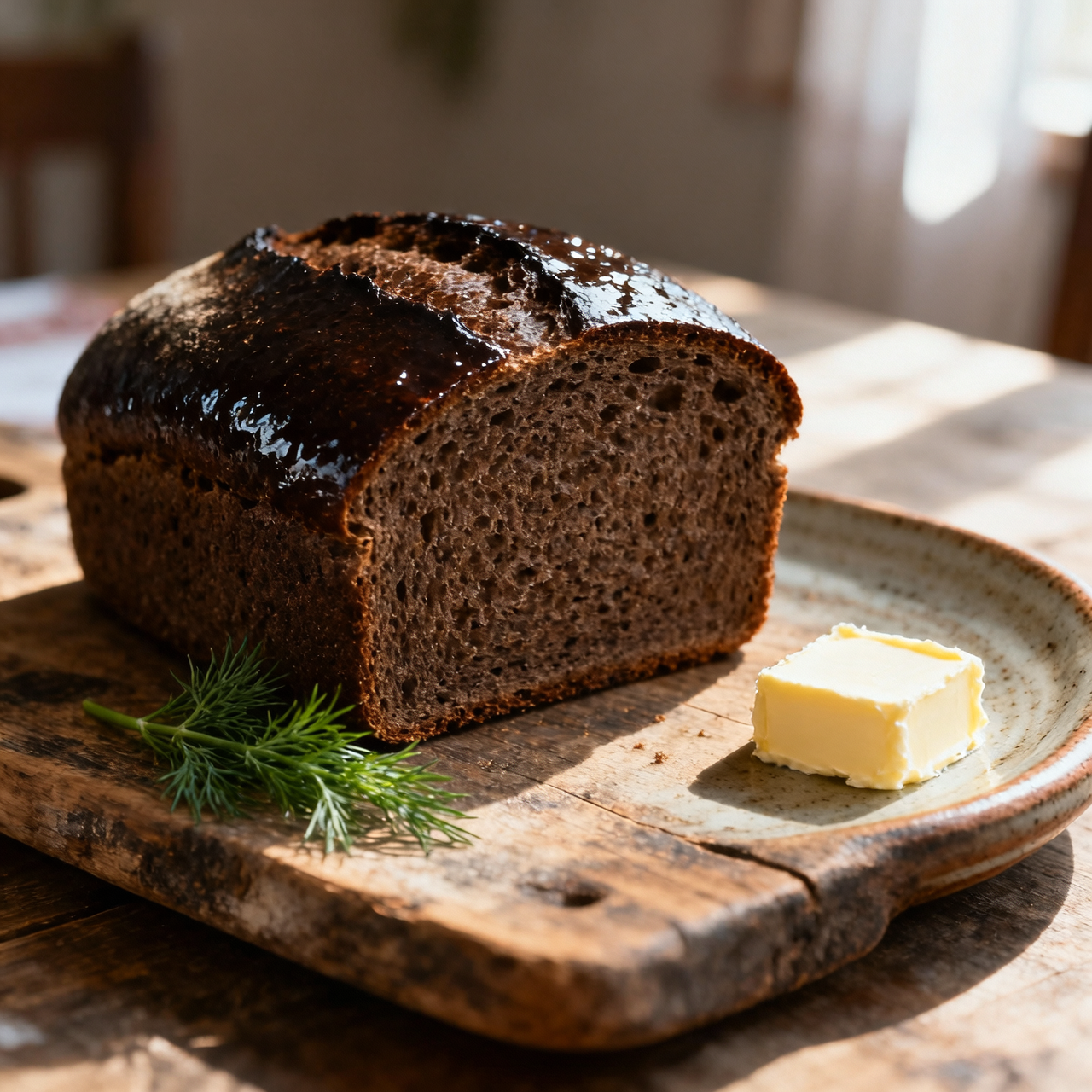
Chleb na zakwasie (sourdough rye)
As Ava, I look at chleb na zakwasie not just as bread, but as a cornerstone of Polish culinary heritage. This traditional sourdough rye bread has sustained generations, offering a dense, tangy crumb and a robust crust that supermarket loaves simply cannot replicate. When you buy packaged rye bread in a shop, you are often paying a premium for a product that costs pennies to make, yet you are getting a sad, gummy brick loaded with preservatives, commercial yeast, and dough conditioners to extend its shelf life. Baking it from scratch is a profound win for both your palate and your wallet. The beauty of this batch hero lies in making massive, crusty loaves that will outlast and outshine any plastic-wrapped alternative. However, working with a rye sourdough starter introduces common pitfalls. Rye flour is notoriously sticky and lacks the strong gluten network of wheat, meaning the dough is incredibly slack and unforgiving if over-hydrated. Many beginners panic when the dough refuses to form a neat ball, but you must trust the process and embrace the sticky reality of rye. Furthermore, the long, slow fermentation is non-negotiable; it breaks down the phytic acid in the rye, making the nutrients bioavailable and giving the bread its signature complex, slightly sour depth. Patience is your most crucial ingredient here. By committing to this from-scratch method, you reclaim a daily staple, transforming a processed convenience into a living, breathing craft that fills your kitchen with an intoxicating, earthy aroma.
Nutrition
| Per serving | Calories | Protein | Carbs | Fat | Sat fat | Fibre | Sugar | Sodium |
|---|---|---|---|---|---|---|---|---|
| beginner | 130kcal | 4g | 26g | 1g | 0g | 4g | 0g | 320mg |
| intermediate | 250kcal | 8g | 48g | 2g | 0g | 8g | 1g | 350mg |
| expert | 260kcal | 7g | 52g | 2g | 1g | 11g | 1g | 580mg |
Per serving · Ava-estimated — a guide, not a clinical figure.
- 1000 grye flour— preferably type 720 or 2000
- 700 gwater— lukewarm
- 300 grye sourdough starter— active and bubbly
- 20 gsalt— fine sea salt
- 20 gcaraway seeds(optional)— traditional addition
Shop-bought rye bread often costs around $3 to $5 per loaf, but it is frequently just refined wheat flour dyed with caramel and malt, loaded with preservatives, and lacking the gut-friendly benefits of true fermentation. Authentic bakery sourdough rye is better but can cost upwards of $8 and goes stale quickly. This beginner version strips away the intimidating free-form shaping and complex steam-injection techniques of traditional artisan baking. Instead, we use a standard loaf pan, which completely eliminates the risk of your sticky rye dough spreading into a flat pancake. You will mix your active sourdough starter, dark rye flour, water, and salt into a thick, heavy batter. Because rye lacks strong gluten, we rely on long, gentle fermentation rather than aggressive kneading. Watch for the dough to double in size during the final proof; rye is less forgiving than wheat if under-proofed, so give it the full time until it domes just above the pan rim. The result is a dense, deeply flavored, crusty loaf that slices beautifully for sandwiches, offering a massive upgrade in taste and nutrition over the plastic-wrapped supermarket blocks.
Equipment
- Large mixing bowl— Glass or ceramic is best as rye can react with reactive metals
- 9x5-inch loaf pan— Standard metal or glass loaf pan
- Digital kitchen scale— Essential for accurate hydration in rye baking
Method
- 1
Combine dark rye flour, water, active sourdough starter, and salt in a large bowl, mixing vigorously with a wooden spoon until a thick, sticky, uniform batter forms.
Rye lacks gluten, so do not expect a smooth, elastic dough.
mixing~ 5 min - 2
Cover the bowl and let the dough ferment at room temperature until it is bubbly and noticeably expanded.
This bulk fermentation develops the sour flavor and breaks down phytic acid.
fermenting~ 240 min - 3
Scrape the fermented dough into a greased 9x5-inch loaf pan, smoothing the top with a wet spatula.
Wet your spatula to prevent the incredibly sticky rye from clinging.
panning~ 2 minTricky bit - 4
Cover the pan and let the dough proof until it domes just above the rim of the pan.
Do not overproof, or the loaf will collapse in the oven.
proofing~ 120 minTricky bit - 5
Bake in a preheated oven until the crust is dark brown and the loaf sounds hollow when tapped on the bottom.
Rye bread must be fully baked to avoid a gummy crumb; use a thermometer to check for 205F internally.
baking~ 50 min - 6
Remove the bread from the pan and let it cool completely on a wire rack before slicing.
Cutting rye bread while hot will ruin the texture and make it gummy.
cooling~ 120 min
Cooking from frozen
Thaw at room temperature in its wrapping, then refresh in a hot oven for ten minutes to restore the crust.
Storage times are a guide — always use your judgement and store food safely.