
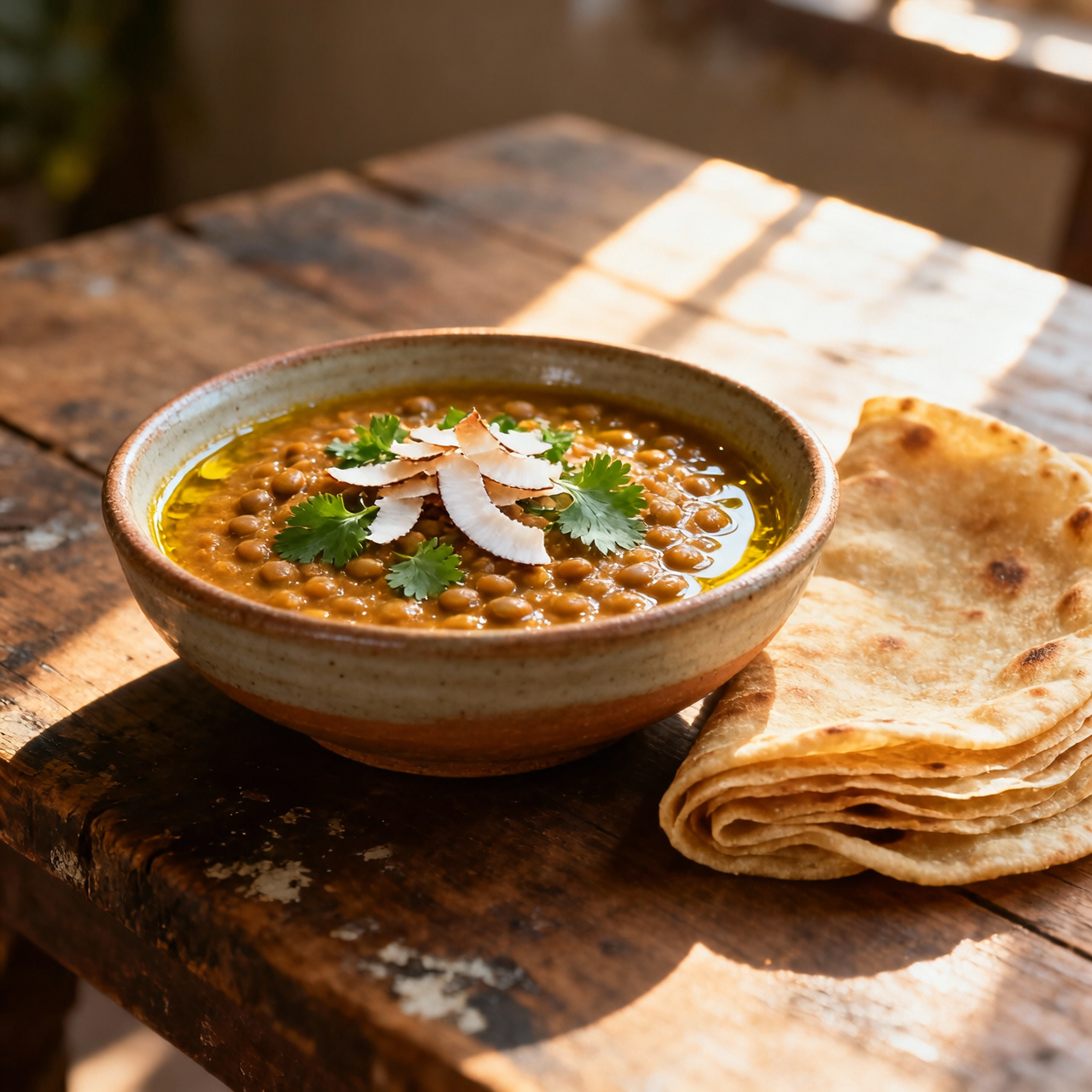
Cholar Dal
I’ve always found comfort in the slow, rhythmic bubbling of cholar dal, a Bengali staple that feels less like a mere dish and more like a quiet conversation with history. Traditionally simmered in homes across West Bengal and Bangladesh, this split chickpea preparation is the heart of festive spreads, particularly during Poila Boishakh and other auspicious occasions. Its origins trace back to ancient agrarian communities who valued legumes for their resilience and nourishment, eventually elevating them with mustard oil, ginger, and the subtle sweetness of coconut or raisins. To me, cholar dal matters because it embodies the Bengali philosophy of balancing simplicity with depth—how a humble pulse can transform into something profoundly celebratory through patience and spice. Yet, I’ve watched many cooks stumble over its quiet demands. The most frequent pitfall is rushing the tempering; if you add the whole spices too early or overcook the onions, the delicate aromatic foundation turns bitter and muddy. Another common misstep is neglecting the soak-to-cook ratio, which leaves the dal either stubbornly firm or tragically mushy. Some also skip the final drizzle of warm mustard oil, missing the glossy finish that ties the flavors together. When I prepare it, I treat the dal like a slow-dancing partner, adjusting heat, tasting often, and letting the spices bloom just before the end. It’s in those restrained moments that the dish finds its true voice, reminding us that tradition isn’t about rigid rules, but about listening to the ingredients.
Nutrition
| Per serving | Calories | Protein | Carbs | Fat | Sat fat | Fibre | Sugar | Sodium |
|---|---|---|---|---|---|---|---|---|
| beginner | 305kcal | 12g | 39g | 13g | 1g | 10g | 6g | 590mg |
| intermediate | 305kcal | 12g | 39g | 13g | 1g | 10g | 6g | 590mg |
| expert | 305kcal | 12g | 39g | 13g | 1g | 10g | 6g | 590mg |
Per serving · Ava-estimated — a guide, not a clinical figure.
- 200 gsplit chickpea— picked over and rinsed
- 45 mlmustard oil— cold-pressed
- 1 mediumyellow onion— finely diced
- 25 gfresh ginger— peeled
- 4 clovesgarlic clove— peeled
- 2 wholegreen chili— slit lengthwise
- 1 leafbay leaf— fresh or dried
- 5 cmcinnamon stick— piece
- 2 podsgreen cardamom pod— lightly crushed
- 3 cloveswhole clove
- 5 gcumin seed
- 3 gground turmeric
- 2 gred chili powder— mild to medium heat
- 10 ggranulated sugar
- 6 gfine sea salt
- 600 mlwater
This version embraces the realities of a busy weeknight without sacrificing the soul of the dish. Instead of hand-grinding pastes or managing multiple tempering stages, you will use a reliable jarred ginger-garlic blend and a simplified stovetop or electric pressure-cooker method. The goal here is confidence: you will learn to recognize when the dal has softened enough to mash against the pot wall and how to properly smoke the mustard oil without letting it burn. Watch the heat closely during the initial oil heating; mustard oil has a low smoke point and will turn bitter if rushed. I recommend using standard measuring spoons for the spices to avoid guessing. When the dal finishes cooking, let it rest covered for ten minutes before stirring. This resting period allows the starches to fully hydrate and thicken naturally, saving you from over-reducing. Follow each step sequentially, trust the visual cues over strict timers, and do not be afraid to adjust the final sweetness to match your palate. By the time you plate it, you will have built a reliable foundation for all future variations.
Equipment
- Heavy-bottomed pot— non-stick works well for beginners
- Pressure cooker(optional)— optional but speeds up cooking
- Wooden spatula— prevents scratching
Method
- 1
Rinse the split chickpeas under cold water until the runoff runs clear.
Cloudy water indicates loose starch.
rinsing~ 2 min - 2
Heat the mustard oil in your heavy pot over medium-high heat until thin white smoke appears, then remove it from the heat.
Step back when the oil smokes.
smoking~ 3 minTricky bit - 3
Return the pot to medium heat and add the bay leaf, cinnamon, cardamom, cloves, and cumin seeds.
Listen for a steady, gentle sizzle.
tempering~ 1 min - 4
Stir in the diced onion and cook until translucent and lightly golden at the edges.
Lower heat if the onions brown too quickly.
sautéing~ 5 min - 5
Add the jarred ginger-garlic paste, ground turmeric, chili powder, and slit green chilies, cooking until fragrant.
Scrape the bottom of the pot frequently.
blooming~ 2 min - 6
Pour in the rinsed chickpeas, fine sea salt, granulated sugar, and water, then bring to a gentle simmer.
Cover with a tight-fitting lid.
simmering~ 5 min - 7
Cover the pot and cook until the chickpeas are completely tender and easily mashed with a spoon.
Check water level halfway through.
braising~ 15 minTricky bit - 8
Mash half of the dal against the pot wall, stir thoroughly, and remove from heat for ten minutes before serving.
Residual heat finishes the thickening.
thickening~ 10 min