
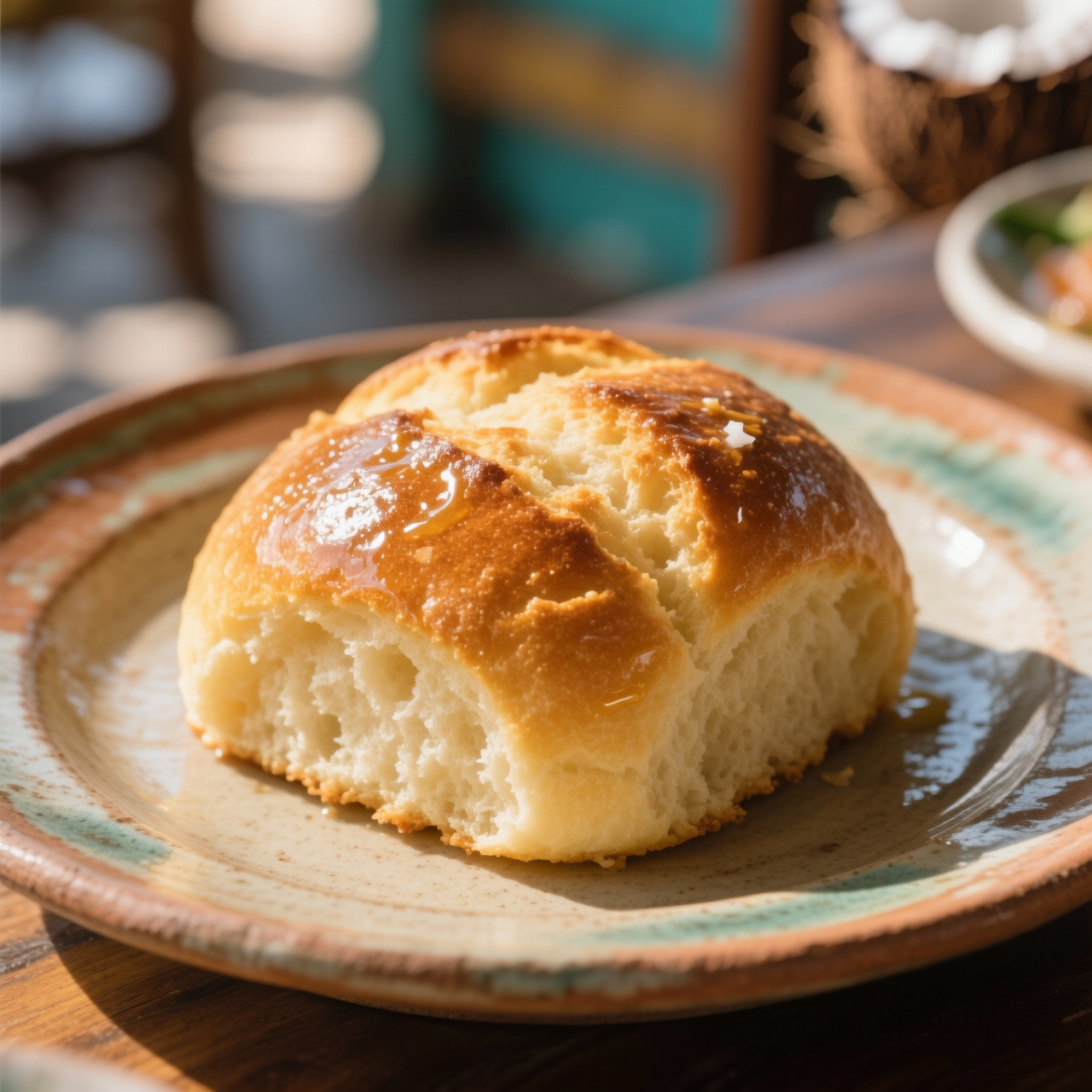
Coco bread
For me, the smell of freshly baked coco bread is the ultimate invitation to breakfast. Originating in Jamaica, this softly sweet, elongated roll is the undisputed king of the bakery counter, designed specifically to cradle a spicy patty or a simple butter spread. The shop-bought versions you find in supermarkets cost around two to three dollars each, but they are a profound disappointment. They arrive wrapped in sweaty plastic that turns the crust gummy, and they are heavily reliant on artificial dough conditioners, preservatives, and cheap margarine to survive weeks on a shelf. When you make it from scratch, you bypass those chemical shortcuts entirely, using real butter, whole milk, and active yeast to achieve a genuinely tender, flaky crumb. The most common pitfall I see is under-kneading the dough or skimping on the final proof; coco bread needs a strong gluten structure to hold its signature folded shape without tearing, and it needs that crucial second rise to become properly pillowy. Another frequent mistake is brushing it with egg wash too early, which can make the top tough rather than giving it that beautiful, subtle shine. By committing to the from-scratch process, you reclaim a cultural staple that is infinitely superior to the processed imitations. It is a true batch hero, too, as these soft folded rolls freeze beautifully, ensuring you always have the perfect vessel for your favorite fillings without compromising on quality or relying on stale, store-bought compromises.
Nutrition
| Per serving | Calories | Protein | Carbs | Fat | Sat fat | Fibre | Sugar | Sodium |
|---|---|---|---|---|---|---|---|---|
| beginner | 540kcal | 9g | 68g | 24g | 15g | 2g | 8g | 290mg |
| intermediate | 625kcal | 15g | 105g | 14g | 9g | 4g | 18g | 800mg |
| expert | — | — | — | — | — | — | — | — |
Per serving · Ava-estimated — a guide, not a clinical figure.
- 500 gbread flour— plus extra for dusting the work surface
- 75 ggranulated sugar
- 5 gsalt
- 7 ginstant yeast
- 60 gunsalted butter— softened to room temperature
- 240 mlwhole milk— warmed to approximately 43°C (110°F)
- 1 piecelarge egg— room temperature, lightly beaten and divided for the dough and egg wash
- 5 mlvanilla extract
- 2 gground nutmeg
Shop-bought coco bread typically costs around $1.50 to $2.00 per piece at Caribbean markets, but it often relies on cheap hydrogenated shortenings, artificial coconut flavoring, and chemical preservatives that result in a waxy, overly dense crumb. This beginner-friendly from-scratch version completely ditches those processed shortcuts while keeping the technique highly forgiving for your first attempt. We use instant yeast to skip the traditional blooming step and employ a simple butter-fold rather than complex lamination to achieve those signature tender, flaky layers. Pay close attention to dough hydration; full-fat coconut milk varies in thickness by brand, so hold back a splash of your liquid if the dough feels excessively sticky. The classic envelope fold is crucial not just for the iconic shape, but it also traps steam during baking to ensure a soft, pull-apart texture that freezes beautifully for quick future sandwiches.
Equipment
- Large mixing bowl— glass or stainless steel preferred
- Baking sheet— line with parchment paper to prevent sticking
- Rolling pin— a clean bottle works in a pinch
Method
- 1
Whisk the bread flour, sugar, salt, and instant yeast together in a large mixing bowl until fully combined.
Ensure the salt and yeast are on opposite sides of the bowl initially.
mixing~ 1 min - 2
Pour in the warm coconut milk and melted butter, then knead the dough on a lightly floured surface until smooth and elastic.
Dough should be soft and slightly tacky, not stiff.
kneading~ 8 min - 3
Place the dough in a lightly oiled bowl, cover with a damp towel, and let it rise in a warm spot until doubled in size.
A turned-off oven with the light on creates a perfect proofing environment.
proofing~ 60 min - 4
Divide the risen dough into four equal pieces, rolling each into a rectangle, brushing with extra melted butter, and folding into a neat envelope shape.
Seal the edges well so the butter doesn't leak during baking.
shaping~ 5 minTricky bit - 5
Transfer the shaped breads to a parchment-lined baking sheet, cover loosely, and let them proof again until puffy.
They should spring back slowly when gently pressed with a finger.
proofing~ 30 min - 6
Bake the coco breads in a preheated oven until they are deeply golden brown and sound hollow when tapped on the bottom.
Brush with a little extra butter immediately upon exiting the oven for a soft crust.
baking~ 20 min
Cooking from frozen
Thaw at room temperature and refresh in a hot oven for five minutes to restore the soft, flaky crumb.
Storage times are a guide — always use your judgement and store food safely.