
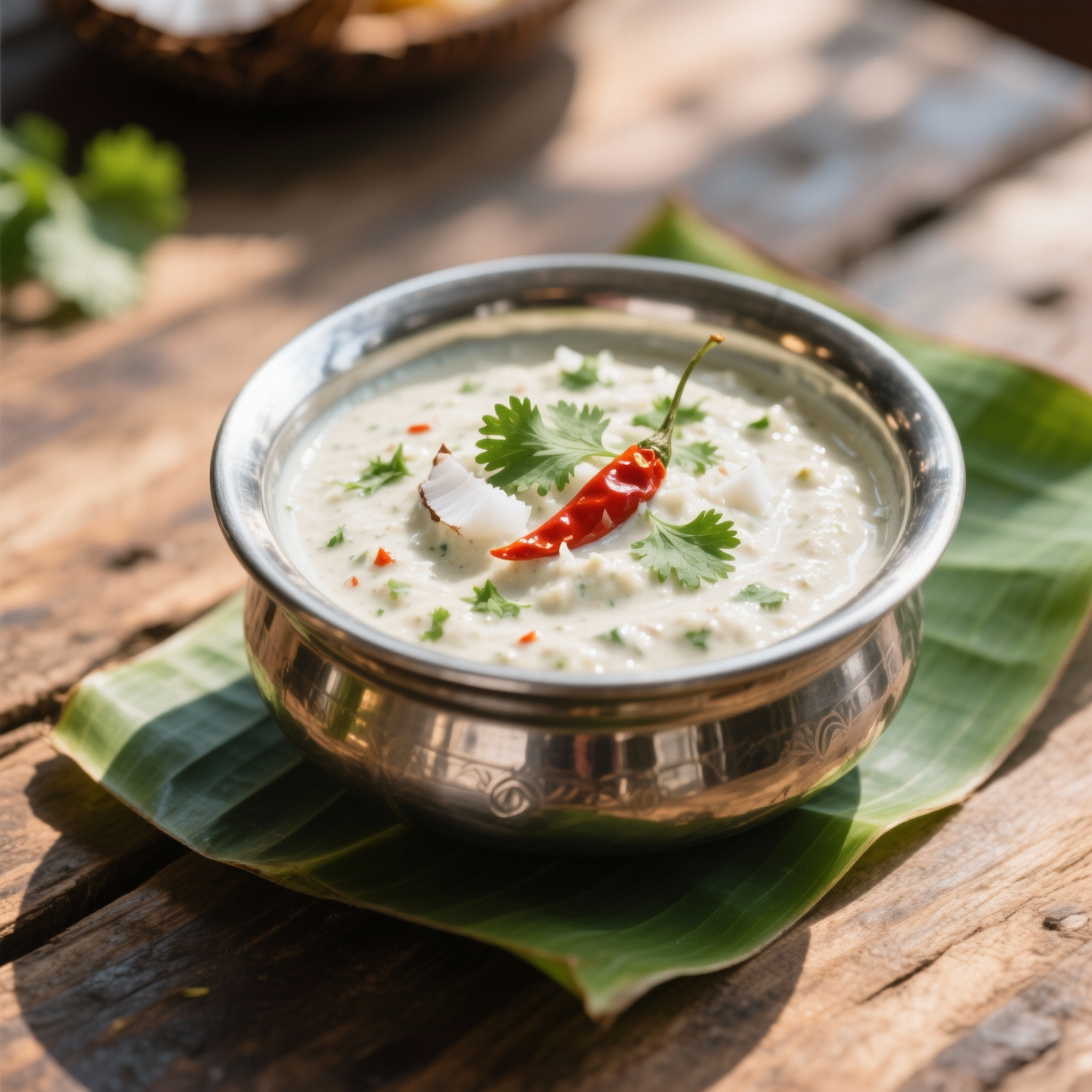
Coconut Chutney
When I first encountered coconut chutney alongside a crisp, golden dosa, I understood immediately why it remains an indispensable cornerstone of South Indian cuisine. Born in the coastal kitchens of southern India, where fresh coconuts grow abundantly along the Arabian Sea, this condiment was never meant to be an afterthought. It is the cooling, aromatic counterpoint to fiery sambar and the essential binder that transforms a simple fermented crepe into a complete meal. I have spent years perfecting its balance, learning that true mastery lies not in complexity but in restraint. The most common pitfall I see is overcomplicating the tempering or grinding the mixture into a pasty slurry rather than a light, slightly textured emulsion. Many cooks also rush the roasting of the chana dal and urad dal, missing out on the nutty depth that anchors the coconut’s natural sweetness. Another frequent mistake is using stale, dried coconut flakes instead of fresh grated meat, which strips the chutney of its delicate, milky fragrance. I always insist on a quick, gentle pulse in the blender, adding water incrementally until it reaches a pourable consistency that clings without weighing down the palate. This chutney matters because it embodies the South Indian philosophy of harmony: sharp, sweet, earthy, and fresh, all existing in a single spoonful. Whether served alongside a weekend breakfast spread or as a quiet dip for evening snacks, it demands respect for its ingredients and patience in its preparation. Get the balance right, and you will taste the very essence of the coastal monsoon in every bite.
Nutrition
| Per serving | Calories | Protein | Carbs | Fat | Sat fat | Fibre | Sugar | Sodium |
|---|---|---|---|---|---|---|---|---|
| beginner | 105kcal | 2g | 4g | 10g | 8g | 3g | 1g | 140mg |
| intermediate | 165kcal | 3g | 7g | 14g | 10g | 3g | 2g | 195mg |
| expert | 115kcal | 3g | 7g | 9g | 8g | 3g | 2g | 190mg |
Per serving · Ava-estimated — a guide, not a clinical figure.
- 200 gfresh coconut— grated, preferably mature
- 15 groasted chana dal— adds thickness and nutty flavor
- 2 pcsgreen chili— adjust heat to preference
- 10 gginger— peeled and roughly chopped
- 5 gtamarind— or substitute with 1 tsp lemon juice
- 3 gsalt— fine sea salt
- 60 mlwater— adjust for desired consistency
- 15 mlcoconut oil(optional)— for tempering
- 3 gmustard seed(optional)— black, for tempering
- 5 gurad dal(optional)— split and husked, for tempering
- 1 pcsdried red chili(optional)— broken in half, for tempering
- 8 pcscurry leaf(optional)— fresh sprigs, for tempering
This beginner version prioritizes accessibility and confidence-building by leaning on reliable shortcuts like pre-shredded unsweetened coconut and pre-ground roasted peanut powder, which eliminate the need for a heavy-duty mortar or traditional stone grinder. The process centers on a quick pulse-and-scrape method in a standard countertop blender, ensuring you never over-process the mixture into a stiff paste. Pay close attention to the texture during blending; you want a smooth, pourable consistency that coats a spoon lightly, so add water one tablespoon at a time. The tempering stage is simplified by using a small, heavy skillet over medium heat. Watch carefully for the mustard seeds to pop and the dried red chilies to darken slightly without burning—this takes less than a minute and signals the oil has fully infused. Once combined, let the chutney rest for five minutes so the flavors meld naturally. This forgiving approach guarantees a bright, balanced condiment on your first try, with clear visual and auditory cues replacing guesswork. Store any leftovers in an airtight jar in the refrigerator for up to four days.
Equipment
- Standard blender or food processor— a 2-cup capacity is sufficient
- Small heavy-bottomed skillet— stainless steel or cast iron works best for even heat distribution
- Heatproof silicone spatula— for scraping the blender jar safely
Method
- 1
Add pre-shredded coconut, roasted peanut powder, chopped green chili, ginger paste, and salt to the blender jar.
Scrape down the sides halfway through to ensure even mixing.
pulse-blending~ 1 min - 2
Blend on high until completely smooth and pourable, adding water one tablespoon at a time if the mixture resists movement.
Stop when it lightly coats the back of a spoon without dripping rapidly.
emulsifying~ 1 min - 3
Transfer the blended mixture to a serving bowl and set it aside while you heat the tempering oil.
Cover loosely to prevent surface drying.
resting~ 0 min - 4
Heat oil in a small skillet over medium heat until shimmering, then add mustard seeds and cook until they actively pop.
Listen for rapid crackling before proceeding to the next ingredients.
tadka~ 1 minTricky bit - 5
Stir in urad dal, dried red chilies, fresh curry leaves, and a pinch of asafoetida, cooking gently until fragrant.
Keep heat at medium to prevent the spices from turning bitter.
tempering~ 1 min - 6
Immediately pour the hot tempering mixture directly over the coconut base and fold together until evenly distributed.
The residual heat will gently cook the raw spices and brighten the flavor.
folding~ 0 min
Cooking from frozen
Thaw overnight in the refrigerator and whisk thoroughly before serving, adding a teaspoon of water if the emulsion separates.
Storage times are a guide — always use your judgement and store food safely.