
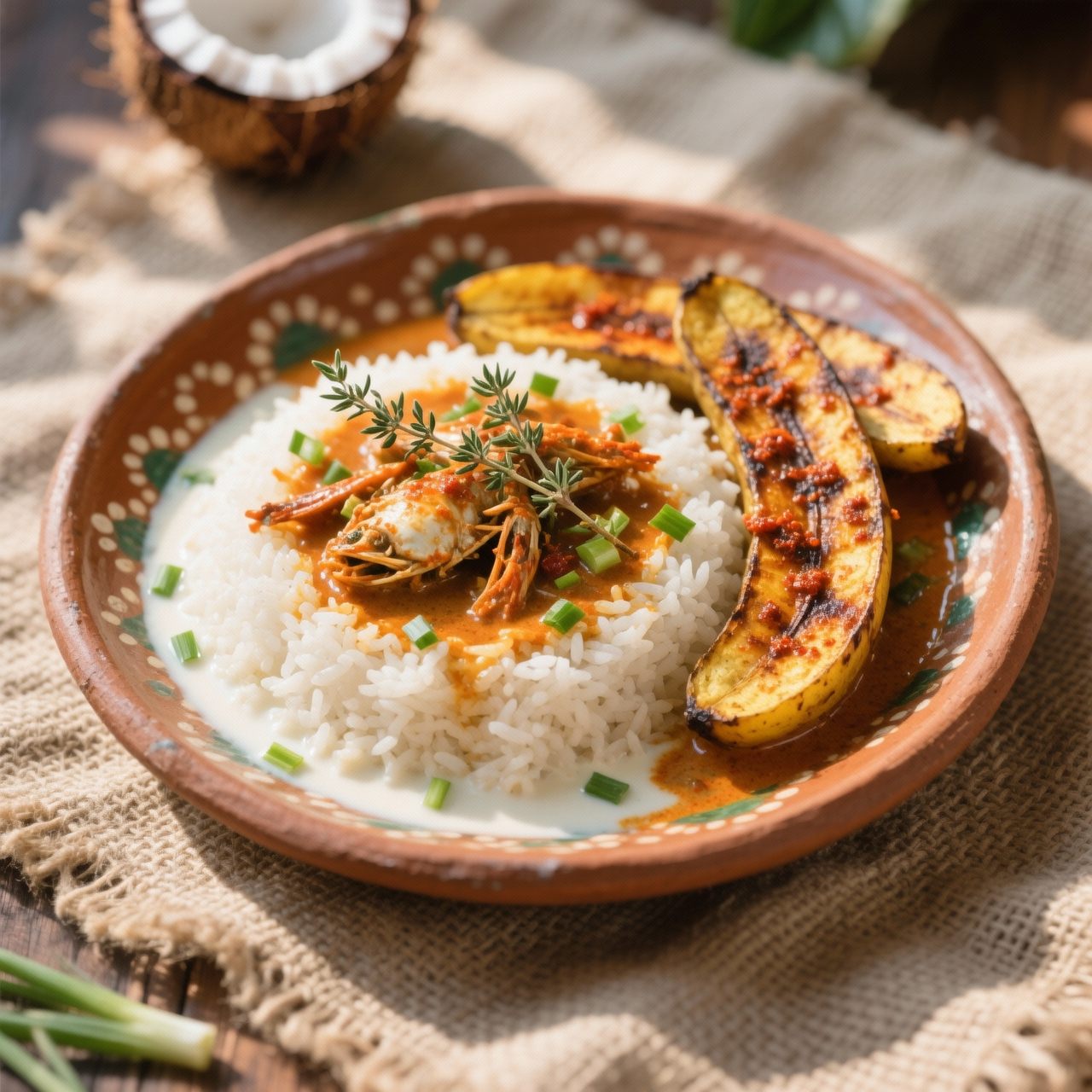
Coconut milk
When I think of the soul of Caribbean cooking, my mind immediately drifts to the rhythmic sound of a machete cracking open a mature brown coconut. While canned coconut milk has undeniably made its way into modern pantries for the sake of convenience, nothing compares to the vibrant, nutty sweetness of fresh-pressed coconut milk, especially when you are building the foundation for a proper pot of rice and peas. The origins of this technique are deeply rooted in the indigenous Taíno practices and later refined through the ingenuity of enslaved Africans in the Caribbean, who transformed the abundant local flora into culinary gold. Using fresh milk matters because it imparts a delicate, floral aroma and a creamy texture that canned versions, often stabilized with gums and lacking in fresh coconut oil, simply cannot replicate. The most common pitfall I see home cooks make is using young, green coconuts instead of mature, brown ones. Young coconuts yield refreshing water but very little of the rich, fatty flesh required for pressing milk. Another mistake is rushing the extraction; true first-press milk requires soaking the grated flesh in warm water and squeezing it through a cheesecloth with patience and strength. If you skip this or use water that is too hot, you will end up with a thin, lackluster liquid that fails to coat the grains of rice and soften the gungo peas. Embracing the labor of fresh-pressing isn't just about honoring tradition; it is about unlocking the true, lush essence of the islands in every single bite.
Nutrition
| Per serving | Calories | Protein | Carbs | Fat | Sat fat | Fibre | Sugar | Sodium |
|---|---|---|---|---|---|---|---|---|
| beginner | 240kcal | 3g | 8g | 22g | 18g | 3g | 1g | 110mg |
| intermediate | 260kcal | 3g | 6g | 17g | 15g | 7g | 1g | 10mg |
| expert | 354kcal | 3g | 15g | 33g | 29g | 9g | 6g | 20mg |
Per serving · Ava-estimated — a guide, not a clinical figure.
- 500 gfresh mature coconut meat— finely grated
- 250 mlwarm water— approximately 40C to aid extraction
While traditional Caribbean rice and peas demand fresh-pressed coconut milk, this beginner version shortcuts the labor-intensive grating and squeezing by using a high-quality jarred coconut paste diluted with warm water. This saves significant time and prevents the common beginner mistake of scorching fresh coconut during extraction. Watch for the consistency as it simmers; it should smoothly coat the back of a spoon without becoming overly thick or separating. We will bloom the foundational aromatics—fresh thyme, scallion, and a hint of scotch bonnet—in a neutral oil before whisking in the coconut paste and water. This gentle blooming builds a rich, authentic flavor base that mimics the depth of fresh-pressed milk. This accessible method guarantees a silky, creamy texture and a confident first attempt at classic Caribbean flavors, completely bypassing the messy, time-consuming process of handling fresh coconuts while still delivering that essential creamy richness to your dish. It is the perfect starting point for mastering this essential Caribbean sauce without the intimidation factor.
Equipment
- Heavy-bottomed pan— non-stick is fine here
- Whisk— essential for smooth emulsion
Method
- 1
Finely chop the scallion, mince the garlic, and slice the scotch bonnet pepper.
Wear gloves when handling the scotch bonnet to avoid burning your eyes.
chopping~ 5 min - 2
Heat the oil in a heavy-bottomed pan over medium heat and sauté the scallion, garlic, thyme, and scotch bonnet until fragrant.
Do not let the garlic brown; just cook until soft and aromatic.
sweating~ 5 min - 3
Whisk in the jarred coconut paste and warm water until completely smooth and no lumps remain.
Add the water gradually to ensure the paste reconstitutes properly.
reconstituting~ 3 minTricky bit - 4
Bring the mixture to a gentle simmer, then reduce the heat to low and cook until the sauce thickens slightly.
Stir frequently to prevent the coconut from sticking to the bottom of the pan.
simmering~ 10 min - 5
Season with salt and remove the pan from the heat, discarding the whole scotch bonnet if desired.
Taste and adjust seasoning; the sauce should be rich and lightly salted.
seasoning~ 1 min
Cooking from frozen
Thaw overnight in the fridge and whisk vigorously to recombine the separated oils.
Storage times are a guide — always use your judgement and store food safely.