
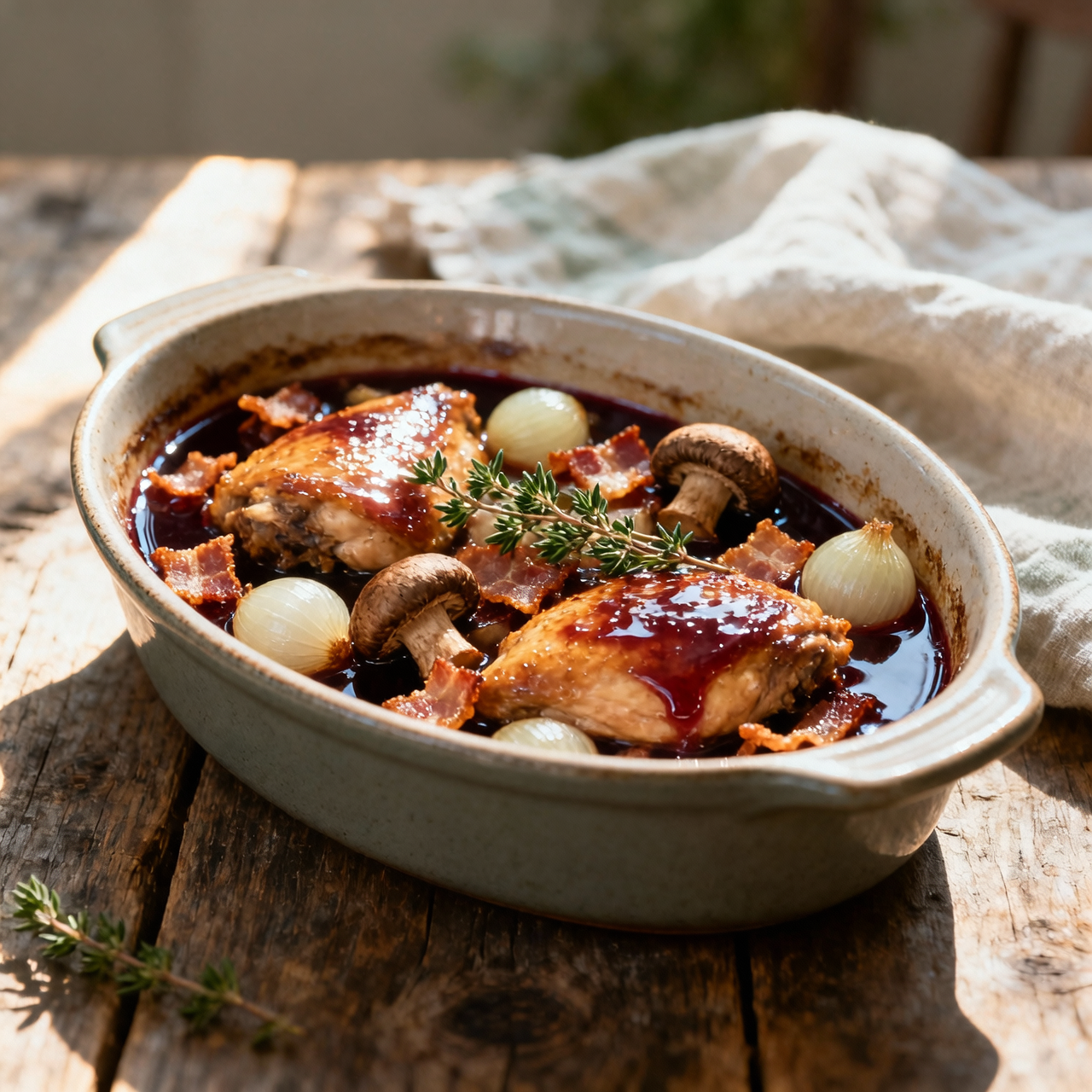
Coq au Vin
When I first learned to coax the deep, resonant flavors of Coq au Vin from a humble Dutch oven, I realized this dish is less about luxury and more about the quiet alchemy of patience. Born in the rural heartlands of Burgundy, it was never meant for banquet tables; it emerged from farm kitchens where tough, aging roosters were transformed into something tender and profound through slow braising in robust red wine. This matters to me because it embodies the French culinary philosophy of respect for ingredients and time. Every element, from the pearl onions to the earthy mushrooms, must be treated with intention, allowing the wine acidity and tannins to work their magic while the collagen breaks down into silk. Yet, so many home cooks stumble at the same thresholds. The most common pitfall I see is rushing the braise, which leaves the meat stubborn and the sauce thin and disjointed. Another is choosing the wrong wine; a cheap, overly sweet blend will curdle the balance, while an overly oaky bottle will overpower the delicate aromatics. I always insist on a dry, medium-bodied Pinot Noir or a similar regional red, and I never skip the step of properly searing the lardons and poultry to build a fond that anchors the entire sauce. Salt too early, and the wine turns harsh; deglaze with water instead of stock, and you lose depth. Coq au Vin demands reverence, not rigidity. When you honor its rustic roots and trust the slow simmer, it rewards you with a dish that feels like a warm, enduring embrace.
Nutrition
| Per serving | Calories | Protein | Carbs | Fat | Sat fat | Fibre | Sugar | Sodium |
|---|---|---|---|---|---|---|---|---|
| beginner | 860kcal | 60g | 24g | 40g | 13g | 3g | 7g | 1800mg |
| intermediate | 860kcal | 60g | 24g | 40g | 13g | 3g | 7g | 1800mg |
| expert | 860kcal | 60g | 24g | 40g | 13g | 3g | 7g | 1800mg |
Per serving · Ava-estimated — a guide, not a clinical figure.
- 1200 gchicken thigh— bone-in, skin-on
- 750 mldry red wine— Pinot Noir or Burgundy
- 150 gbacon lardon— thick-cut
- 200 gpearl onion— peeled
- 200 gcremini mushroom— halved
- 150 gcarrot— roughly chopped
- 4 clovesgarlic— smashed
- 30 gtomato paste
- 10 gfresh thyme— tied in a bundle
- 2 leavesbay leaf
- 30 gall-purpose flour
- 500 mlchicken stock— low-sodium
- 30 gunsalted butter— cold, cubed
- 30 mlolive oil
- 10 gfine sea salt
- 2 gblack peppercorn— freshly cracked
This version strips away the intimidation factor by leveraging reliable pantry shortcuts without sacrificing the soul of the dish. You will use a high-quality jarred aromatics base to skip the tedious chopping and sweating phase, and a pre-reduced demi-glace concentrate to guarantee a rich, glossy finish without hours of simmering. The chicken is browned in a single batch rather than carefully staged, which saves time and simplifies cleanup. I have structured the steps to guide you through the critical moments: recognizing when the sauce has properly thickened, and knowing exactly when the meat has reached that fork-tender sweet spot. Watch the heat closely during the initial braise; a gentle simmer is your best friend, while a rolling boil will turn your tender thighs into dry, stringy shreds. The goal here is confidence. By the end of this process, you will understand the fundamental flavor architecture of a classic French braise, equipped with a reliable template that delivers consistent, restaurant-adjacent results on a weeknight.
Equipment
- Dutch oven— 5-quart capacity
- wooden spoon
- tongs
Method
- 1
Pat the chicken thighs completely dry and season generously with salt and pepper.
Moisture prevents proper browning.
drying~ 2 min - 2
Heat olive oil in the Dutch oven over medium-high heat and brown the chicken in a single layer.
Do not crowd the pan.
searing~ 8 minTricky bit - 3
Remove the chicken and sauté the jarred aromatics base until fragrant.
Stir constantly to prevent burning.
sweating~ 3 min - 4
Pour in the wine and scrape the browned bits from the bottom of the pot.
Let the alcohol evaporate for two minutes.
deglazing~ 4 min - 5
Return the chicken to the pot, add the remaining liquids, cover tightly, and simmer gently.
Bubbles should barely break the surface.
braising~ 30 minTricky bit