
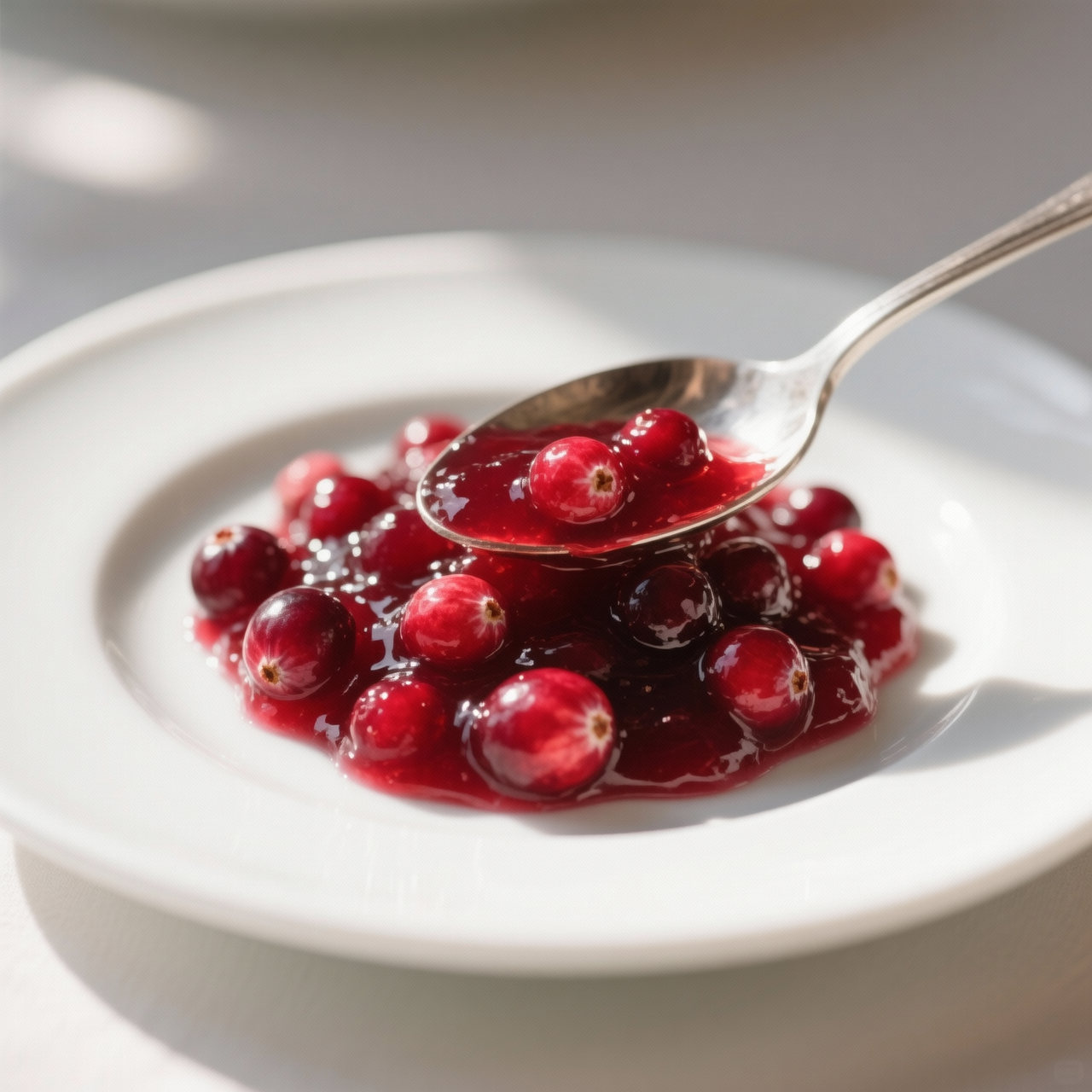
Cranberry sauce
When I think of Thanksgiving, my mind immediately goes to the vibrant, ruby-red jewel that is homemade cranberry sauce. Forget the cylindrical, ridged monstrosity that slides out of a can; making this from fresh berries is a batch hero move that completely transforms the holiday table. Cranberry sauce, in its modern form, traces its roots back to early American settlers who discovered the tartness of the native cranberry and began sweetening it with sugar or maple syrup. It matters because it provides that crucial acidic, bright counterpoint to the rich, heavy fats of roasted turkey and savory stuffing. The common pitfalls I see people fall into are either overcooking the berries until they turn into a bitter, muddy mush, or under-sweetening them, resulting in a puckering astringency that shocks the palate. The secret is a gentle simmer, just until the berries pop and release their natural pectin, creating that perfect, glossy jam-like consistency without needing any artificial thickeners. By using fresh or frozen berries, you control the texture and the balance of tart and sweet, often elevating it with a splash of orange juice, a pinch of cinnamon, or a hint of fresh ginger. It is remarkably easy to scale up, making it the ultimate batch-prep condiment that you can make weeks in advance and keep in the fridge. Once you experience the bright, complex flavor of a homemade cranberry sauce, the canned jelly will simply never make it back onto your menu.
Nutrition
| Per serving | Calories | Protein | Carbs | Fat | Sat fat | Fibre | Sugar | Sodium |
|---|---|---|---|---|---|---|---|---|
| beginner | 110kcal | 0g | 28g | 0g | 0g | 2g | 22g | 15mg |
| intermediate | 250kcal | 1g | 65g | 0g | 0g | 4g | 52g | 5mg |
| expert | 245kcal | 1g | 56g | 0g | 0g | 2g | 52g | 40mg |
Per serving · Ava-estimated — a guide, not a clinical figure.
- 340 gfresh cranberry— rinsed and sorted to remove any soft berries or stems
- 200 ggranulated sugar— ensure it is certified vegan
- 240 mlwater
- 1 pieceorange— zested and juiced
- 1 piececinnamon stick(optional)
This beginner-friendly cranberry sauce is all about building confidence with minimal fuss, proving you don't need culinary school to ditch the canned jelly. By using a simple, hands-off stovetop method, you'll achieve that perfect balance of tart and sweet with zero stress. The key here is patience; let the berries pop naturally without stirring too vigorously, which keeps the texture rustic and appealing. Watch closely for the berries to burst and the mixture to thicken—it should easily coat the back of a spoon. If it looks too thin at the end of cooking, don't panic; cranberry sauce relies on natural pectin and will firm up significantly as it cools in the fridge. This highly approachable method guarantees a vibrant, homemade condiment that tastes like you spent hours in the kitchen. It is the perfect batch-hero for your holiday table, easily scaling up to feed a crowd while keeping your prep time incredibly short and your cleanup a breeze.
Equipment
- Medium saucepan— Stainless steel or enameled; avoid uncoated aluminum as it can react with the acidic berries.
- Heat-proof spatula— A wooden spoon works perfectly for gentle stirring.
Method
- 1
Combine the fresh cranberries, sugar, orange juice, and a pinch of salt in the saucepan.
Do not stir yet; let the sugar dissolve into the juices as it heats.
combining~ 2 min - 2
Place the saucepan over medium heat and bring the mixture to a gentle simmer.
Watch for small bubbles around the edges; a rolling boil can make the sauce bitter.
simmering~ 3 min - 3
Reduce the heat to low and let it cook undisturbed until the cranberries burst and the sauce thickens.
Resist the urge to stir constantly; gentle swirling is enough to prevent sticking.
reducing~ 8 minTricky bit - 4
Remove the pan from the heat and let the sauce cool completely before transferring to storage jars.
The sauce will continue to thicken significantly as it drops in temperature.
cooling~ 10 min
Cooking from frozen
Thaw overnight in the refrigerator and stir well to recombine any separated liquids.
Storage times are a guide — always use your judgement and store food safely.