
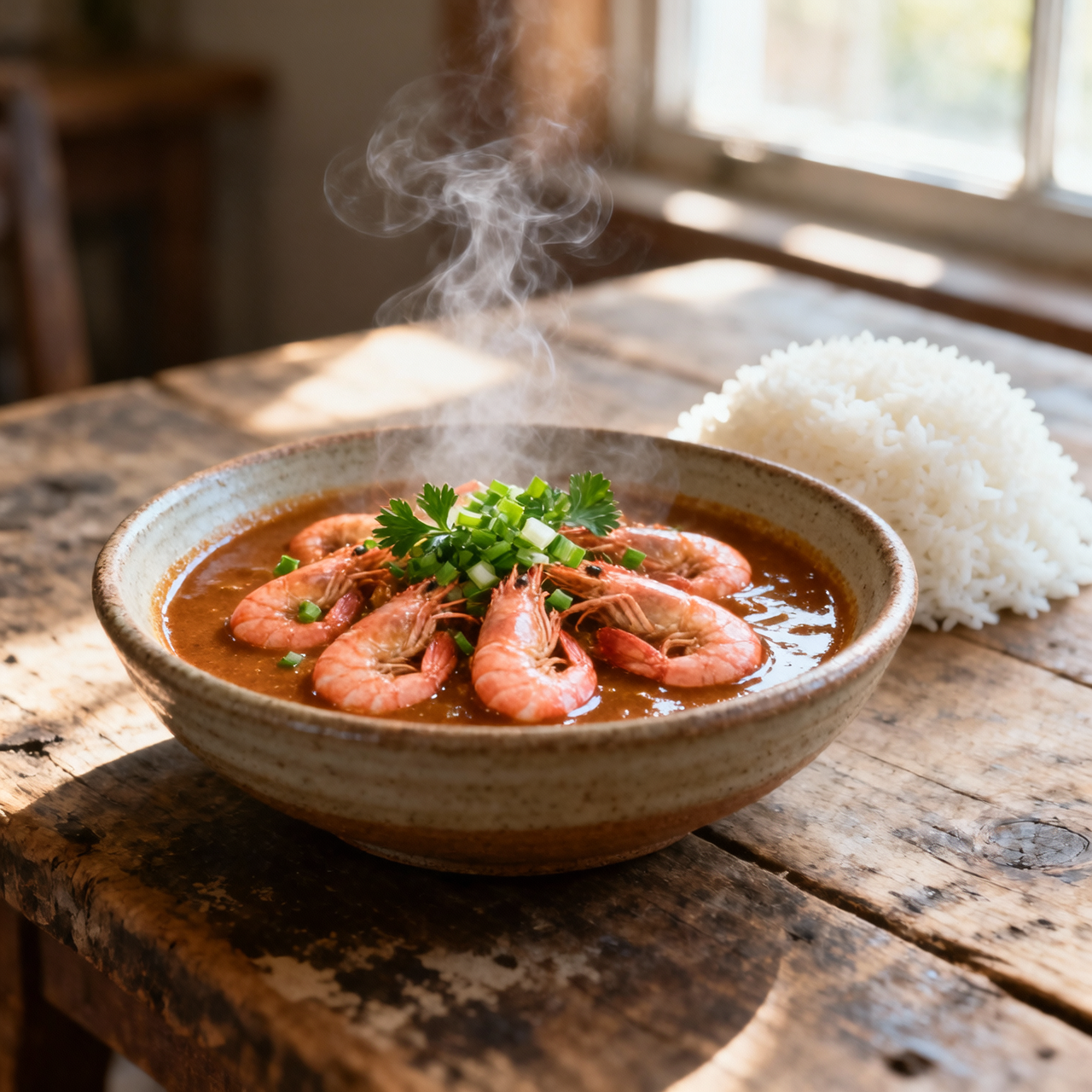
Crawfish Etouffee
Crawfish etouffee is a cornerstone of Louisiana's Cajun and Creole heritage, born in the bayous of Acadiana where resourcefulness met abundance. The word itself means "smothered" in French, a technique that transforms humble swamp crustaceans into something deeply luxurious. It emerged not in grand kitchens but in the hands of home cooks who learned to coax maximum flavor from every ingredient, layering the holy trinity into a roux that breathes with patience. To me, this dish isn't just a meal; it's a living archive of Louisiana's cultural crossroads. It carries French technique, West African wisdom, and indigenous Gulf Coast knowledge in a single cast-iron pot. When I prepare it, I'm honoring a tradition that values time over convenience and community over isolation. Yet, I constantly watch cooks stumble at the very steps that define it. The most common pitfall is rushing the roux, which either stays too pale to carry depth or crosses into bitterness from impatience. Others drown the base in tomatoes, confusing etouffee with gumbo, or they boil the crawfish tails until they turn rubbery. The fix is simple but demands restraint: cook the roux to a rich copper hue, let the vegetables melt completely into the foundation, and fold in the sweet tail meat only at the end, just long enough to warm through. When respected, etouffee becomes a spoonable, deeply comforting testament to what happens when you let time do the heavy lifting.
Nutrition
| Per serving | Calories | Protein | Carbs | Fat | Sat fat | Fibre | Sugar | Sodium |
|---|---|---|---|---|---|---|---|---|
| beginner | 650kcal | 27g | 76g | 26g | 15g | 5g | 5g | 1650mg |
| intermediate | 650kcal | 27g | 76g | 26g | 15g | 5g | 5g | 1650mg |
| expert | 650kcal | 27g | 76g | 26g | 15g | 5g | 5g | 1650mg |
Per serving · Ava-estimated — a guide, not a clinical figure.
- 115 gbutter— unsalted
- 120 gall-purpose flour
- 200 gyellow onion— finely diced
- 150 gcelery stalk— finely diced
- 150 ggreen bell pepper— finely diced
- 15 ggarlic clove— minced
- 750 mlseafood stock— preferably homemade or low-sodium
- 450 gpeeled crawfish tail— thawed if frozen, patted dry
- 30 gtomato paste
- 5 gcayenne pepper
- 2 gdried thyme
- 1 wholebay leaf
- 10 gkosher salt
- 3 gblack pepper— freshly ground
- 200 glong-grain white rice— rinsed
- 30 ggreen onion— thinly sliced, for garnish
This version prioritizes confidence over tradition, replacing the notoriously finicky roux with a reliable jarred Cajun seasoning and prepared tomato-cayenne paste. You will focus on building flavor through gentle sautéing rather than constant roux stirring. I have designed the steps to eliminate guesswork, using clear visual cues and forgiving timing so you can achieve a rich, cohesive sauce without watching a thermometer. The key is patience during the vegetable sweat; rushing this step leaves raw, sharp notes that clash with the delicate crawfish. Keep your heat strictly at medium-low, allowing the onions and celery to soften until translucent before introducing the stock. When adding the crawfish, remember they cook instantly. Overcooking turns them rubbery, so fold them in only at the very end and remove the pan from the heat the moment they curl. Taste before serving, adjusting salt gradually since pre-mixed blends already carry sodium. Serve over perfectly steamed rice, letting the residual heat finish the dish.
Equipment
- heavy-bottomed skillet— non-stick is fine here
- silicone whisk— for smooth incorporation
Method
- 1
Melt the butter in a heavy-bottomed skillet over medium heat.
Wait until the foam subsides before proceeding.
melting~ 1 min - 2
Add the diced yellow onion, celery stalks, and green bell pepper to the pan.
Vegetables should sizzle gently, not fry.
sweating~ 5 min - 3
Stir in the minced garlic, tomato paste, and Cajun seasoning blend.
Cook until fragrant, scraping the bottom.
blooming~ 1 min - 4
Pour the seafood stock into the pan in a slow, steady stream.
Whisk continuously to prevent flour clumping.
whisking~ 1 min - 5
Bring the mixture to a gentle simmer, then reduce heat to low.
Cover partially and cook for fifteen minutes.
simmering~ 15 min - 6
Remove the pan from the heat and gently fold in the crawfish tails.
Residual heat will cook them perfectly.
folding~ 5 minTricky bit - 7
Discard the bay leaf, season with kosher salt to taste, and ladle over cooked rice.
Garnish with sliced green onion before serving.
plating~ 1 min