
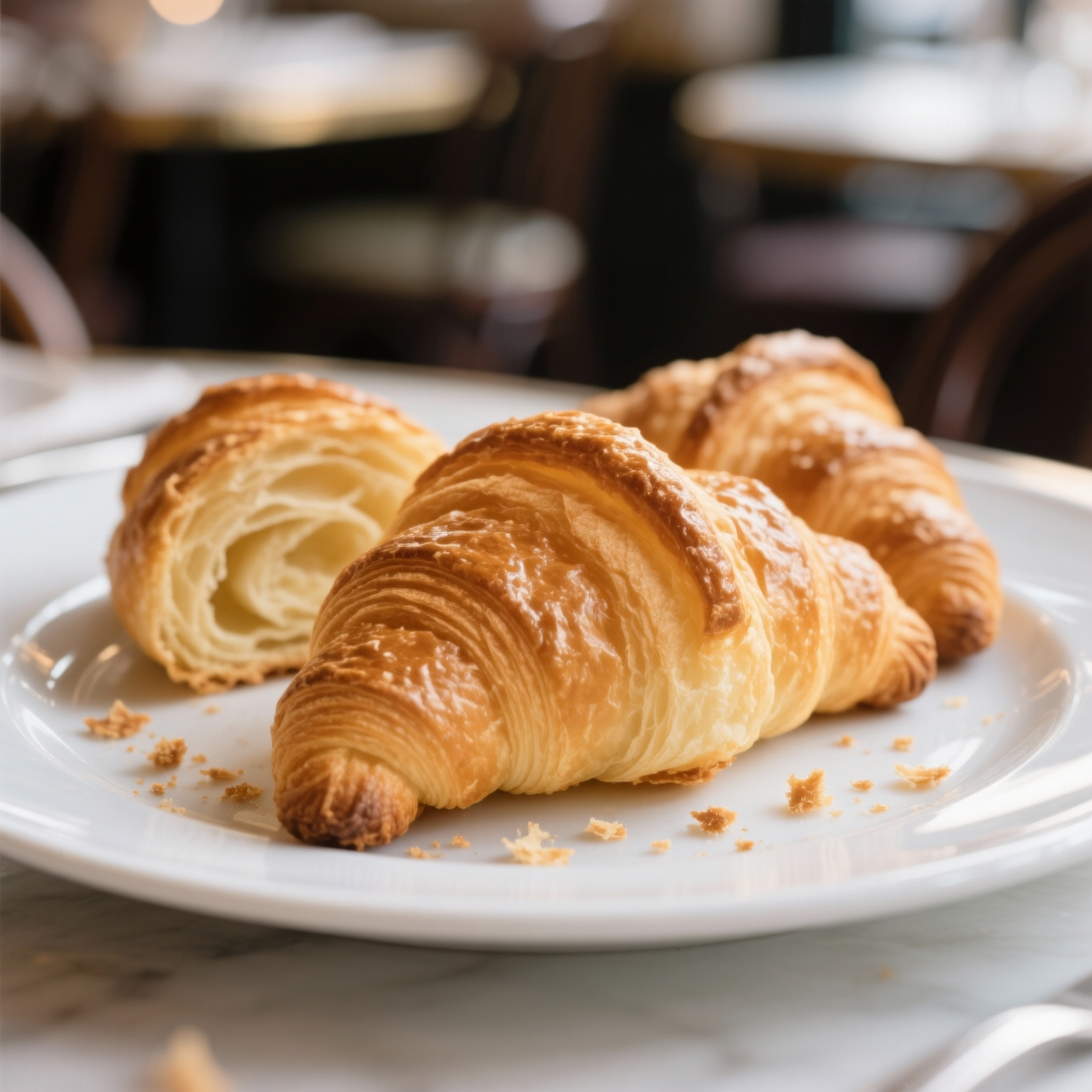
Croissants
I still remember the first time I truly understood why a croissant cannot be rushed. It begins in the quiet bakeries of Paris, where Austrian kipferl dough met French butter and evolved into a laminated masterpiece. Today, you can grab a pack of four at the supermarket for nearly five pounds, but they are merely sweetened, aerated bread substitutes. They rely on hydrogenated fats, chemical leaveners, and preservatives that leave you with a waxy, one-dimensional bite that stales by noon. When I make these from scratch, I am trading that convenience for something profoundly alive: pure cultured butter, real flour, and the patience of cold fermentation. The magic lies entirely in keeping the butter cold while rolling and folding the dough into hundreds of delicate, alternating strata. The most common pitfall is letting the butter soften too much during lamination, which causes it to smear into the dough rather than create distinct pockets of steam. Overworking the gluten or baking in a cool oven will also collapse the lift, leaving you with dense, heavy pastries instead of the shattering, honeycombed interior we crave. My approach strips away every industrial shortcut. You will work with real ingredients, resting the dough thoroughly between turns, and then embrace the batch-hero method that makes weekend mornings effortless. Once shaped, the unbaked pastries can be frozen solid and transferred straight to the oven whenever you desire that bakery-fresh aroma, ensuring you never again settle for the pale, preservative-laden imposters lining the supermarket shelves.
Nutrition
| Per serving | Calories | Protein | Carbs | Fat | Sat fat | Fibre | Sugar | Sodium |
|---|---|---|---|---|---|---|---|---|
| beginner | 485kcal | 11g | 58g | 23g | 14g | 2g | 8g | 340mg |
| intermediate | 345kcal | 6g | 31g | 21g | 12g | 1g | 4g | 290mg |
| expert | 315kcal | 7g | 28g | 19g | 11g | 1g | 4g | 155mg |
Per serving · Ava-estimated — a guide, not a clinical figure.
- 500 gbread flour— High-protein flour recommended for strong gluten development
- 280 gunsalted butter— Divided: 40 g for initial dough, 240 g cold block for lamination
- 300 mlwhole milk— Warm to 35°C before activating yeast
- 60 ggranulated sugar— Feeds yeast and promotes golden crust formation
- 10 gfine sea salt— Strengthens gluten network and balances sweetness
- 7 ginstant yeast— Can be replaced with active dry yeast if bloomed in warm milk first
This beginner-friendly approach strips away the intimidation of traditional lamination while keeping every ingredient strictly from scratch. Unlike the £3.50 supermarket packs that rely on hydrogenated fats, preservatives, and stale-tasting frozen dough, your homemade croissants deliver genuine buttery layers, a delicate honeycomb crumb, and a clean, rich finish. We simplify the process by using a single, forgiving quick-fold method instead of six precise turns, and we skip the thermometer in favor of reliable tactile cues. The key to success here is temperature control: keep your butter block and dough equally cool to prevent melting, but pliable enough to roll without cracking. Watch for clean edges during shaping and resist the urge to rush the final proof; the dough should wobble slightly when the pan is nudged. By embracing a relaxed, hands-on rhythm and trusting visual signs over rigid timers, you will confidently achieve bakery-quality results on your very first attempt, with shaped dough that freezes beautifully for future mornings.
Equipment
- Rolling pin— wood or marble both work
- Baking sheet— line with parchment paper
- Bench scraper(optional)— keeps dough from sticking
- Pastry brush— silicone is easiest to clean
Method
- 1
Whisk the flour, sugar, salt, and instant yeast together in a large bowl before pouring in the cold milk and melted butter.
Dough will look rough initially.
mixing~ 2 min - 2
Turn the mixture onto a clean counter and knead vigorously until the surface becomes completely smooth.
Stop when it springs back lightly.
kneading~ 5 min - 3
Flatten the dough into a rectangle, wrap it tightly, and rest it in the refrigerator until thoroughly chilled.
Firm dough prevents tearing later.
resting~ 3 min - 4
Place the cold butter between two sheets of parchment and roll it into an even square.
Keep butter cold but pliable.
butter blocking~ 3 minTricky bit - 5
Lay the butter onto one half of the dough, fold the other half over, and firmly pinch the seams shut.
Trapped air creates flaky layers.
encasing~ 2 minTricky bit - 6
Roll the sealed parcel lengthwise and execute two simple letter folds with brief chilling intervals between them.
Dust lightly to avoid sticking.
laminating~ 6 minTricky bit - 7
Slice the final rectangle into eight even triangles and roll each piece tightly from the wide base toward the pointed tip.
Tension ensures proper curling.
shaping~ 5 min - 8
Arrange the rolls on a lined tray and let them rest at room temperature until noticeably puffed and jiggly.
Warm spot speeds this up.
proofing~ 2 min - 9
Brush the pastries lightly with beaten egg and bake until the layers are visibly separated and deeply golden.
Rotate tray halfway through.
baking~ 20 min
Cooking from frozen
Thaw at room temperature, then warm at 180°C for 5 to 8 minutes until crisp.
Storage times are a guide — always use your judgement and store food safely.