
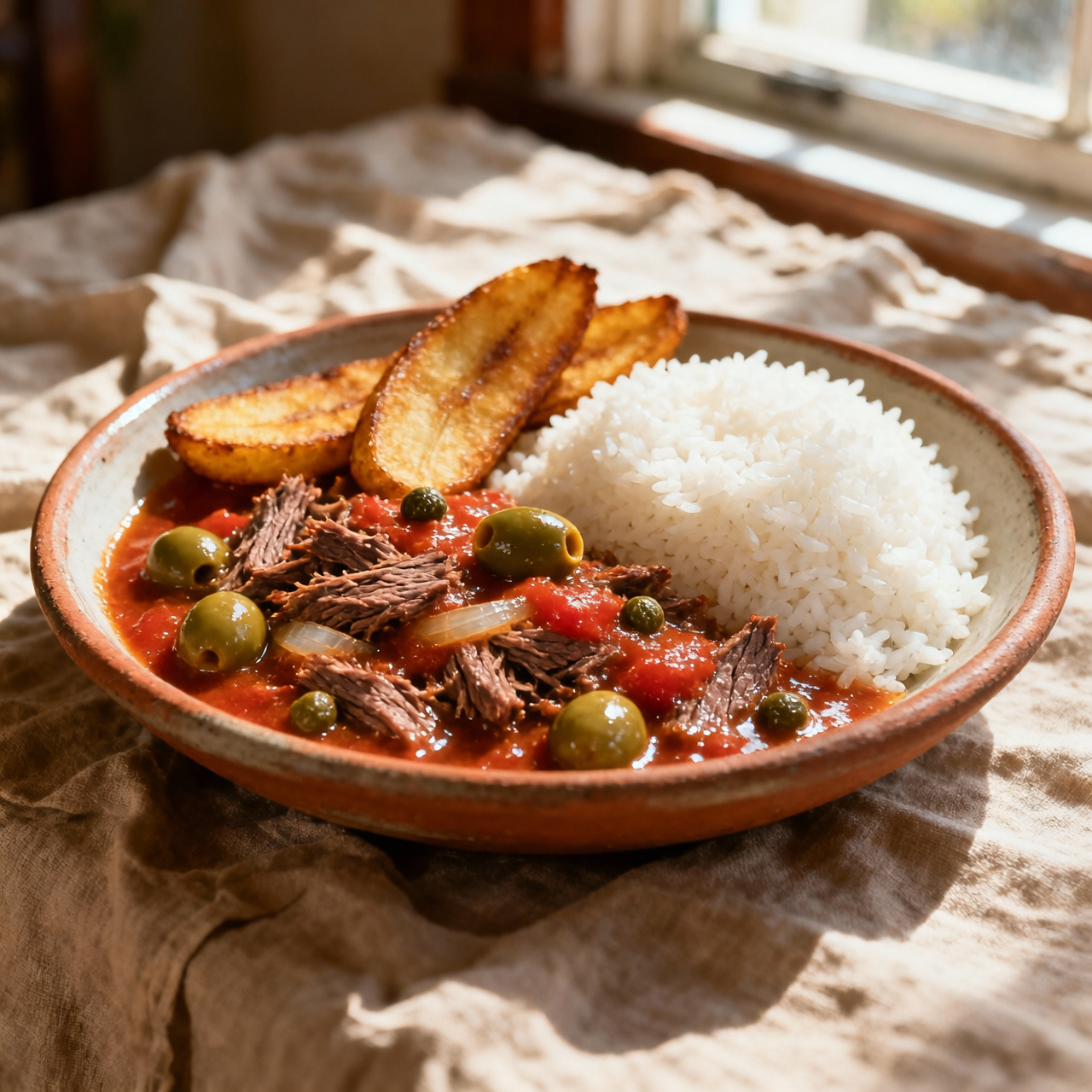
Cuban Ropa Vieja
When I first learned to make Cuban ropa vieja in my grandmother’s cramped kitchen, I didn’t just learn a recipe—I inherited a philosophy. The name translates to 'old clothes,' a poetic nod to the way slow-cooked flank steak frays into tender, thread-like strands that mimic a beggar’s patched garments. Its roots stretch back to the Canary Islands, carried to Cuba by Spanish settlers who adapted it with local tomatoes, bell peppers, and the island’s signature sofrito. What makes this dish matter to me, and to generations of Cuban cooks, is its profound celebration of resourcefulness. It transforms a tough, inexpensive cut of beef into something deeply luxurious through patience alone. I’ve seen it anchor Sunday tables, fuel neighborhood celebrations, and bridge distances when family is scattered across the globe. Yet, I’ve also watched countless home cooks stumble over its deceptively simple steps. The most common pitfall is impatience. Rushing the braise yields chewy, unyielding meat. Skipping the slow caramelization of onions and peppers leaves the sauce flat and one-dimensional. Many also choose overly lean cuts, forgetting that connective tissue is what melts into silk during those quiet hours on the stove. And finally, balancing the bright acidity of tomatoes and white wine requires a gentle hand; too much, and the dish turns sharp, too little, and it lacks the vibrant backbone that defines true Caribbean comfort food. Mastering it means surrendering to the clock.
Nutrition
| Per serving | Calories | Protein | Carbs | Fat | Sat fat | Fibre | Sugar | Sodium |
|---|---|---|---|---|---|---|---|---|
| beginner | 620kcal | 58g | 18g | 28g | 9g | 5g | 8g | 1450mg |
| intermediate | 620kcal | 58g | 18g | 28g | 9g | 5g | 8g | 1450mg |
| expert | 620kcal | 58g | 18g | 28g | 9g | 5g | 8g | 1450mg |
Per serving · Ava-estimated — a guide, not a clinical figure.
- 900 gflank steak— trimmed of excess fat
- 200 gyellow onion— thinly sliced
- 150 ggreen bell pepper— cored and thinly sliced
- 150 gred bell pepper— cored and thinly sliced
- 15 ggarlic clove— minced
- 60 gtomato paste— unsweetened
- 400 gcrushed tomato— San Marzano preferred
- 120 mldry white wine— dry and crisp
- 240 mlbeef broth— low sodium
- 5 gground cumin— freshly ground preferred
- 2 gdried oregano— Cuban or Mexican variety
- 2 gbay leaf— whole, dried
- 50 ggreen olive— pitted and brined
- 15 gcaper— rinsed
- 30 mlextra virgin olive oil— for sautéing
- 10 gkosher salt— adjust to taste
- 2 gblack pepper— freshly cracked
- 30 mlfresh lime juice— strained
This version is designed for your first confident attempt at Cuban Ropa Vieja, removing technical friction while preserving the dish’s core identity. Instead of building a sofrito from scratch, you will rely on straightforward assembly and a forgiving long braise that guarantees tender results without constant attention. The primary shift here is in your approach to timing: rather than watching for precise color changes or reducing liquids to exact consistencies, you will focus entirely on the structural integrity of the beef. Your goal is to reach a point where the meat yields to a gentle fork pull without crumbling into mush. I recommend using a heavy Dutch oven or a reliable slow cooker, as consistent low heat is your greatest ally. Watch closely during the final reduction stage, as beginners often rush the finishing step, leaving the sauce too thin to cling properly. If you choose a pre-mixed tomato base or jarred seasoning blend, remember that commercial products vary widely in salt and thickener content, so always adjust your final seasoning after the braise. Keep your workspace tidy, measure everything before heating the pan, and trust the process. The dish will teach you how patience translates to texture.
Equipment
- heavy-bottomed pot— Dutch oven preferred for even heat
- digital thermometer(optional)— helps monitor liquid temperature
- two forks— for shredding meat
Method
- 1
Season the flank steak generously with kosher salt and black pepper on all sides.
Pat dry first for better browning.
seasoning~ 1 min - 2
Heat olive oil in a heavy-bottomed pan over medium-high heat and sear the steak until browned on both sides.
Do not move it until it releases naturally.
searing~ 3 minTricky bit - 3
Transfer the steak to a large pot, then add all remaining ingredients except the lime juice and capers.
The liquid should barely cover the meat.
braising~ 2 min - 4
Cover tightly and cook on low until the beef pulls apart easily with two forks.
Check at the two-hour mark to prevent overcooking.
slow cooking~ 150 min - 5
Remove the meat, shred it using two forks, and return it to the pot with the lime juice and capers to warm through.
Taste the sauce before adding more salt.
shredding~ 5 min