
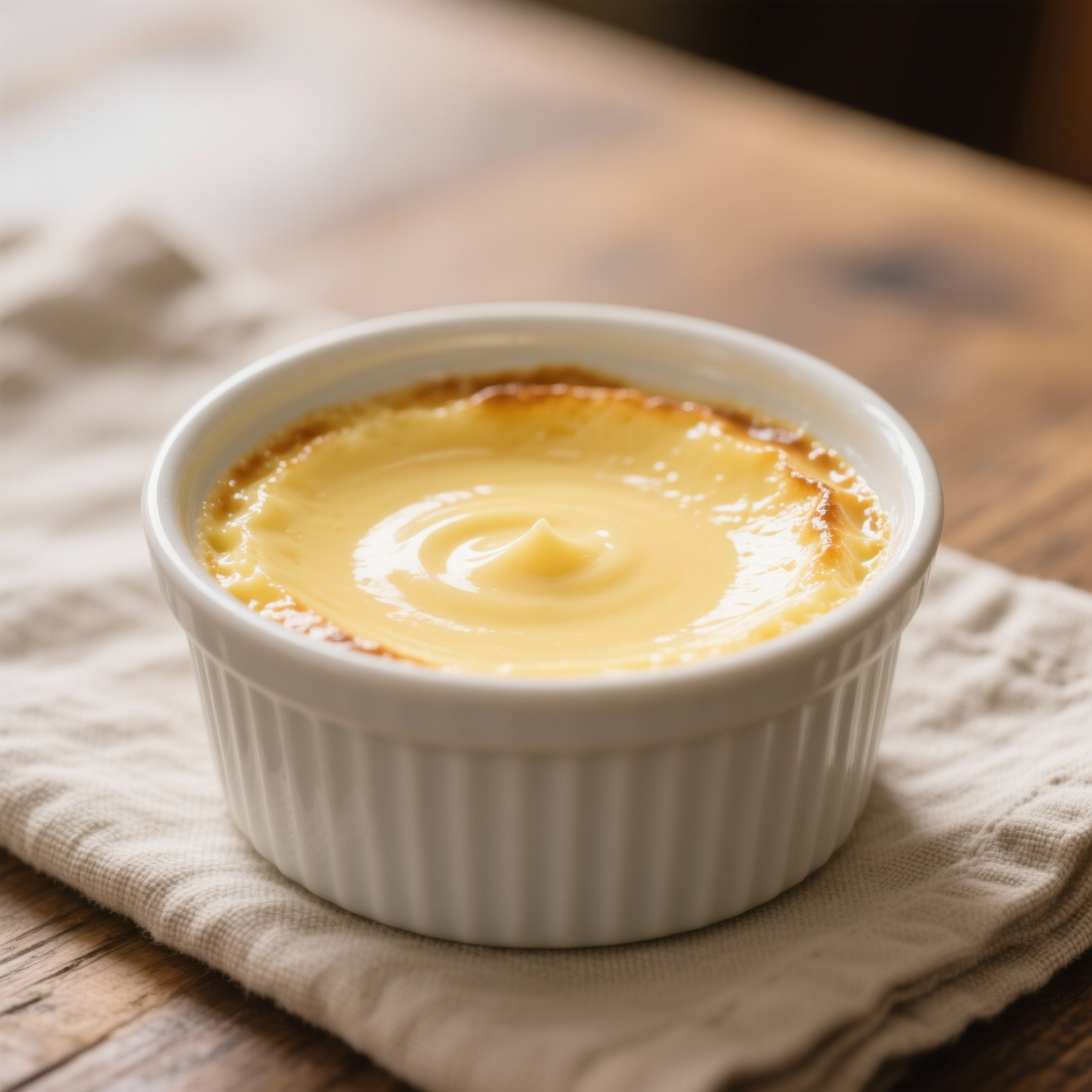
Custard
When I think of British comfort, my mind immediately drifts to a steaming jug of real, egg-based custard poured generously over a slice of sticky toffee pudding or a warm apple crumble. Far too often, modern cooks reach for that bright yellow powder in a tin, but I implore you to look past the convenience of the packet. True custard, rooted in the French crème anglaise but adopted and adapted into the very soul of British pudding culture, is a revelation of texture and flavor that no artificial mix can replicate. It matters because it transforms a simple dessert into an occasion, offering a rich, velvety mouthfeel and a delicate vanilla essence that speaks of patience and care. The most common pitfall I see, and one that terrifies many home cooks, is the dreaded curdle. Because custard relies on the gentle coagulation of egg yolks, applying too much heat or rushing the process will instantly scramble your eggs, leaving you with a lumpy, broken mess rather than a silky sauce. The secret lies in low, gentle heat and constant, vigilant stirring. You must never let the mixture boil. If you feel it thickening too quickly or see the first wisp of steam, simply lift the pan off the heat and keep stirring. It is a labor of love, yes, but the reward of pouring a flawless, golden, homemade custard over your favorite bake is an experience that will forever ruin the powdered stuff for you.
Nutrition
| Per serving | Calories | Protein | Carbs | Fat | Sat fat | Fibre | Sugar | Sodium |
|---|---|---|---|---|---|---|---|---|
| beginner | 380kcal | 8g | 22g | 32g | 19g | 0g | 19g | 75mg |
| intermediate | 422kcal | 8g | 19g | 32g | 19g | 0g | 19g | 70mg |
| expert | 480kcal | 9g | 32g | 38g | 21g | 0g | 31g | 65mg |
Per serving · Ava-estimated — a guide, not a clinical figure.
- 300 mlwhole milk
- 3 largeegg yolk— lightly beaten
- 25 gcaster sugar
- 1 tspvanilla extract
This beginner-friendly approach to classic British custard proves that making real egg custard from scratch is far easier than you might think, and infinitely better than the powdered tin. The secret to a confident first attempt lies in two crucial shortcuts: a pinch of cornflour to stabilize the mixture and a digital thermometer to take the guesswork out of the heat. We hand-hold you through the tempering process, ensuring your egg yolks gently warm up without scrambling into sweet scrambled eggs. By keeping the heat low and stirring constantly, you will achieve a luxuriously smooth, pourable sauce every time. Watch for the exact moment the custard coats the back of a spoon and reaches 82°C (180°F); this is the sweet spot where it thickens perfectly without curdling. If you do spot any tiny lumps, don't panic—simply pass the finished custard through a fine-mesh sieve for an instant, foolproof rescue. Serve it warm over sticky pudding, or chill it for a decadent dessert sauce.
Equipment
- Heavy-bottomed saucepan— Prevents hot spots and scorching
- Digital kitchen thermometer— Crucial for beginners to avoid scrambling the eggs
- Fine-mesh sieve— Your safety net for a perfectly smooth sauce
Method
- 1
Pour the milk and cream into a heavy-bottomed pan, add the vanilla extract, and heat over medium until steaming but not boiling.
Do not let it reach a rolling boil.
heating~ 5 min - 2
Whisk the egg yolks, caster sugar, and cornflour together in a heatproof bowl until pale and completely smooth.
Ensure there are no dry pockets of cornflour.
whisking~ 2 min - 3
Slowly pour the hot milk mixture into the egg mixture in a thin, steady stream while whisking constantly to gently temper the eggs.
Keep the whisk moving continuously to prevent the eggs from cooking.
tempering~ 2 minTricky bit - 4
Pour the combined mixture back into the pan and cook over low heat, stirring continuously with a wooden spoon, until it reaches 82°C (180°F) and coats the back of the spoon.
Draw a line through the custard on the spoon; if it holds the line, it is ready.
thickening~ 5 minTricky bit - 5
Immediately remove from the heat and pass the custard through a fine-mesh sieve into a clean jug to catch any accidental lumps.
Press the custard through gently with a spatula.
straining~ 1 min
Storage times are a guide — always use your judgement and store food safely.