
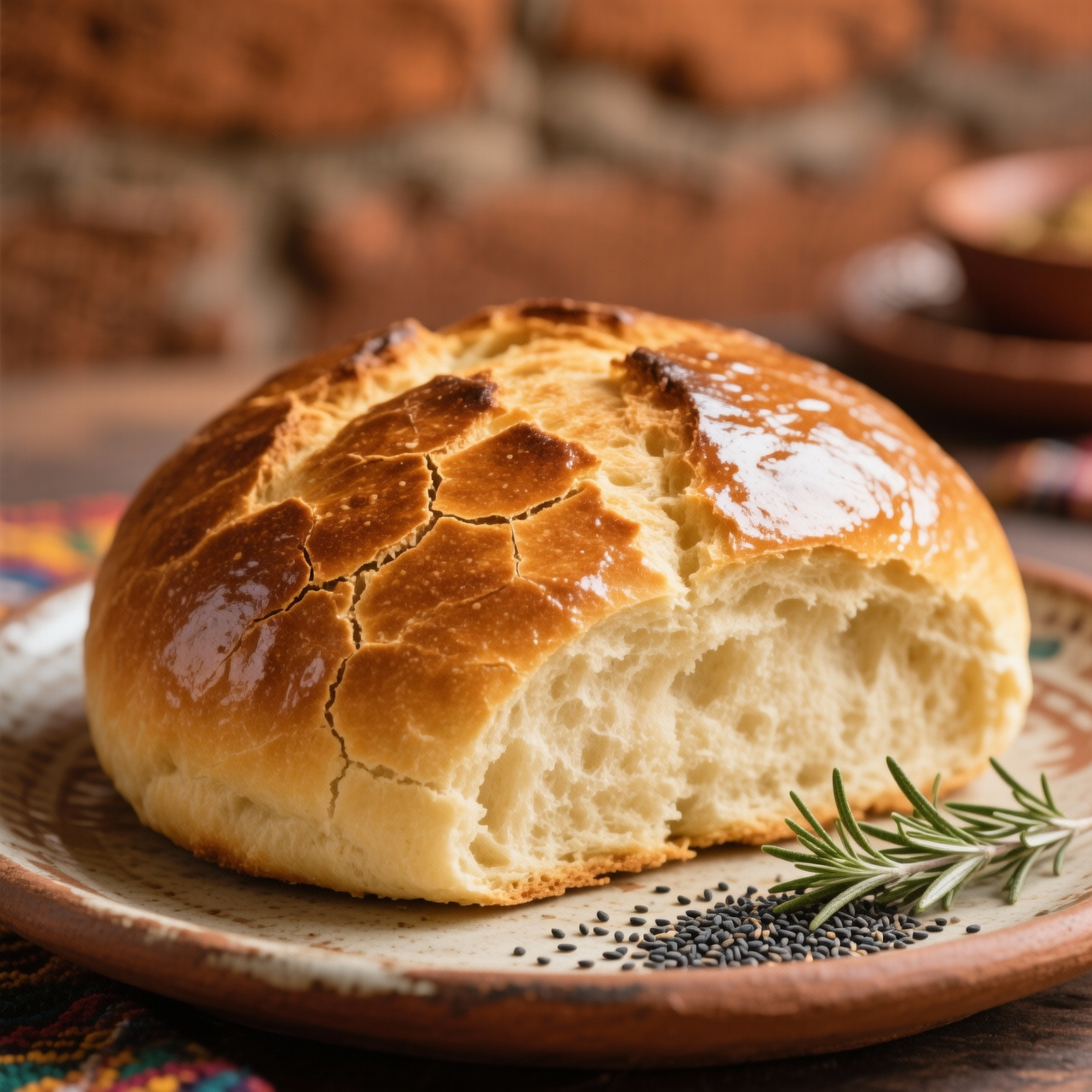
Dabo (Ethiopian celebration loaf)
I’ve always found it strange that we treat sweet, buttery celebration loaves like something you only get from a supermarket plastic sleeve. In Ethiopia, dabo is the quiet anchor of holiday mornings, a softly enriched bread that breaks easily into pieces to be shared alongside strong coffee and spiced honey. It isn’t meant to be perfectly uniform or aggressively sweetened; its charm lives in the tender crumb that yields when you pull it apart. When I first learned to make it from elders in Addis, the rhythm of kneading felt like a meditation, and I quickly understood why shortcuts betray it. Commercially produced holiday loaves cost anywhere from five to eight dollars, yet they arrive dense, overly sweet, and laced with preservatives that flatten the very warmth they claim to offer. They also lack that subtle cardamom and honey perfume that makes dabo feel like a proper celebration. The most common mistake I see when people attempt this at home is rushing the rise. Enriched doughs with butter and milk are heavy, and if you don’t give them enough time, you’ll end up with a tight, cake-like brick instead of a pillowy loaf. Another pitfall is overworking the dough after the butter is folded in, which develops too much gluten and makes the crumb chewy rather than delicate. Trust the slow fermentation, keep your butter properly softened but never melted, and resist the urge to add extra sugar; the natural sweetness of honey and the gentle warmth of the spice will carry you. This isn’t just bread, it’s a ritual.
Nutrition
| Per serving | Calories | Protein | Carbs | Fat | Sat fat | Fibre | Sugar | Sodium |
|---|---|---|---|---|---|---|---|---|
| beginner | 245kcal | 6g | 44g | 4g | 1g | 2g | 6g | 290mg |
| intermediate | 275kcal | 6g | 44g | 7g | 4g | 2g | 8g | 180mg |
| expert | 305kcal | 8g | 43g | 11g | 6g | 2g | 13g | 250mg |
Per serving · Ava-estimated — a guide, not a clinical figure.
- 500 gAll-purpose flour— Sifted before measuring
- 7 gActive dry yeast
- 50 gGranulated sugar
- 8 gFine sea salt
- 240 mlWhole milk— Warmed to 38°C
- 60 gUnsalted butter— Softened to room temperature
- 1 pieceLarge egg— For dough enrichment and glaze
This beginner-friendly version of Dabo strips away the intimidation factor of traditional holiday breads by relying on a straightforward, single-rise method and instant yeast, which skips the blooming step entirely. While supermarket pre-sliced loaves or generic flatbreads cost around $5 and often contain preservatives, stale textures, and artificial softeners, this from-scratch loaf delivers a tender crumb, subtle honey sweetness, and rich toasted flavor for under $2. Watch closely for the windowpane test during kneading to ensure proper gluten development without overworking the dough. The enriched dough will feel slightly tacky but should clear the bowl easily; resist the urge to add excess flour, which dries out the final loaf. A simple dough hook or firm hand-mixing works perfectly. Shape it gently into a tight cylinder to trap air, then let it proof in a warm, draft-free spot until doubled. Bake until the crust turns a deep golden brown and an internal thermometer reads 190°F. This forgiving approach guarantees a reliable, celebratory centerpiece that pairs beautifully with tea or spiced honey, proving that authentic holiday baking doesn’t require professional training or endless waiting periods.
Equipment
- 9x5-inch loaf pan— light-colored metal bakes more evenly
- Large mixing bowl— at least 3-quart capacity for rising room
- Instant-read thermometer(optional)— crucial for checking internal doneness without guessing
- Dough scraper(optional)— helps fold sticky dough cleanly
Method
- 1
Whisk together the flour, instant yeast, sugar, and salt in a large bowl, then gradually stir in warm water and melted butter until a shaggy dough forms.
Water should be comfortably warm to the touch, around 105°F.
mixing~ 3 min - 2
Turn the dough onto a lightly floured surface and knead firmly for six minutes until smooth, elastic, and slightly tacky.
Perform a quick windowpane test by stretching a small piece thin enough to see light through without tearing.
kneading~ 6 minTricky bit - 3
Place the kneaded dough back into a lightly greased bowl, cover with a damp kitchen towel, and let it rest in a warm spot until doubled in size.
Look for clear finger-indentations that slowly bounce back when pressed gently.
bulk fermentation~ 60 min - 4
Gently deflate the dough, press it into a tight rectangle, roll it up tightly from the short end, and tuck the seam underneath before placing it in a greased loaf pan.
Seal the ends firmly to prevent air pockets from forming during the final rise.
shaping~ 4 minTricky bit - 5
Cover the pan loosely and let it rise until the dough crowns just above the rim, then bake in a preheated oven until deeply golden.
Tap the bottom; it should sound hollow, and an instant-read thermometer should read 190°F.
baking~ 35 min
Cooking from frozen
Thaw completely at room temperature, then refresh in a 300°F oven for ten minutes.
Storage times are a guide — always use your judgement and store food safely.