
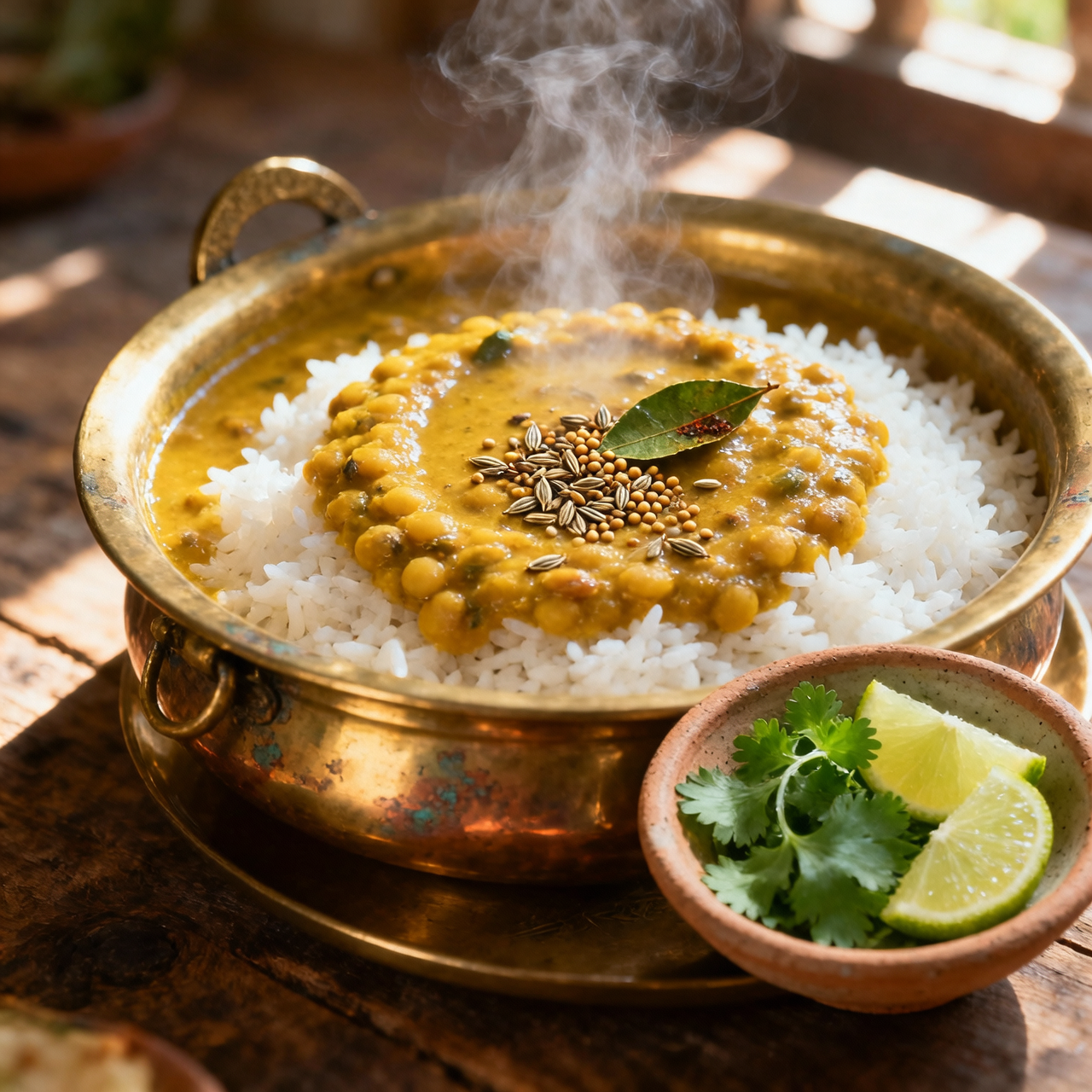
Dal Bhat
When I first learned to simmer lentils and steam rice in the quiet rhythm of a Nepalese kitchen, I quickly understood why dal bhat is called the heartbeat of the Himalayas. Born from necessity and refined by generations of mountain communities, this humble pairing of spiced lentils and fragrant rice is far more than sustenance; it is a daily ritual that bridges the high valleys of Nepal with the Tibetan plateau, where shared meals forge resilience against harsh climates and long treks. To me, dal bhat matters because it embodies quiet generosity—every bowl is meant to be passed, shared, and returned to until no one is left wanting. Yet, despite its apparent simplicity, it is astonishingly easy to misstep. The most common pitfall is rushing the tempering, or tadka, which requires patience to bloom mustard seeds, cumin, and fresh ginger in hot oil until their aromatics fully awaken. Many home cooks also neglect the proper rice-to-water ratio or skip the crucial resting period after cooking, resulting in clumped grains that fail to absorb the dal’s rich, earthy broth. Another frequent error is over-spicing the lentils, which drowns out the natural sweetness of the split peas or masoor. True dal bhat demands restraint, steady heat, and a willingness to listen to the pot. When you honor its slow, deliberate pace, you are not just cooking a meal; you are participating in a centuries-old dialogue between land, labor, and community.
Nutrition
| Per serving | Calories | Protein | Carbs | Fat | Sat fat | Fibre | Sugar | Sodium |
|---|---|---|---|---|---|---|---|---|
| beginner | 545kcal | 19g | 82g | 15g | 2g | 15g | 9g | 1950mg |
| intermediate | 545kcal | 19g | 82g | 15g | 2g | 15g | 9g | 1950mg |
| expert | 545kcal | 19g | 82g | 15g | 2g | 15g | 9g | 1950mg |
Per serving · Ava-estimated — a guide, not a clinical figure.
- 200 gyellow split pea— rinsed thoroughly
- 200 gbasmati rice— aged variety preferred
- 1000 mlvegetable broth— low sodium
- 200 gyellow onion— finely diced
- 4 unitgarlic clove— peeled
- 30 gfresh ginger— peeled and minced
- 250 gtomato— ripe and finely chopped
- 60 mlsunflower oil— or neutral cooking oil
- 5 gground turmeric— freshly ground preferred
- 5 gground cumin
- 3 gmustard seed— black or brown
- 2 unitdried red chili— whole
- 20 gfresh cilantro— leaves and tender stems
- 1 unitlime— juiced and zested
- 10 gsea salt
This version strips away the intimidation factor of traditional dal preparation by leaning on reliable, time-saving shortcuts. You will use a high-quality jarred Nepalese spice paste and pre-rinsed split peas to guarantee consistent results without the need for manual grinding or complex tempering sequences. The focus here is entirely on timing and heat management, so you can build confidence in your kitchen rhythm. Watch closely when combining the paste with hot oil, as it can seize if the temperature is too high; keep your stove at medium and stir constantly. The goal is a smooth, cohesive emulsion that coats the lentils evenly. Do not rush the simmer, even with the shortcuts. Let the pot bubble gently so the flavors have time to marry without scorching the bottom. Pay attention to the rice-to-liquid ratio, which is the most common failure point for newcomers. When the dal reaches a creamy consistency and the rice is tender but distinct, you have succeeded. This approach is designed to give you a deeply satisfying, restaurant-style result on a busy weeknight, proving that authentic comfort food does not require hours of prep to be worthy of the table.
Equipment
- Heavy-bottomed pan— non-stick is fine here
- Fine mesh sieve— for rinsing lentils
- Measuring cups— for precise liquid ratios
Method
- 1
Rinse the yellow split peas in a sieve until the water runs completely clear.
Cloudy water indicates excess starch.
rinsing~ 1 min - 2
Heat the sunflower oil in your pan over medium heat until it shimmers.
Do not let the oil smoke.
heating~ 1 min - 3
Stir in the jarred spice paste and cook while whisking until the oil separates.
Constant motion prevents scorching.
sautéing~ 2 minTricky bit - 4
Add the vegetable broth, rinsed peas, diced onion, and salt to the pan.
Liquid will hiss loudly upon contact.
combining~ 1 min - 5
Bring the mixture to a gentle boil, then reduce heat to low, cover, and simmer.
Stir every five minutes to prevent sticking.
simmering~ 25 min - 6
Fluff the cooked rice in a separate bowl and serve topped with the dal.
Garnish immediately with fresh cilantro.
plating~ 1 min