
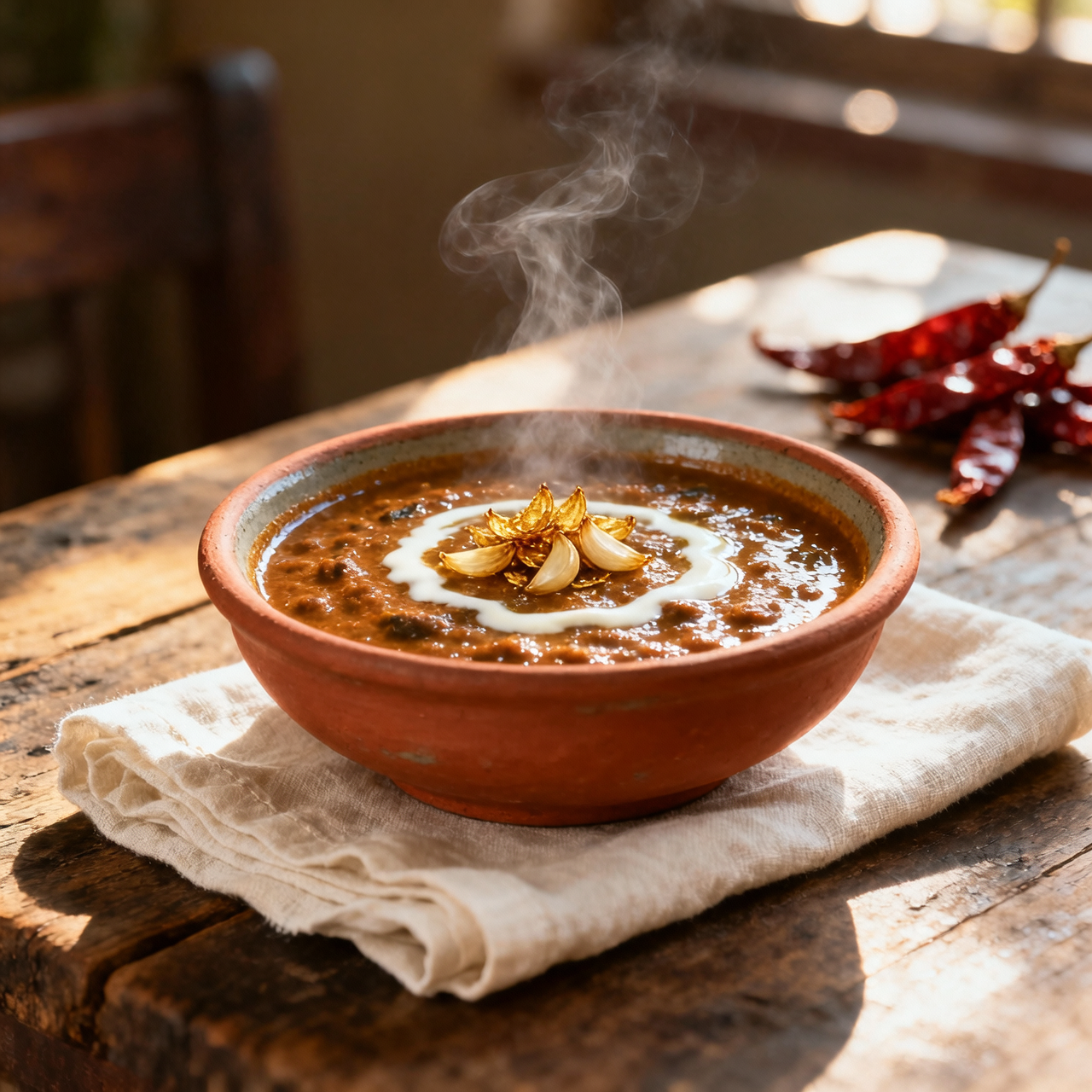
Dal Makhani
I’ve always believed that true Dal Makhani is less a recipe and more a meditation. Born in the bustling kitchens of Punjab, this dish emerged from generations of farmers and cooks who understood that time is the most vital ingredient. Traditionally, it relies on a slow, overnight simmer of whole black lentils and kidney beans, finished with a generous swirl of butter and cream that transforms humble legumes into something profoundly luxurious. To me, Dal Makhani represents the heart of North Indian hospitality—a dish that demands patience but rewards it with a velvety, deeply earthy richness that can anchor any meal. Yet, I’ve watched countless kitchens rush it, mistaking convenience for craft. The most common pitfall is skipping the slow simmer, which leaves the lentils stubbornly firm and the flavors disjointed. Others drown the dish in heavy cream to mask undercooked spices, creating a cloying heaviness rather than a balanced silkiness. Some even boil the beans in hard water or add acidic tomatoes too early, which toughens the skins and halts proper breakdown. When I make it, I let the dal breathe, tempering whole spices gently, allowing the starch to release naturally, and finishing with just enough dairy to coat the spoon without weighing it down. It’s a lesson in restraint and respect for tradition, where every slow hour builds a depth that no shortcut can replicate.
Nutrition
| Per serving | Calories | Protein | Carbs | Fat | Sat fat | Fibre | Sugar | Sodium |
|---|---|---|---|---|---|---|---|---|
| beginner | 545kcal | 19g | 53g | 31g | 19g | 16g | 6g | 1020mg |
| intermediate | 545kcal | 19g | 53g | 31g | 19g | 16g | 6g | 1020mg |
| expert | 545kcal | 19g | 53g | 31g | 19g | 16g | 6g | 1020mg |
Per serving · Ava-estimated — a guide, not a clinical figure.
- 200 gwhole black urad dal— skin-on, not split
- 50 gred kidney bean— dried, soaked
- 100 gunsalted butter— cold, high-fat preferred
- 100 mlheavy cream— 35% fat minimum
- 200 gyellow onion— finely diced
- 30 gfresh ginger— peeled
- 20 gfresh garlic clove— peeled
- 300 gripe tomato— chopped
- 10 gcumin seed— whole
- 5 gcoriander powder— freshly ground preferred
- 5 ggaram masala— aromatic blend
- 5 gKashmiri red chili powder— mild heat, vibrant color
- 2 gground turmeric
- 10 gfine sea salt— adjust to taste
- 1500 mlwater— for boiling and simmering
- 10 gfresh cilantro— chopped for garnish
- 5 gdried fenugreek leaf— crushed between palms
This version is engineered for your first successful attempt without sacrificing the dish’s comforting essence. I have streamlined the process by allowing you to use a pre-blended ginger-garlic-tomato base and a pressure cooker to bypass the traditional overnight soak and multi-hour simmer. The focus here is entirely on timing and temperature control. Watch your heat closely when folding in the butter and cream; they will separate instantly if the dal is boiling. Your goal is a steady, gentle bubble. Do not rush the final seasoning, as starch-heavy lentils require a moment to absorb salt. The shortcut pastes will deliver a reliable flavor floor, but I strongly advise you to bloom your cumin in butter before adding them, which instantly bridges the gap between convenience and authenticity. Keep the lid slightly ajar during the final simmer to prevent scorching, and stir with a flat wooden spatula to protect the delicate bean skins. You will know you have succeeded when the liquid turns opaque and clings to the back of a spoon. Trust the visual cues over the clock, and do not be afraid to adjust the salt at the very end, as the cream will mute it slightly.
Equipment
- pressure cooker— 4-quart minimum, ensure gasket is intact
- heavy-bottomed pot— non-stick is fine here
- wooden spatula— flat edge preferred
Method
- 1
Rinse the soaked lentils and beans until the water runs clear.
Drain thoroughly to prevent splattering.
rinsing~ 1 min - 2
Melt half the butter in a heavy pot over medium heat and bloom the cumin seeds.
Seeds should sizzle and darken slightly, not burn.
blooming~ 1 min - 3
Add the pre-blended aromatics and cook until the oil separates from the paste.
Stir constantly to prevent sticking.
sweating~ 3 min - 4
Pour in the rinsed legumes and water, then seal the pressure cooker.
Ensure the vent is fully open before heating.
pressure cooking~ 15 minTricky bit - 5
Stir in the remaining butter, cream, and spices once pressure releases.
Keep heat on low to avoid curdling.
tempering~ 2 minTricky bit