
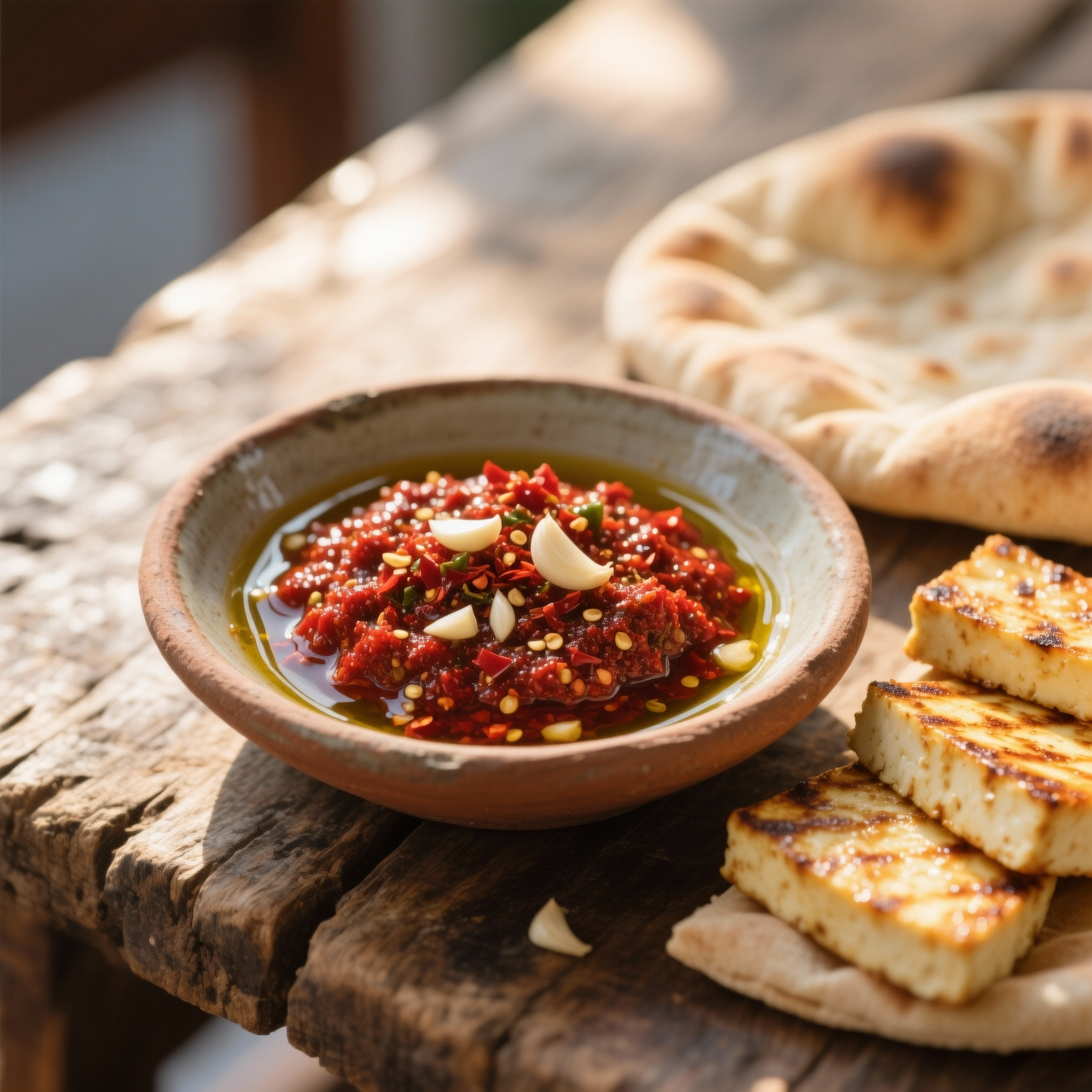
Daqqa (chilli garlic relish)
I have always considered daqqa to be the quiet heartbeat of a Levantine table. While hummus and tabbouleh command the spotlight, this vibrant chili-garlic relish operates in the background, cutting through rich fats and lifting grilled meats, roasted vegetables, and warm flatbreads with a sharp, uncompromising brightness. Its origins are deeply rooted in Lebanese village kitchens, where preserving the summer’s fiery harvest meant pounding fresh chilies, garlic, and citrus into a paste that would keep the pantry alive through winter. A great daqqa balances three elements: the raw, vegetal heat of the pepper, the pungent depth of crushed alliums, and the bright acidity that arrests oxidation. The texture should be rustic yet cohesive, never a watery slurry or a homogenized emulsion. The most common pitfall is rushing the process, which leads to bitter, oxidized garlic or a separated, greasy finish. Another frequent misstep is over-processing, which ruptures too many cell walls and releases harsh capsaicin that overwhelms rather than complements. When approached with patience, daqqa transforms into a living condiment, deepening in complexity as it rests. Whether you are using a modern food processor or a centuries-old stone mortar, the goal remains unchanged: to capture the untamed spirit of the harvest and bottle it for everyday brilliance.
Nutrition
| Per serving | Calories | Protein | Carbs | Fat | Sat fat | Fibre | Sugar | Sodium |
|---|---|---|---|---|---|---|---|---|
| beginner | 195kcal | 2g | 8g | 16g | 3g | 2g | 3g | 580mg |
| intermediate | 210kcal | 2g | 6g | 19g | 3g | 2g | 3g | 550mg |
| expert | 185kcal | 1g | 4g | 18g | 3g | 2g | 2g | 480mg |
Per serving · Ava-estimated — a guide, not a clinical figure.
- 150 gred chilli— fresh, firm, stems removed
- 60 ggarlic— fresh cloves, peeled
- 40 mllemon juice— freshly squeezed only
- 80 mlextra virgin olive oil— cold-pressed, high quality
- 5 gfine sea salt— non-iodised preferred
- 3 gground cumin(optional)— toasted preferred
This version prioritizes accessibility and confidence without sacrificing the core flavor profile. You will bypass the labor-intensive prep work by utilizing a high-quality jarred chili-garlic paste, which provides a reliable baseline of heat and allium depth. The focus shifts entirely to proper emulsification and acid balancing. Pay close attention to the consistency; jarred pastes often contain stabilizers or excess moisture, so you may need to adjust the oil ratio slightly to achieve a cohesive spread. Work in short pulses to avoid over-processing, which can turn the mixture into a bitter, separated soup. Taste after each addition of lemon juice, as commercial pastes vary widely in salt and acidity. The goal here is a quick, foolproof condiment that still respects the traditional balance of heat, fat, and citrus. Keep your workspace cool and use a silicone spatula to scrape the bowl frequently. Let the finished relish rest for at least thirty minutes before serving; this brief maturation allows the sharp edges to soften and the flavors to harmonize. It is an excellent entry point into Levantine condiment making.
Equipment
- Food processor— pulse setting preferred
- Mixing bowl— glass or ceramic
- Silicone spatula— flexible head for scraping
- Glass storage jar— with airtight lid
Method
- 1
Place the jarred paste into the food processor bowl.
Check for excess liquid and drain if necessary.
portioning~ 1 min - 2
Add the lemon juice and fine sea salt to the processor.
Acid should taste sharp but not overwhelming.
seasoning~ 0 min - 3
Pulse the mixture briefly until just combined.
Avoid continuous running to prevent overheating.
pulsing~ 0 minTricky bit - 4
Drizzle the olive oil through the feed tube while pulsing.
Stream slowly to encourage a stable blend.
emulsifying~ 1 minTricky bit - 5
Transfer the relish to a glass jar and let it rest at room temperature.
Thirty minutes allows flavors to meld.
resting~ 30 min
Cooking from frozen
Thaw overnight in the refrigerator, then stir vigorously to re-emulsify the separated oil before serving.
Storage times are a guide — always use your judgement and store food safely.