
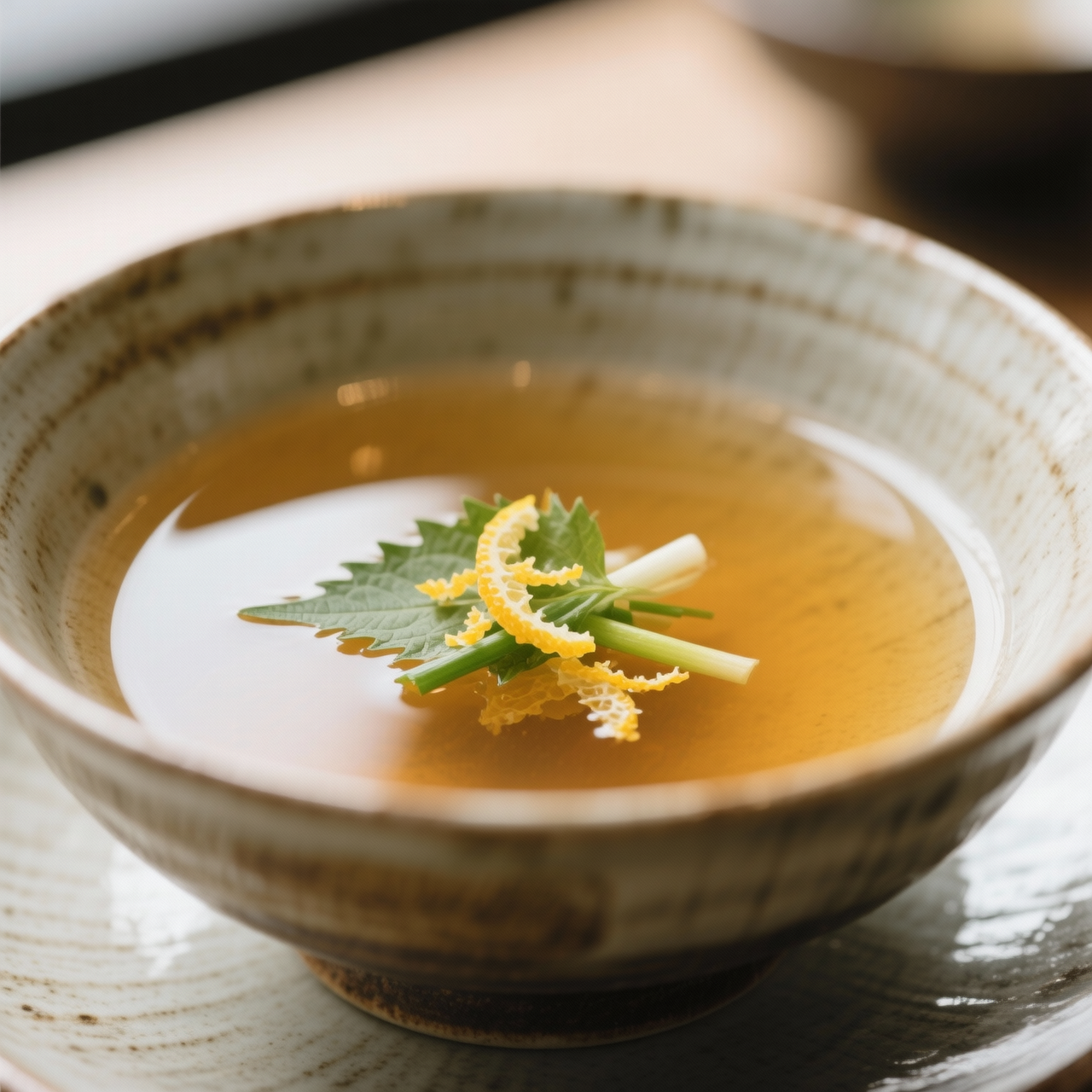
Dashi (Stock)
When I first learned to pull dashi, I realized it wasn’t just a stock—it was the quiet architecture of Japanese cooking. Born in coastal Japan, where the sea and mountains meet, this clear broth relies on two humble ingredients: kombu kelp and katsuobushi, the dried bonito flakes that give the liquid its signature umami resonance. There’s no garlic, no onion, no heavy roasting. Instead, it’s about coaxing out glutamates and inosinate through gentle patience. That’s why it matters: dashi is the invisible backbone that gives miso soup its soul, tempura batter its lightness, and simmered vegetables their quiet depth. Without it, a dish might taste good, but it won’t taste authentically Japanese. Yet so many cooks sabotage it before the first ladle hits the pan. The most common pitfall is rushing. Boiling kombu turns its delicate mucilage into a bitter, slippery sludge, while overheating bonito flakes clouds the liquid with astringency. You must treat it like a steep, not a boil. Another mistake is ignoring water quality; hard tap water masks the umami, so filtered or soft spring water is nonnegotiable. And please, don’t skip the resting step after removing the heat. Let the flakes sink on their own time, then strain through a fine mesh without pressing them down. That gentle restraint preserves the clarity and the clean, oceanic finish that makes dashi a true batch hero. Once you master the rhythm of temperature and timing, you’ll find yourself returning to it constantly, because it’s the kind of foundation that elevates everything else you build on top of it.
Nutrition
| Per serving | Calories | Protein | Carbs | Fat | Sat fat | Fibre | Sugar | Sodium |
|---|---|---|---|---|---|---|---|---|
| beginner | 10kcal | 1g | 1g | 0g | 0g | 0g | 1g | 350mg |
| intermediate | 15kcal | 2g | 1g | 0g | 0g | 0g | 0g | 160mg |
| expert | 15kcal | 2g | 1g | 0g | 0g | 0g | 0g | 320mg |
Per serving · Ava-estimated — a guide, not a clinical figure.
- 1000 mlwater— Filtered or spring water yields the cleanest taste
- 10 gkombu— Wipe gently with a dry cloth to remove surface dust, do not rinse
- 20 gbonito flake— Use thick, freshly shaved flakes for optimal infusion
This beginner-friendly dashi relies on jarred dashi concentrate or instant granules to deliver the same savory depth as traditional methods, without the need for sourcing kombu, toasting bonito flakes, or managing precise steeping temperatures. The shortcut eliminates straining and guesswork, making it ideal for quick weeknight soups, noodle broths, or simmering liquids. Your only real task is mastering the ratio and temperature: always whisk the concentrate into cool or lukewarm water first, then gently warm the mixture until it’s just steaming. Never let it reach a rolling boil, as aggressive heat will dull the delicate umami and introduce a harsh, metallic aftertaste. Stir thoroughly to ensure the base fully hydrates, then taste and adjust with a splash of water if it feels too concentrated. Because this version skips the raw ingredients, it’s remarkably consistent and stores beautifully. Pour cooled dashi into ice cube trays or small airtight containers and freeze for up to three months. When you’re ready to cook, simply drop a portion straight into your pan. With this streamlined approach, you’ll build confidence in Japanese stock-making while keeping your pantry flexible and your prep time minimal.
Equipment
- Medium saucepan— stainless steel or enamel works best for even heating
- Measuring spoons— essential for accurate concentrate-to-water ratios
Method
- 1
Combine cold water and jarred dashi concentrate in a medium saucepan.
Follow package directions for a standard 1-to-4 ratio to avoid over-concentration.
proportioning~ 1 min - 2
Place over medium-low heat and whisk gently until the concentrate fully dissolves.
Starting with cold water prevents clumping and ensures smooth integration.
dissolving~ 1 min - 3
Warm the liquid until it reaches a light steam, then immediately remove from the heat.
Aggressive boiling extracts harsh tannins and clouds the final stock.
tempering~ 3 minTricky bit - 4
Taste and adjust with a splash of water if the flavor feels too intense or salty.
The liquid should taste clean and savory, ready to absorb other ingredients.
balancing~ 1 min
Cooking from frozen
Thaw overnight in the refrigerator and gently warm over low heat without boiling to maintain its delicate clarity.
Storage times are a guide — always use your judgement and store food safely.