
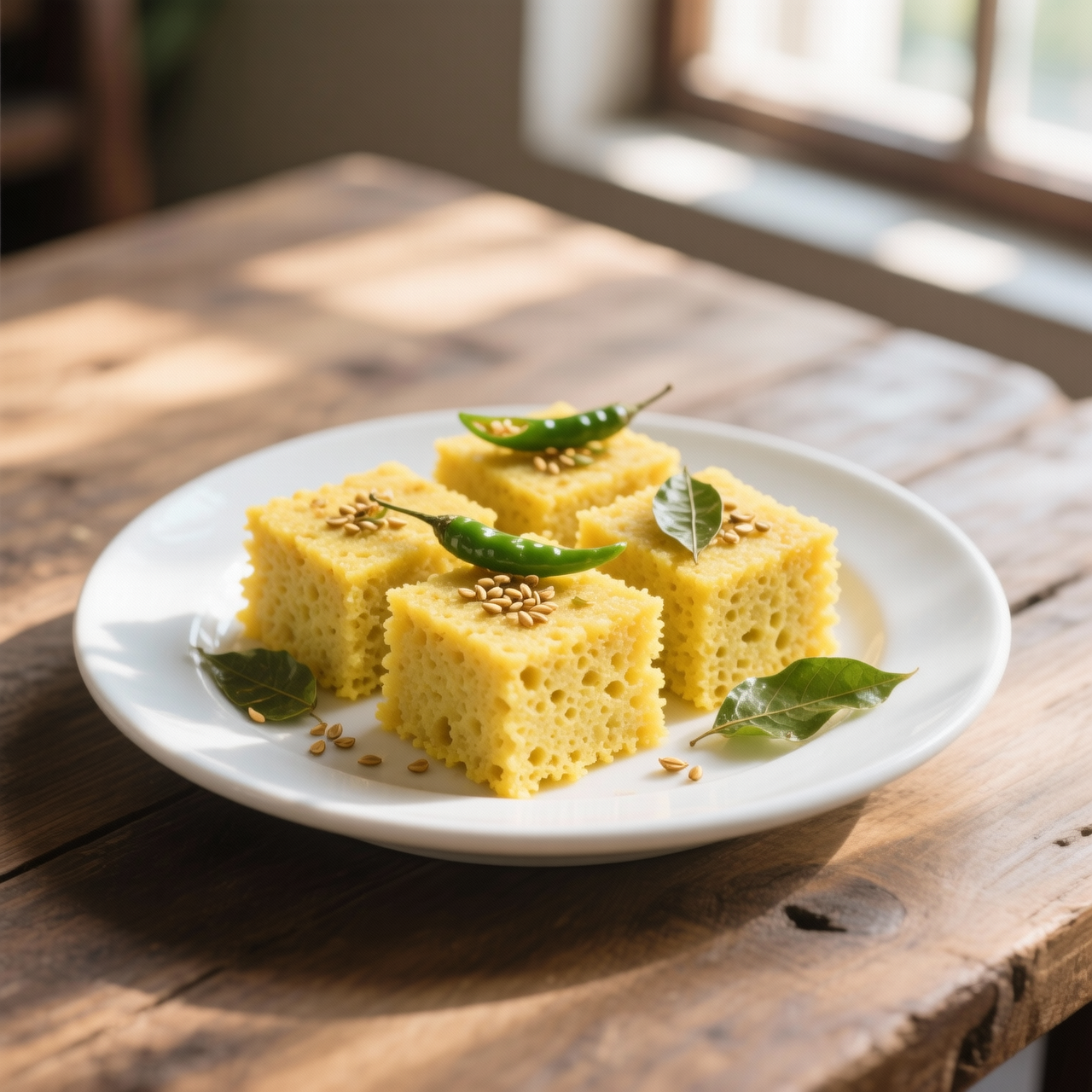
Dhokla
I’ve always been fascinated by how a few humble pantry staples can transform into something so profoundly celebratory. Dhokla, a steamed savory cake that hails from the sun-drenched plains of Gujarat, embodies exactly that alchemy. Historically rooted in Jain and Gujarati vegetarian traditions, it was born out of necessity and ingenuity—fermenting chickpea and rice flours to create a light, spongy texture that feels almost impossibly delicate. To me, this dish matters because it proves that vegetarian cooking doesn’t need to be heavy or complicated to leave a lasting impression. It’s a masterclass in patience and timing. Yet, despite its simplicity, dhokla is notoriously unforgiving. I’ve seen countless attempts fail because the batter was overmixed, destroying the precious air pockets, or because the fermentation was rushed in a kitchen that was simply too cold. Others pour the batter too thickly into the steaming pan, resulting in a dense, gummy brick rather than a cloud-like sponge. The tempering, too, requires a delicate hand; mustard seeds that burn or curry leaves that turn bitter can instantly overshadow the subtle tang of the fermented base. When I approach this recipe, I remind myself that dhokla isn’t just about following steps—it’s about listening to the batter, respecting the fermentation, and trusting the gentle heat of steam. It’s a quiet, everyday triumph that rewards mindfulness, and once you master it, you’ll never look at a simple chickpea the same way again.
Nutrition
| Per serving | Calories | Protein | Carbs | Fat | Sat fat | Fibre | Sugar | Sodium |
|---|---|---|---|---|---|---|---|---|
| beginner | 315kcal | 12g | 43g | 11g | 1g | 6g | 6g | 500mg |
| intermediate | 315kcal | 12g | 43g | 11g | 1g | 6g | 6g | 500mg |
| expert | 315kcal | 12g | 43g | 11g | 1g | 6g | 6g | 500mg |
Per serving · Ava-estimated — a guide, not a clinical figure.
- 200 gChickpea flour— finely sifted, ensure no lumps
- 50 gRice flour— fine grain for lightness
- 300 mlWater— room temperature
- 15 mlLemon juice— freshly squeezed
- 2 pieceGreen chili— finely chopped, seeds removed for mild heat
- 30 mlVegetable oil— neutral variety
- 3 gMustard seed— whole black seeds
- 8 pieceCurry leaf— fresh, not dried
- 15 gGranulated sugar
- 5 gBaking soda— aluminum-free
- 5 gSalt— fine sea salt
- 1 gTurmeric powder
This version prioritizes reliability and speed by embracing trusted shortcuts without sacrificing the dish’s essential character. You will use a pre-measured leavener and a simplified tempering sequence to bypass the guesswork of natural fermentation. The key to success here is maintaining a steady, medium-low steam throughout the cooking phase; violent boiling will condense too rapidly and waterlog the batter. Watch the surface closely—the moment it loses its glossy sheen and springs back when lightly pressed, it is ready. Do not rush the cooling period before cutting, as the crumb needs time to set into clean, uniform squares. The tempering step is condensed into a single quick sizzle, ensuring the mustard seeds pop evenly without burning. Keep your mixing bowl completely dry before combining the dry flours, as even a trace of moisture can activate the leavener prematurely. By following these controlled cues, you will achieve a consistently light, spongy result on your very first attempt, building the foundational confidence required to explore deeper techniques later.
Equipment
- Steaming rack with lid— fits inside your largest pot
- Mixing bowl— stainless steel or glass
- Silicone spatula— heat resistant
Method
- 1
Combine the chickpea flour, rice flour, baking soda, salt, and turmeric in a large dry mixing bowl.
Ensure the bowl is completely moisture-free.
dry whisking~ 1 min - 2
Whisk in the room-temperature water and lemon juice until a smooth, thick batter forms.
Lumps will collapse during steaming, so sieve if necessary.
hydration~ 3 min - 3
Pour the batter into a greased shallow dish and place it on the preheated steaming rack.
Water level must sit below the dish.
steaming~ 20 minTricky bit - 4
Cover the pot tightly and steam over medium heat until a toothpick inserted into the center comes out clean.
Do not lift the lid during the first fifteen minutes.
setting~ 15 min - 5
Remove the dish and immediately brush the surface with a mixture of warm water and granulated sugar.
This creates the signature glossy finish.
glazing~ 1 min - 6
Heat the oil in a small pan, add the mustard seeds, curry leaves, and green chilies, then pour evenly over the cake.
Listen for a rapid, consistent popping sound.
tempering~ 2 min