
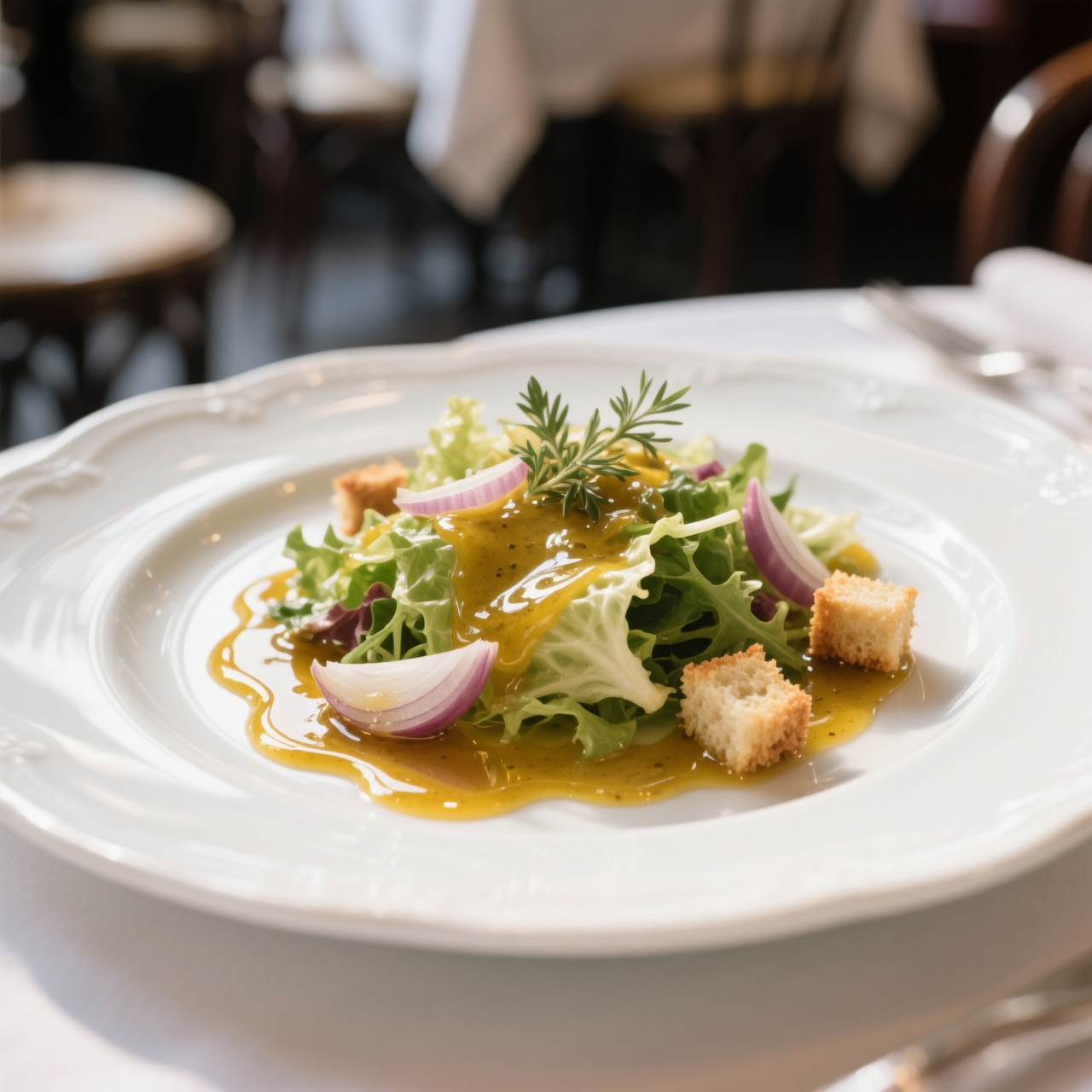
Dijon vinaigrette
I’ve always believed that a great salad lives or dies by the dressing, and nowhere is that truer than with a proper Dijon vinaigrette. Born in the kitchens of France, where mustard from Burgundy has been prized since the Middle Ages, this emulsion transformed from a simple pantry staple into the backbone of everyday French dining. I remember my first attempt at making it; I just dumped oil and vinegar into a jar, shook it until my arm ached, and ended up with a greasy, separated mess. That’s the most common pitfall I see home cooks fall into: ignoring the emulsion process entirely. The magic happens when you whisk the mustard, a pinch of salt, and a splash of acid together until smooth before slowly streaming in the oil. That slow, deliberate addition allows the mustard’s natural emulsifiers to bind everything into a cohesive sauce that actually clings to your greens instead of pooling at the bottom of the bowl. It matters because it teaches you the fundamental chemistry of fat and water, a lesson that applies to every sauce you’ll ever make. I’ve spent years tweaking ratios for different vinegars and oils, but the truth is, simplicity wins. You don’t need expensive ingredients, just patience and a steady hand. Once you master that slow drizzle and the rhythm of the whisk, you’ll never reach for a bottled dressing again. It’s vibrant, sharp, and deeply comforting, a small ritual that turns a handful of leaves into something worth lingering over.
Nutrition
| Per serving | Calories | Protein | Carbs | Fat | Sat fat | Fibre | Sugar | Sodium |
|---|---|---|---|---|---|---|---|---|
| beginner | 120kcal | 0g | 1g | 13g | 2g | 0g | 0g | 180mg |
| intermediate | 95kcal | 0g | 2g | 11g | 1g | 0g | 1g | 180mg |
| expert | 295kcal | 1g | 2g | 31g | 4g | 0g | 1g | 275mg |
Per serving · Ava-estimated — a guide, not a clinical figure.
- 120 mlextra virgin olive oil— Room temperature oil emulsifies more easily
- 40 mlred wine vinegar— Room temperature for optimal blending
- 15 gdijon mustard— Traditional French style provides the best emulsion base
- 3 gkosher salt
- 1 gblack pepper
This beginner-friendly approach strips away the intimidation of traditional whisking by using a simple mason jar as your primary tool. Instead of slowly drizzling oil while maintaining a furious whisk, you will combine store-bought Dijon mustard, vinegar, and seasonings directly in the jar, pour in your oil, seal the lid tightly, and shake vigorously until the dressing thickens and turns opaque. This shortcut guarantees a stable emulsion without the risk of breaking, making it perfect for everyday salads. Watch for two key details during prep: first, ensure all your ingredients are at room temperature before combining, as cold liquids resist blending and can lead to a greasy, separated result. Second, always taste the final mixture directly on a piece of lettuce rather than a spoon, as the dressing will taste sharper and saltier in isolation. If the consistency feels too thick for your preference, simply whisk in a teaspoon of warm water to loosen it without diluting the flavor. With this hands-off method, you will achieve a perfectly balanced, restaurant-quality vinaigrette in under five minutes, building the foundational palate awareness needed for more complex sauces later.
Equipment
- Glass jar with tight-fitting lid— A standard 16oz mason jar works perfectly
Method
- 1
Measure out the Dijon mustard, vinegar, salt, and black pepper directly into the empty glass jar.
Room temperature ingredients blend much faster than cold ones.
mise en place~ 1 min - 2
Pour the olive oil into the jar and immediately screw the lid on as tightly as possible.
A secure seal prevents messy leaks during the vigorous shaking step.
emulsifying~ 0 min - 3
Shake the sealed jar rapidly for thirty to forty seconds until the liquid turns pale and completely opaque.
Stop shaking once the mixture looks uniformly creamy and no longer separates at the edges.
agitation~ 1 minTricky bit - 4
Open the jar, taste a drop on a plain lettuce leaf, and adjust seasoning if needed.
Always taste on actual greens, as the dressing will taste sharper in isolation.
seasoning~ 1 min
Storage times are a guide — always use your judgement and store food safely.