
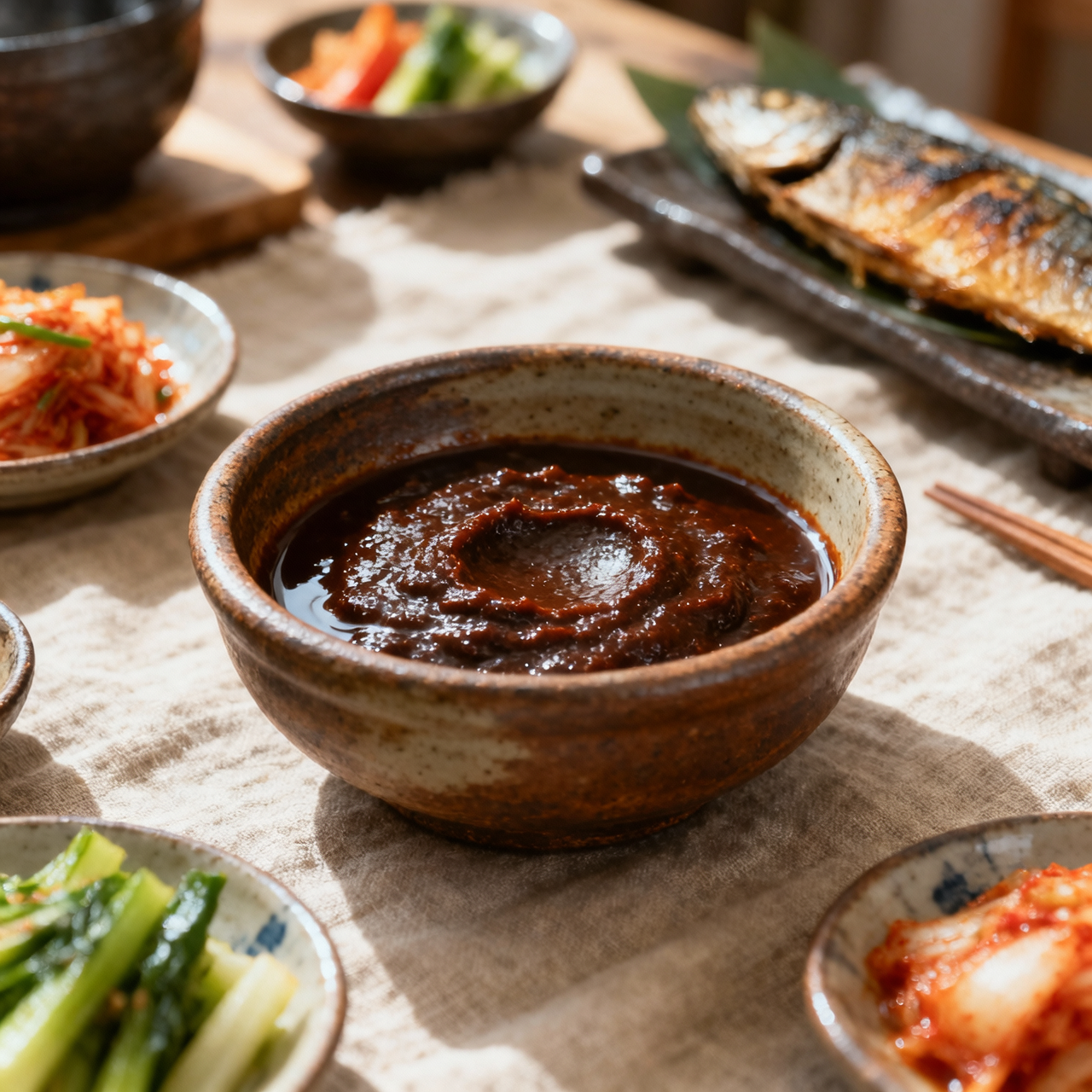
Doenjang (Soybean Paste)
Doenjang has been the quiet backbone of Korean kitchens for centuries, born from the same ancient brine that birthed ganjang. When I first watched my grandmother tend to her clay pots, I didn’t just see fermented soybeans; I saw time made edible. This thick, deeply savory paste is more than a condiment—it’s the foundational umami that transforms humble broths into healing stews and gives roasted vegetables their soulful depth. What matters most isn’t just the recipe itself, but the patience it demands. Modern cooks often rush the fermentation, expecting the complex, nutty richness of a traditional batch to appear overnight. But true doenjang requires months of quiet transformation, where microbes break down proteins into a tapestry of savory, slightly funky, and profoundly comforting notes. The most common pitfall I see is improper salt balance or inadequate aeration during the initial meju stage. Too little salt invites spoilage, while too much stifles the very cultures that give this paste its character. Another frequent mistake is sealing the container too tightly during active fermentation; the paste needs to breathe, yet it must also be protected from contaminants. I always remind myself that doenjang is a living thing. It will change with the seasons, deepen with age, and reward careful tending. When you approach it with respect rather than rigid timelines, you’ll find that this humble fermented base doesn’t just elevate a dish—it connects you to generations of Korean cooks who understood that the best flavors are never forced, only guided. Keep it cool, taste it often, and let the microbes do their quiet, miraculous work.
Nutrition
| Per serving | Calories | Protein | Carbs | Fat | Sat fat | Fibre | Sugar | Sodium |
|---|---|---|---|---|---|---|---|---|
| beginner | 65kcal | 6g | 5g | 2g | 0g | 2g | 3g | 920mg |
| intermediate | 115kcal | 10g | 11g | 5g | 1g | 3g | 2g | 950mg |
| expert | 88kcal | 7g | 8g | 3g | 0g | 4g | 2g | 1100mg |
Per serving · Ava-estimated — a guide, not a clinical figure.
- 1000 gsoybean— Choose high-quality, non-GMO dried yellow soybeans; inspect and remove any debris or damaged beans before use
- 2500 mlwater— Filtered or spring water is recommended to avoid chlorine interfering with fermentation
- 200 gcoarse sea salt— Use unrefined Korean coarse salt or natural sea salt without anti-caking agents
This beginner-friendly approach skips the traditional multi-year fermentation process by starting with a reliable, store-bought doenjang and transforming it into a rich, ready-to-use stew base. By gently simmering the paste with a splash of water, a touch of rice syrup, and finely minced garlic, you will quickly unlock deeper umami layers while maintaining that signature earthy depth. The key at this level is patience during the low-heat dissolve phase: avoid rushing with high temperatures, which can scorch the paste or destroy delicate aromatic compounds. As the mixture simmers, you will want to whisk continuously to prevent sticking, then gradually thin it with vegetable broth until it reaches a smooth, pourable consistency. Always taste before adding extra salt, since commercial pastes vary wildly in sodium levels. Once the desired texture is achieved, remove the pan from heat and let it cool completely at room temperature to preserve flavor stability. Transfer to clean, airtight jars and refrigerate immediately. This method guarantees a dependable, consistently savory foundation for stews and marinades, giving you full confidence without the long wait or specialized equipment required for traditional fermentation.
Equipment
- Medium saucepan— heavy-bottomed to prevent scorching
- Silicone whisk— flexible tines navigate pan corners easily
- Glass storage jars— airtight lids required for refrigeration
Method
- 1
Place the store-bought doenjang in a medium saucepan and slowly drizzle in cold water while whisking to prevent clumping.
Add water gradually; you can always thin it later.
hydrating~ 2 min - 2
Turn the heat to low and stir in minced garlic, rice syrup, and a splash of sesame oil until fully incorporated.
Keep the heat gentle to avoid browning or bittering the garlic.
blooming~ 3 minTricky bit - 3
Maintain a bare simmer for twenty minutes, stirring occasionally until the mixture slightly reduces and thickens.
Bubbles should barely break the surface to preserve the paste's natural character.
reducing~ 20 min - 4
Remove the pan from heat, taste for seasoning balance, and allow the base to cool completely before jarring.
Never seal hot fermented pastes; trapped steam causes spoilage.
tempering~ 15 min
Cooking from frozen
Thaw slowly in the refrigerator and stir well to reincorporate separated moisture before use.
Storage times are a guide — always use your judgement and store food safely.