
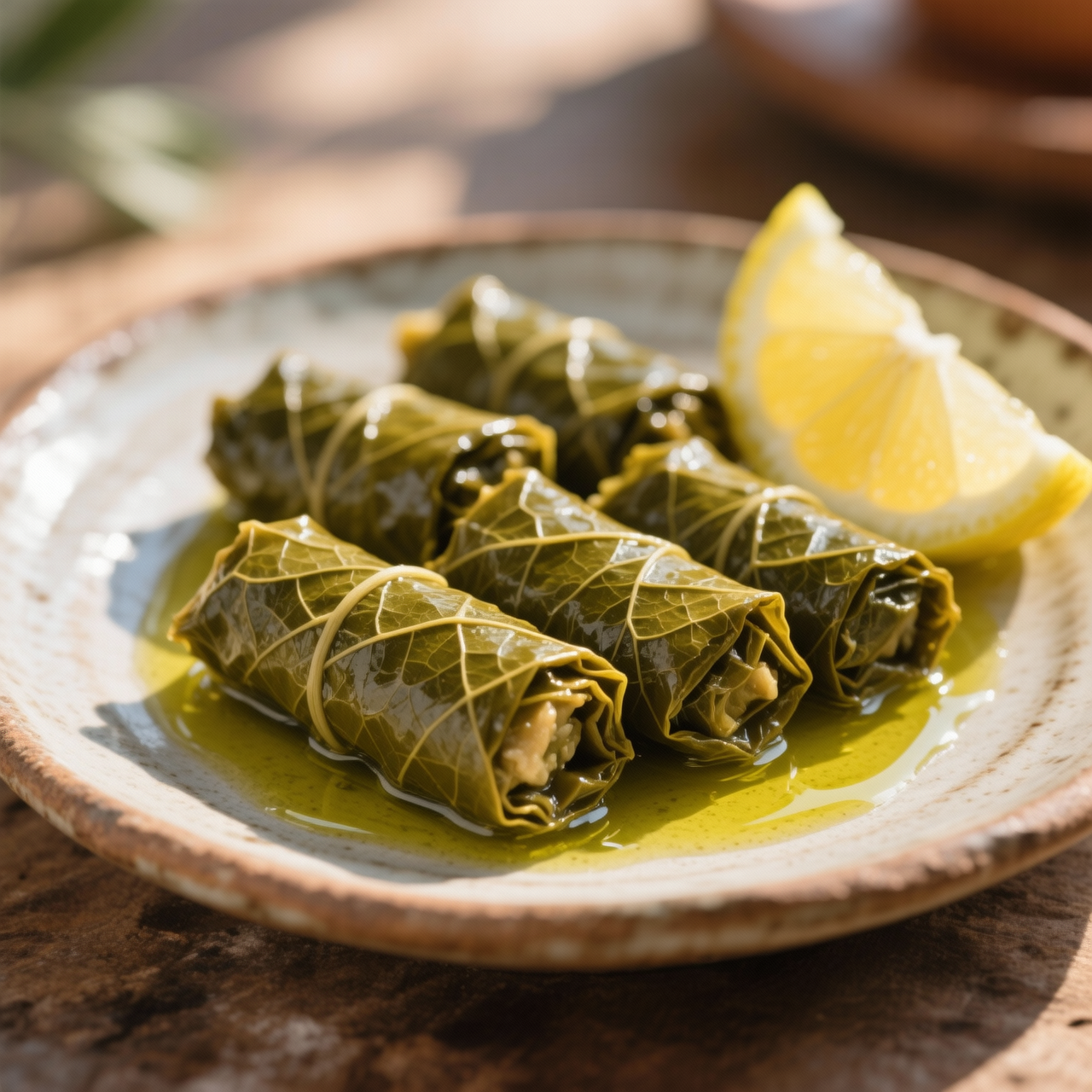
Dolmades (stuffed vine leaves)
I still remember the first time I tried to recreate the jarred dolmades my grandmother kept in the pantry. Those supermarket versions always sit in a cloudy, metallic-tasting brine, wrapped in tough, over-processed leaves that taste faintly of vinegar and tin. A single jar costs around four pounds, yet delivers a disappointing, mushy interior and an aggressively sour finish that completely masks the actual ingredients. Making them from scratch is a quiet rebellion against that industrial shortcut. In Greece, dolmades have always been a communal craft, born from the simple necessity of preserving summer harvests through the cooler months. The authentic version relies entirely on real, unprocessed staples: fragrant olive oil, freshly chopped dill and mint, plump long-grain rice, and a bright squeeze of lemon. The magic happens when you take your time rolling them snugly but not tightly, allowing the rice to swell and the leaves to soften naturally. The most common pitfall I see home cooks fall into is packing the filling too densely, which causes the leaves to split during the slow simmer. Another is rushing the cooking process; these need a gentle, steady bubble to coax the starch into a silky, cohesive texture that holds its shape without turning gummy. When you make a proper batch at home, you are not just saving money compared to those tinned impostors, you are reclaiming a dish that actually tastes of the earth it came from. They are endlessly forgiving once you master the basic fold, and because they are so sturdy, they actually improve after resting. I always make double, because sharing a platter with friends is where the true spirit of the dish lives.
Nutrition
| Per serving | Calories | Protein | Carbs | Fat | Sat fat | Fibre | Sugar | Sodium |
|---|---|---|---|---|---|---|---|---|
| beginner | 390kcal | 3g | 35g | 27g | 4g | 1g | 1g | 380mg |
| intermediate | 265kcal | 5g | 38g | 10g | 2g | 3g | 4g | 380mg |
| expert | 260kcal | 5g | 38g | 9g | 2g | 4g | 5g | 350mg |
Per serving · Ava-estimated — a guide, not a clinical figure.
- 40 leavesvine leaf— rinsed and drained if jarred, or blanched and shocked if fresh
- 200 gshort-grain rice— uncooked, rinsed until water runs clear
- 1 mediumyellow onion— finely diced
- 100 mlextra virgin olive oil— divided for sautéing and layering
- 25 gfresh dill— finely chopped
- 15 gfresh mint— finely chopped
- 2 wholelemon— zested and juiced separately
- 400 mlvegetable stock— low sodium, preferably homemade
- 8 gfine sea salt— adjust to taste
- 2 gblack pepper— freshly ground
Shop-bought tinned dolmades typically run £4–£6 and suffer from a mushy, over-salted filling held together with cheap oils and stabilisers. This beginner-friendly from-scratch version skips those compromises while keeping the technique highly forgiving. Instead of stressing over tight, cigar-like rolls, you will use a simple, snug-fold method that holds together beautifully during simmering. The filling relies on pantry staples—short-grain rice, fresh dill and mint, olive oil, lemon juice, and garlic—mixed directly without pre-cooking, allowing the rice to absorb the bright, herbaceous broth as it cooks. We use preserved vine leaves from a jar or tin (rinsed well), as blanching fresh leaves adds unnecessary complexity for a first attempt. The key is gentle heat and a steady simmer; keep the leaves submerged under an inverted plate to prevent unraveling. You will know they are done when the rice yields without being crunchy and the leaves turn a deep, glossy olive-green. Once cooled slightly, they firm up and slice cleanly. This method guarantees a vibrant, clean-tasting snack that freezes beautifully for quick future meals.
Equipment
- Heavy-bottomed pan— wide enough to layer leaves snugly in a single layer
- Mixing bowl— medium size for combining filling
- Kitchen shears(optional)— for trimming tough leaf stems
- Small heatproof plate— fits inside the pan to weigh down leaves
Method
- 1
Rinse 12 preserved vine leaves under cold running water and pat them completely dry with a clean towel.
Rinsing removes excess brine so your filling stays bright and balanced rather than overly salty.
rinsing~ 2 min - 2
Trim the thick central stem from each leaf using kitchen shears, then combine 1 cup rinsed short-grain rice, 1/2 cup extra virgin olive oil, 1/4 cup fresh lemon juice, 2 minced garlic cloves, 1/2 cup finely chopped fresh dill, 1/4 cup chopped fresh mint, and 1/2 tsp black pepper in a large bowl.
The uncooked rice will swell and naturally bind the filling as it simmers in the broth.
emulsifying~ 5 min - 3
Lay each leaf shiny-side down on a clean surface, place 1 tablespoon of the rice mixture near the stem, fold the sides inward, and roll tightly toward the tip.
A snug roll is sufficient; the grains will expand slightly and lock the shape during cooking.
rolling~ 10 minTricky bit - 4
Arrange the rolled leaves seam-side down in a single tight layer inside your heavy-bottomed pan, packing them closely together.
Tight packing prevents them from shifting open while simmering.
layering~ 3 min - 5
Pour 1 cup warm water and 1/4 cup fresh lemon juice evenly over the packed leaves, place a heatproof plate upside down directly on top of them, cover the pan, and bring to a gentle simmer over medium heat.
The plate acts as a weight to keep everything submerged and evenly cooked.
simmering~ 5 min - 6
Reduce heat to low and cook gently for 40 minutes until the rice is tender and the liquid is mostly absorbed, then remove from heat and rest for 15 minutes before lifting and serving.
Resting allows the starches to firm up, making them easier to lift without tearing.
resting~ 15 min
Cooking from frozen
Thaw overnight in the fridge and gently reheat in a covered pan with a splash of water or lemon broth.
Storage times are a guide — always use your judgement and store food safely.