
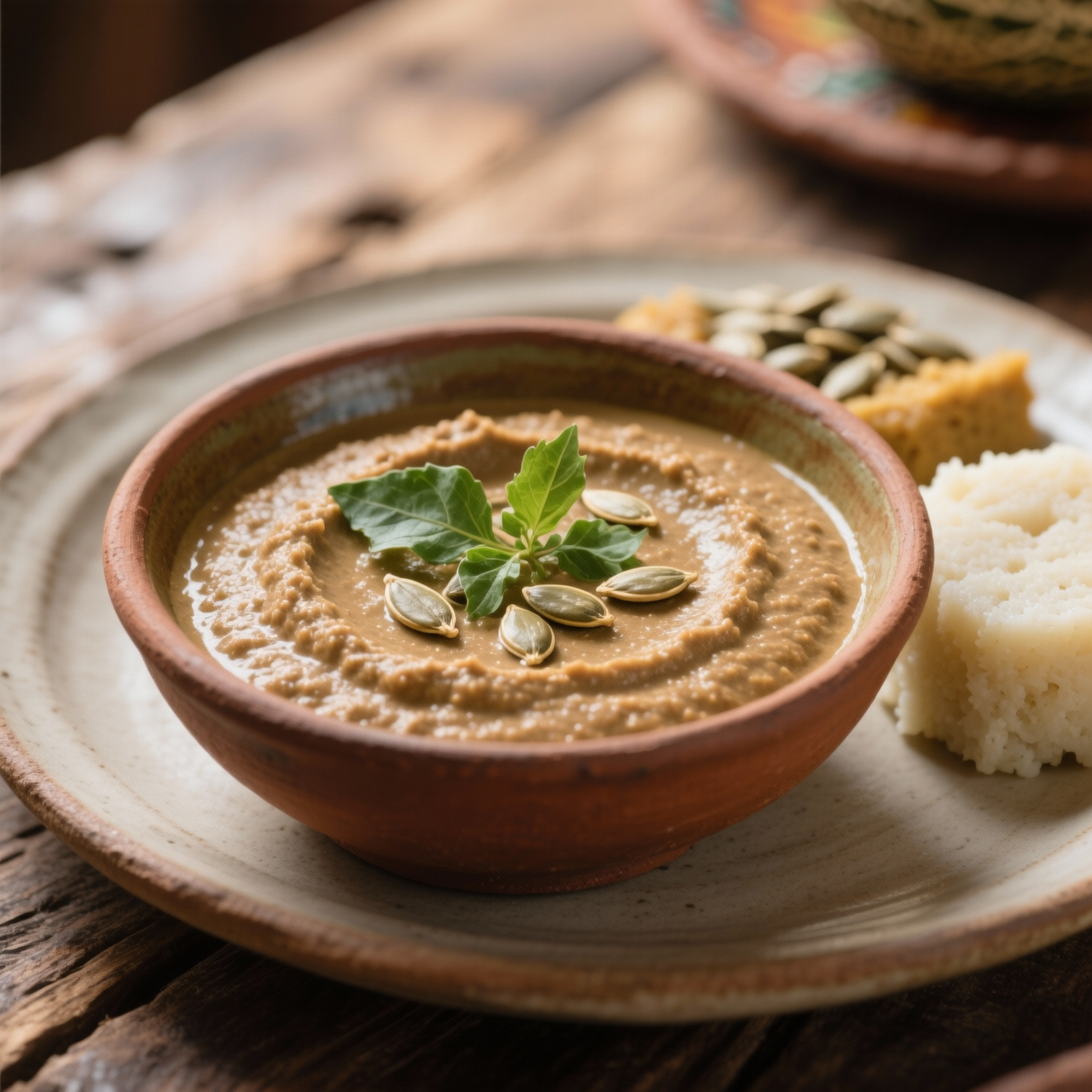
Egusi paste (ground melon seed)
When I first learned to work with ground melon seeds, I quickly realized that egusi is far more than a simple thickener; it is the quiet backbone of countless West African soups and stews. Originating in the fertile river valleys of Nigeria, where the melon was first cultivated and prized for its rich, nutty flesh, egusi has traveled across borders to become a culinary staple. I see it as a testament to resourcefulness and patience, transforming humble seeds into a luxurious, velvety base that carries the weight of spices and slow-cooked broths. What makes egusi so vital to the region’s foodways is its unique ability to bind liquids while releasing a deep, earthy sweetness that elevates everything from leafy vegetable pots to hearty seafood medleys. Yet, I often watch cooks stumble over a few predictable pitfalls. The most common is rushing the initial roast or failing to grind the seeds to a consistent texture, which leaves the final dish grainy instead of silken. Another frequent mistake is neglecting to properly hydrate and rest the paste before simmering; without that quiet soak, the proteins and starches never fully awaken, resulting in a stiff, clumpy sauce rather than a cohesive, glossy emulsion. I always remind myself to treat egusi with gentle heat and steady attention, stirring slowly to coax out its natural oils. When handled correctly, it doesn’t just thicken a pot—it becomes the soul of the meal, carrying generations of technique in every spoonful.
Nutrition
| Per serving | Calories | Protein | Carbs | Fat | Sat fat | Fibre | Sugar | Sodium |
|---|---|---|---|---|---|---|---|---|
| beginner | 215kcal | 14g | 7g | 16g | 3g | 4g | 2g | 290mg |
| intermediate | 310kcal | 14g | 9g | 26g | 6g | 5g | 2g | 115mg |
| expert | 315kcal | 18g | 10g | 26g | 6g | 4g | 2g | 12mg |
Per serving · Ava-estimated — a guide, not a clinical figure.
- 200 gmelon seed— Hulled and thoroughly dried; ensure seeds are completely moisture-free before grinding
This beginner-friendly approach to egusi paste bypasses the traditional labor of sun-drying and hand-grinding melon seeds, opting instead for high-quality, pre-packaged ground egusi or jarred paste available at most African markets. By starting with a ready-made base, you eliminate the most time-consuming steps while preserving the authentic, nutty flavor and thickening power that defines West African stews. The key to success here is proper hydration and gentle cooking to prevent clumping or scorching. Watch for the paste to absorb your chosen broth or water gradually, transforming from a gritty powder into a smooth, cohesive dough-like consistency. Stir frequently during the initial mixing phase, and maintain a low-to-medium heat to allow the natural oils in the seeds to release slowly without burning. This version emphasizes control and simplicity, making it an ideal entry point for cooks new to West African techniques. Once you master this foundational thickening step, you will easily be able to adapt the paste into classic dishes like egusi soup or vegetable stews with confidence and minimal stress.
Equipment
- Heavy-bottomed skillet— Distributes heat evenly to prevent scorching
- Wooden spoon— Ideal for stirring thick pastes without scratching
- Medium mixing bowl— For initial hydration step
Method
- 1
Combine the pre-ground egusi paste with warm vegetable broth in a medium bowl and whisk until a smooth, pourable slurry forms.
Warm liquid hydrates the seeds faster without cooking them prematurely.
hydration~ 1 min - 2
Heat a neutral oil in a heavy-bottomed skillet over medium-low heat until it shimmers.
Keep the flame moderate to avoid frying the paste too aggressively.
heating_fat~ 2 min - 3
Pour the egusi slurry into the warm skillet and stir immediately with a wooden spoon to coat the pan.
Constant movement prevents the bottom layer from sticking and burning.
incorporation~ 1 minTricky bit - 4
Reduce the heat to low and continue stirring occasionally as the mixture thickens and begins to pull away from the sides of the pan.
Look for a glossy, cohesive texture that holds its shape when pressed.
reduction~ 15 minTricky bit - 5
Remove the skillet from the heat once the paste reaches your desired consistency and let it rest for two minutes before incorporating it into your stew.
Resting allows residual heat to finish hydrating the seeds evenly.
carryover_cooking~ 2 min
Cooking from frozen
Thaw overnight in the refrigerator, then warm slowly over low heat while stirring continuously to restore its original silky consistency.
Storage times are a guide — always use your judgement and store food safely.