
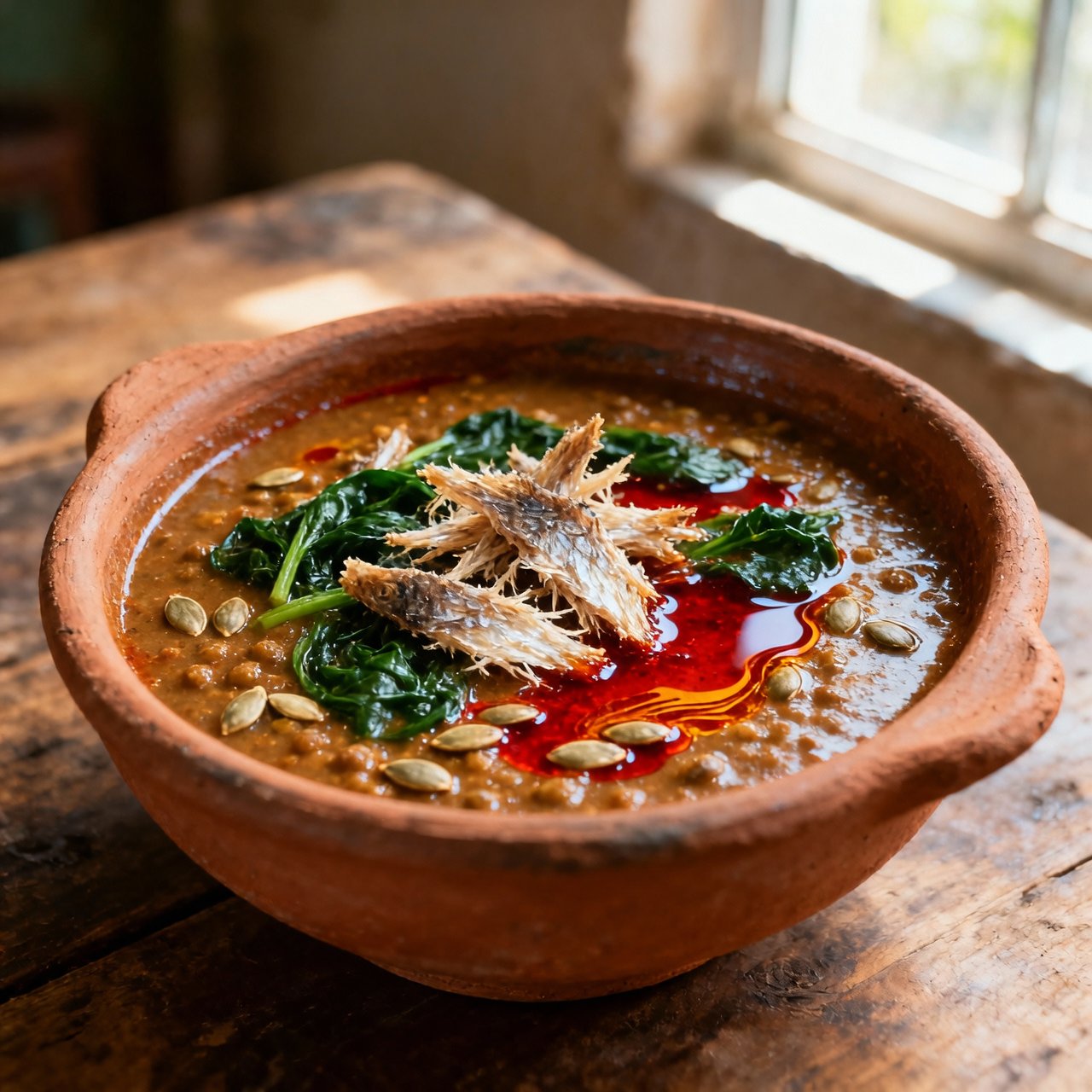
Egusi Soup
I’ve always believed that Egusi Soup is less a dish and more a quiet conversation between generations. Its roots stretch deep into the soils of West Africa, particularly Nigeria, where the melon seeds at its heart were first cultivated not just for sustenance, but as a testament to resourcefulness and communal care. I love how it transforms humble, sun-dried egusi into something profoundly rich, but I also know exactly how easy it is to lose that balance. Many home cooks rush the frying stage, skipping the crucial step of properly toasting the ground seeds until they release their nutty oils, which leaves the final broth tasting raw and grainy. Others drown it in water, forgetting that true egusi soup should cling to the spoon, thick and velvety, not swim in a diluted pool. I have seen well-meaning hands overcomplicate it with unnecessary spices or skip the slow simmer that allows the palm oil to properly bloom and marry with the tomatoes and peppers. When I cook it, I listen to the pot. I watch the oil rise, the way the meat softens, the exact moment the bitterleaf or spinach should fold in without turning to mush. This soup matters because it holds my heritage in every bowl. It is the dish that greets guests, comforts the grieving, and marks celebrations. It asks for patience, not perfection. Respect the seeds, honor the oil, and let time do the heavy lifting, and you will taste exactly why it has survived centuries of migration, adaptation, and change.
Nutrition
| Per serving | Calories | Protein | Carbs | Fat | Sat fat | Fibre | Sugar | Sodium |
|---|---|---|---|---|---|---|---|---|
| beginner | 750kcal | 37g | 16g | 62g | 23g | 5g | 3g | 1400mg |
| intermediate | 750kcal | 37g | 16g | 62g | 23g | 5g | 3g | 1400mg |
| expert | 750kcal | 37g | 16g | 62g | 23g | 5g | 3g | 1400mg |
Per serving · Ava-estimated — a guide, not a clinical figure.
- 200 gegusi seeds— whole and raw
- 150 mlpalm oil— unrefined, for authentic flavor
- 500 mlbeef stock— low-sodium, warmed
- 50 gstockfish— cleaned and soaked
- 30 gdried shrimp— whole, rinsed
- 200 gfresh spinach— stems removed, roughly chopped
- 2 wholescotch bonnet pepper— pierced but intact
- 1 wholered onion— finely diced
- 30 gground crayfish— toasted, for umami depth
- 30 giru— fermented locust beans, rinsed
- 5 gfine sea salt— to taste
- 100 mlwater(optional)— for consistency adjustment
This version prioritizes accessibility and confidence, replacing the labor-intensive seed preparation with a reliable, store-bought egusi paste. Because commercial blends are already toasted and finely ground, you bypass the most unforgiving stage of the recipe and can focus entirely on heat management and flavor integration. The primary goal here is to prevent the paste from sticking or scorching, which happens quickly when oil temperatures spike. Keep your burner at medium-low and maintain a steady, deliberate stirring rhythm until the mixture darkens slightly. You will notice the texture is smoother and more uniform than traditional preparations, which is entirely acceptable for a first attempt. Watch closely as you introduce the stock; pour it slowly to avoid splattering and to help the paste hydrate evenly without forming stubborn lumps. The cooking time is significantly reduced, making this ideal for weeknight dinners or when you are simply building foundational skills in West African stews. Do not worry about achieving the classic oil separation immediately, as the stabilizers in jarred pastes alter how fats behave on the surface. Trust the process, taste carefully before adding salt, and serve it alongside your preferred starch to complete a deeply satisfying meal.
Equipment
- Heavy-bottomed pan— non-stick is acceptable here
- Wooden spoon— for gentle folding
Method
- 1
Heat the palm oil in a heavy-bottomed pan over medium-low heat.
Do not let the oil smoke.
tempering~ 1 min - 2
Add the jarred egusi paste and stir continuously for three minutes.
Scrape the bottom constantly to prevent burning.
frying~ 3 minTricky bit - 3
Pour in the beef stock and add the dried shrimp, scotch bonnet pepper, and red onion.
Keep the heat at a gentle simmer.
braising~ 5 min - 4
Fold in the fresh spinach and stir until wilted.
Residual heat will finish the greens.
wilting~ 2 min - 5
Season with salt and serve immediately over your preferred starch.
Taste before adding extra sodium.
seasoning~ 1 min