
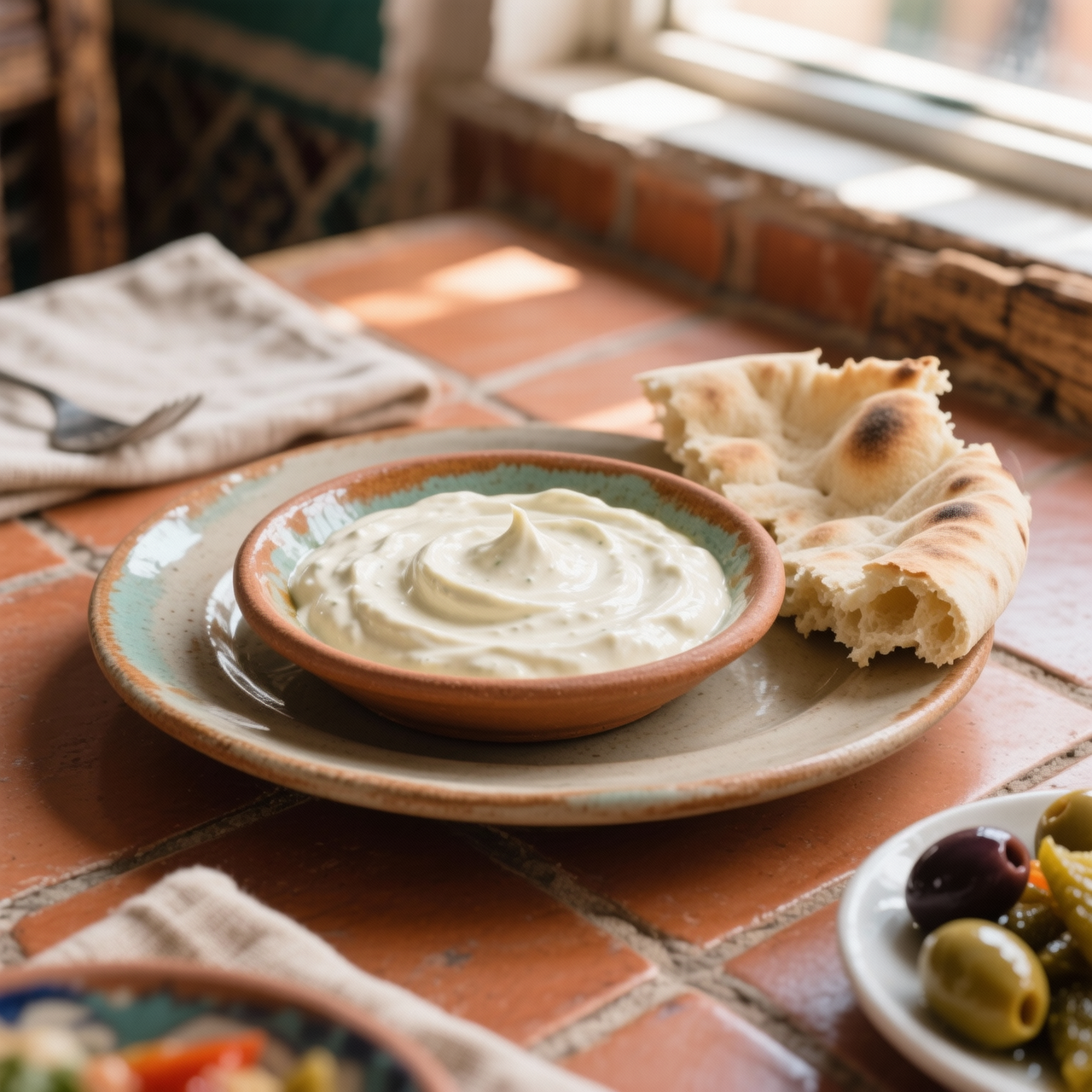
Toum (garlic sauce)
When I first learned to whip toum, I thought it was just a clever trick of patience and oil. But this stark, cloud-white emulsion is actually a centuries-old testament to Levantine culinary mastery, where humble garlic and neutral oil become something profoundly alchemical. Though you will find it gracing plates across Egypt and the broader Middle East, its true roots anchor firmly in the coastal kitchens of Lebanon, where it has long served as the essential, fiery counterpoint to charcoal-grilled meats. What makes toum so vital is not merely its pungent heat or its velvety texture, but the way it bridges extreme simplicity and exacting technique. You are essentially coaxing oil into a stable suspension with nothing but crushed alliums, acid, and sheer mechanical force. Yet, this simplicity is exactly where most cooks falter. The most common pitfall is rushing the oil addition; pour too fast, and the delicate protein matrix shatters into a greasy, broken mess that no amount of whisking will save. Temperature matters just as much. If your ingredients are too warm, the emulsion will slip and turn bitter. I always insist on starting with chilled cloves, adding ice water gradually, and chilling the mixing bowl beforehand. For the vegan adaptation, I bypass traditional egg whites entirely, relying purely on the natural mucilage of the garlic and careful emulsification, proving that animal products are unnecessary for this kind of kitchen magic. When you finally achieve that glossy, pipeable consistency, the reward is immediate. It demands respect, but once you understand its rhythm, it will never fail you.
Nutrition
| Per serving | Calories | Protein | Carbs | Fat | Sat fat | Fibre | Sugar | Sodium |
|---|---|---|---|---|---|---|---|---|
| beginner | 210kcal | 0g | 4g | 23g | 3g | 0g | 1g | 220mg |
| intermediate | 395kcal | 1g | 4g | 44g | 6g | 0g | 1g | 310mg |
| expert | 390kcal | 1g | 5g | 43g | 5g | 1g | 1g | 320mg |
Per serving · Ava-estimated — a guide, not a clinical figure.
- 200 ggarlic clove— Peeled and brought to room temperature before use
- 500 mlneutral oil— Sunflower, canola, or grapeseed oil recommended for clean flavor
- 60 mllemon juice— Freshly squeezed and strained of pulp
- 10 gsalt— Fine sea salt or kosher salt
- 30 mlice water(optional)— Helps maintain low temperature for stable emulsification
This beginner-friendly approach replaces traditional mortar-and-pestle grinding with a standard food processor or tall stick blender, making the emulsification process far more forgiving for first-timers. The key difference is the emphasis on temperature control and a painfully slow oil addition, which are the two most common failure points. Watch for the sauce turning from a coarse, pale paste into a glossy, snow-white cream. If the mixture looks curdled or separates, stop immediately, add a fresh garlic clove and a splash of lemon juice, and restart the machine; this acts as a fresh emulsifying base to rescue the batch. Avoid using pre-minced jarred garlic, as its high water content will instantly break the oil suspension. Keep all ingredients chilled straight from the refrigerator, as cold temperatures stabilize the fat molecules during blending. Patience is non-negotiable here—rushing the oil pour guarantees a broken sauce. Once fully whipped, transfer to a clean, airtight container and refrigerate. The result will be a thick, spreadable garlic sauce perfect for brushing on grilled vegetables, dipping flatbread, or dolloping onto roasted meats, with a bold flavor that rewards your careful technique.
Equipment
- Food processor or tall stick blender— ensure all parts are completely dry to prevent splitting
- Narrow-spouted measuring cup— crucial for controlling the oil stream
Method
- 1
Peel and trim the garlic cloves, then pulse them in the processor until finely minced.
Scrape down the sides halfway through to ensure even grinding.
mincing~ 1 min - 2
Add the lemon juice and salt, then process until the mixture forms a thick, pale paste.
The acid helps break down the garlic fibers before oil is introduced.
macerating~ 1 min - 3
With the machine running on medium, begin adding the neutral oil in a single, ultra-thin, steady stream.
If you pour too fast, the emulsion will break immediately.
emulsifying~ 3 minTricky bit - 4
Continue processing for another two minutes until the sauce becomes glossy, stiff, and doubles in volume.
The blades should leave a clear trail through the thick mixture.
whipping~ 2 min - 5
Transfer the finished sauce to a sterilized glass jar, seal tightly, and refrigerate until ready to serve.
A cold resting period allows the flavors to meld and the texture to stabilize.
chilling~ 1 min
Cooking from frozen
Thaw slowly in the refrigerator overnight and whisk vigorously to restore the separated emulsion before serving.
Storage times are a guide — always use your judgement and store food safely.