
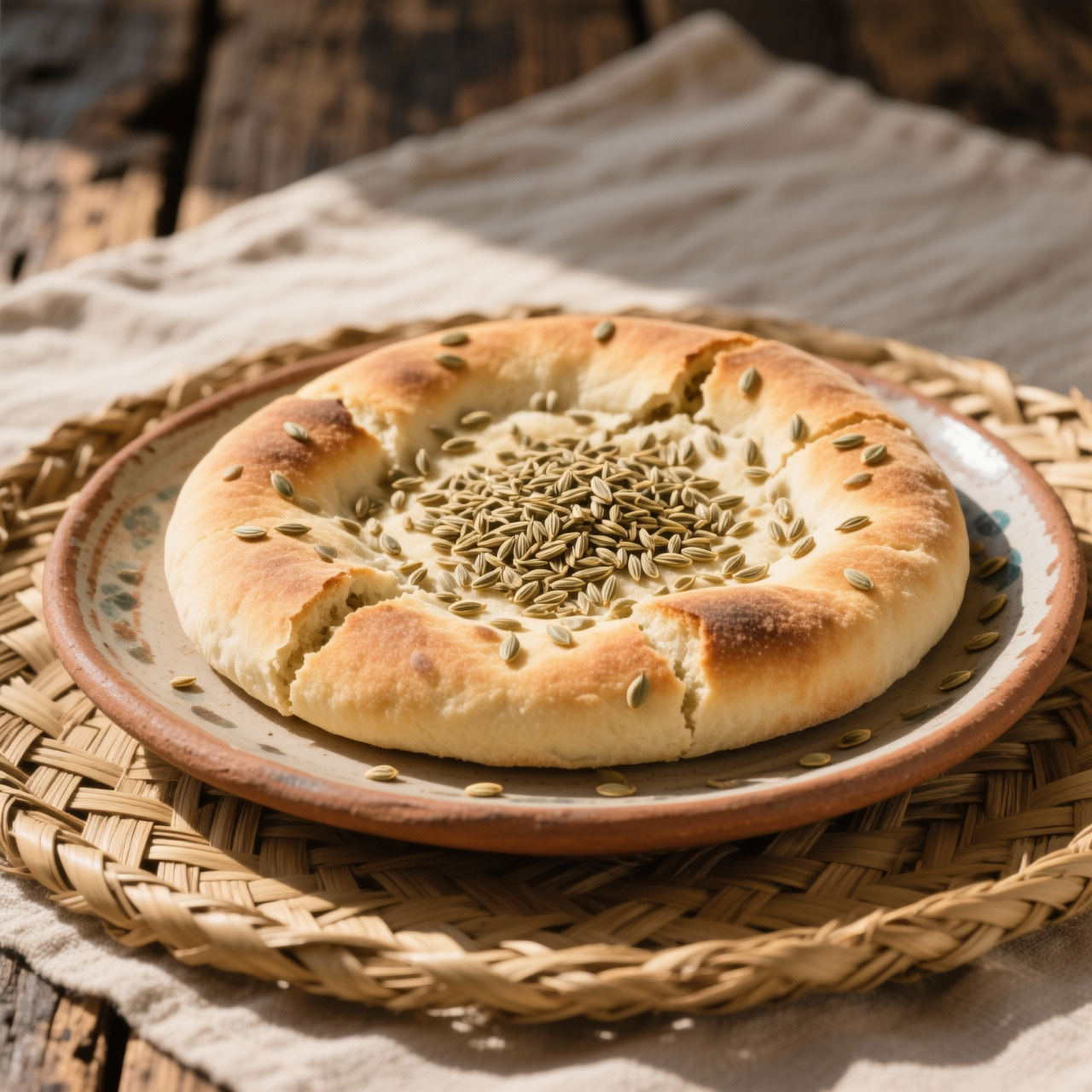
Eish merahrah (fenugreek bread)
I’ve spent years chasing the quiet magic of eish merahrah, a humble flatbread that has anchored Egyptian kitchens for generations. Long before it reached modern tables, it was born from necessity and ingenuity—farmers in Upper Egypt blending coarse yellow maize with ground fenugreek to stretch grain, boost protein, and create a bread that could survive the dry heat. Today, it matters more than ever as a quiet rebellion against the hollow, preservative-stuffed flatbreads lining supermarket shelves. A standard pack of eight mass-produced wraps costs around two pounds, yet they deliver little beyond shelf stability: a rubbery chew, a chemical aftertaste, and zero nutritional integrity. Making this bread from scratch costs pennies per loaf and restores the earthy, nutty depth that only real toasted maize and soaked fenugreek can provide. The process is forgiving but demands respect. The most common pitfall I see is rushing the fenugreek soak and grinding it too fine, which turns the dough bitter and gummy instead of yielding that signature aromatic lift. Another is overworking the dough; eish merahrah thrives on a loose, slightly shaggy hydration that rests long enough to hydrate the coarse cornmeal without becoming elastic. If you pat it out gently and cook it on a dry, medium-hot skillet until blistered and pliant, you’ll taste exactly why this bread has outlasted empires. It’s not fast food, but it’s honest food, and once you learn its rhythm, the supermarket aisle loses its grip entirely.
Nutrition
| Per serving | Calories | Protein | Carbs | Fat | Sat fat | Fibre | Sugar | Sodium |
|---|---|---|---|---|---|---|---|---|
| beginner | 350kcal | 9g | 72g | 5g | 1g | 7g | 1g | 420mg |
| intermediate | 320kcal | 9g | 55g | 5g | 1g | 8g | 1g | 350mg |
| expert | 310kcal | 8g | 65g | 3g | 1g | 6g | 1g | 300mg |
Per serving · Ava-estimated — a guide, not a clinical figure.
- 300 gcoarse maize meal— stone-ground for traditional rustic texture
- 50 gfenugreek seed— soaked for 2 hours, drained, and ground into a smooth paste
- 250 mlwater— lukewarm to aid dough hydration
- 5 gfine sea salt
- 15 mlolive oil(optional)— for greasing the cooking surface
This beginner-friendly approach to Eish Merahrah strips away the traditional multi-day sprouting and stone-grinding steps, focusing instead on a straightforward soak-and-blend method that guarantees a forgiving, cohesive dough. While store-bought Egyptian corn flatbreads run three to four dollars per pack and rely on industrial stabilizers, excessive sodium, and refined oils that dull the earthy warmth of fenugreek, making it at home takes under an hour and delivers a vibrant, nutty crumb with zero additives. The key difference here is the simplified hydration: we soak whole fenugreek seeds briefly, pulse them into a smooth paste with water, and fold that directly into the maize and whole wheat flours. This eliminates the guesswork of sprouting while preserving the distinctive bitter-sweet aroma that defines the bread. Watch the dough closely during resting; it should feel tacky but not sticky, and a light dusting of extra maize flour during shaping will prevent tearing. Cook on a dry, evenly heated skillet over medium heat until the surface blisters and the base turns golden. Keep the finished breads wrapped in a clean towel to retain pliability.
Equipment
- Heavy-bottomed skillet— cast iron or thick non-stick works best
- Blender— food processor is an acceptable alternative
- Rolling pin— a flat-bottomed glass works in a pinch
- Large mixing bowl— at least 4-quart capacity
Method
- 1
Soak whole fenugreek seeds in warm water for twenty minutes until softened.
Drain thoroughly before blending to avoid excess moisture.
soaking~ 5 min - 2
Blend the drained seeds with half the recipe water until a smooth green paste forms.
Pulse in short bursts to prevent overheating the motor.
blending~ 1 min - 3
Whisk maize flour, whole wheat flour, and salt in a large bowl, then pour in the fenugreek paste and remaining water.
Mix until a shaggy mass forms before switching to hand kneading.
hydration~ 3 min - 4
Knead the mixture on a lightly floured surface for five minutes until it becomes smooth and pliable.
Add a teaspoon of water if the dough cracks or extra flour if it sticks.
kneading~ 5 minTricky bit - 5
Cover the dough and let it rest at room temperature for twenty minutes to relax the gluten network.
This short autolyse makes rolling significantly easier.
resting~ 10 min - 6
Divide the dough into four equal balls, roll each into a thin six-inch circle, and transfer to a hot dry skillet.
Handle gently to preserve the rustic texture.
shaping~ 4 minTricky bit - 7
Cook each flatbread for two minutes per side until the surface blisters and the underside develops deep brown spots.
Press gently with a spatula to encourage even puffing.
pan-searing~ 4 min - 8
Transfer the cooked breads to a plate and immediately cover with a clean kitchen towel to trap residual heat.
Steaming keeps the maize crumb soft rather than brittle.
steaming~ 3 min
Cooking from frozen
Thaw at room temperature, then warm briefly in a dry skillet or wrap in foil to steam until pliable.
Storage times are a guide — always use your judgement and store food safely.