
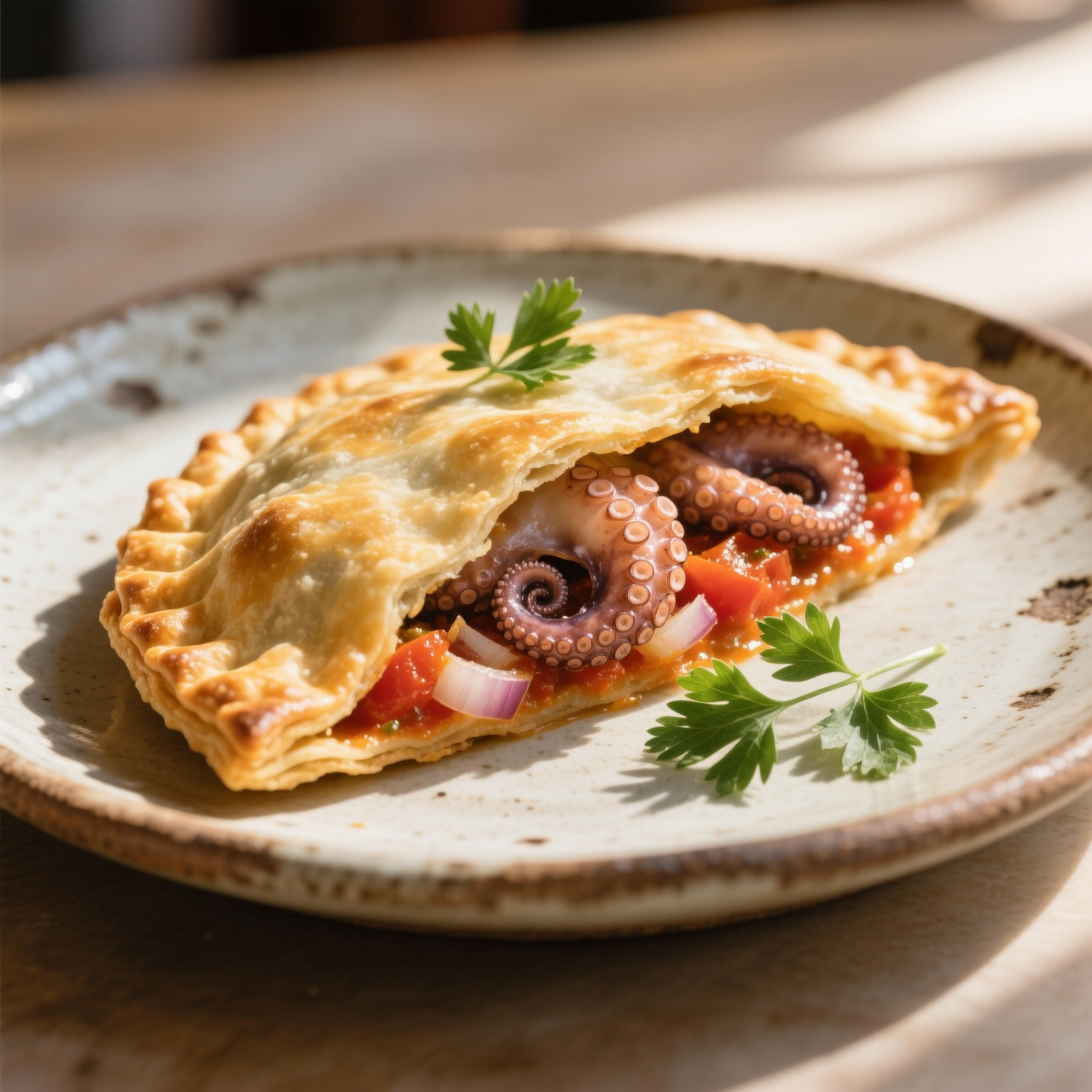
Empanadas (gallega style)
When I first encountered a proper empanada gallega, I realized how much we’ve been sold on convenience. Supermarket versions usually cost around six euros for a plastic-wrapped slice, but they’re little more than greasy dough pockets stuffed with anemic, heavily processed fillings and loaded with stabilizers. The real thing, born in the damp, wind-swept kitchens of northwest Spain, is a celebration of slow-cooked sofrito and hand-kneaded dough. Galician bakers have perfected this portable feast for centuries, using it to carry rich tuna, peppers, and onions across long journeys. What makes it matter today is the uncompromising texture: a flaky, golden crust that actually shatters, giving way to a deeply savory, slow-simmered interior. The most common pitfall is rushing the dough or skipping the resting time, which leaves you with a tough, chewy shell instead of something tender and layered. Another mistake is drowning the filling in raw juices; you must cook it down until it’s thick and concentrated, or your beautiful pastry will turn to soggy mush. I always make my dough from scratch with just flour, water, olive oil, and a touch of white wine for brightness. There are no shortcuts, no jarred sofritos, and certainly no pre-rolled pastry sheets. It takes patience, but the reward is a deeply authentic centerpiece that scales beautifully. When you assemble a full batch and freeze them unbaked, you’re preserving a piece of culinary heritage that outshines any factory-made alternative.
Nutrition
| Per serving | Calories | Protein | Carbs | Fat | Sat fat | Fibre | Sugar | Sodium |
|---|---|---|---|---|---|---|---|---|
| beginner | 540kcal | 24g | 52g | 26g | 6g | 4g | 5g | 720mg |
| intermediate | 460kcal | 22g | 38g | 24g | 8g | 4g | 6g | 620mg |
| expert | 540kcal | 24g | 48g | 28g | 4g | 3g | 5g | 720mg |
Per serving · Ava-estimated — a guide, not a clinical figure.
- 500 gall-purpose flour— sifted
- 120 mlolive oil— extra virgin
- 150 mlwarm water— around 38C
- 7 gactive dry yeast— one standard packet
- 10 gsalt— fine sea salt
- 2 mediumyellow onion— finely diced
- 1 largered bell pepper— seeded and diced
- 200 gcanned tuna— drained
- 100 gcrushed tomato— passata preferred
- 10 gsmoked paprika— Spanish pimentón
- 2 wholehard-boiled egg— peeled and sliced
- 1 largeegg— beaten for glazing
Store-bought Galician empanadas cost several euros each but rely on hydrogenated fats, preservative-heavy fillings, and dense par-baked crusts that turn cardboard-thin when reheated. This beginner version replaces those industrial shortcuts with a straightforward, from-scratch approach that remains highly forgiving. You will mix a pliable olive-oil dough that requires minimal kneading, paired with a filling simmered gently from fresh onions, sweet peppers, and tuna or pork. The primary difference is the simplified assembly: we skip complex laminating and traditional pleating in favor of a rustic half-moon shape sealed firmly with a fork. Watch your dough thickness closely, as rolling it slightly thicker prevents tearing under the weight of the filling. Keep the filling completely cooled before spooning it onto the pastry, since hot ingredients will melt the dough and ruin your seal. Baking at a moderate heat ensures even browning without leakage. These unbaked pastries freeze exceptionally well, giving you a reliable, batch-ready meal that actually delivers homemade flavor.
Equipment
- Large mixing bowl— stainless steel or ceramic
- Rolling pin— wooden or silicone coated
- Medium skillet— heavy base prevents scorching
- Baking sheet— line with parchment paper
- Pastry brush— for applying egg wash
Method
- 1
Whisk flour, salt, warm water, and olive oil in a large bowl until a cohesive mass forms.
Add liquid gradually to avoid a sticky mess.
hydration~ 5 min - 2
Knead the dough on a clean surface for two minutes until it feels smooth and elastic.
A brief knead develops just enough structure.
kneading~ 2 min - 3
Cover the dough with a damp towel and let it relax at room temperature for twenty minutes.
Gluten needs this rest to stretch without snapping back.
resting~ 20 min - 4
Sauté finely diced onion and roasted pepper in a skillet over medium heat until soft and fragrant.
Stir frequently to avoid scorching the edges.
sweating~ 7 min - 5
Add your protein, smoked paprika, and a small pour of white wine, then cook until all excess moisture evaporates.
A wet filling will steam and tear the crust later.
reducing~ 8 minTricky bit - 6
Divide the rested dough into four pieces and roll each into a circle roughly fifteen centimeters wide.
Lightly flour your surface to prevent sticking.
rolling~ 5 min - 7
Place a quarter of the completely cooled filling on one half of each circle, leaving a two-centimeter border.
Overfilling causes seams to burst during baking.
portioning~ 4 minTricky bit - 8
Fold the dough over and press the edges firmly together with a damp fork to seal.
A tight seal keeps steam inside for a tender crust.
crimping~ 3 min - 9
Brush the tops lightly with beaten egg, prick twice with a knife, and bake until golden and crisp.
The vents prevent the pastries from puffing and splitting.
baking~ 30 min
Cooking from frozen
Bake straight from frozen at 200°C, adding ten minutes to the standard time until the crust is deeply golden and piping hot.
Storage times are a guide — always use your judgement and store food safely.