
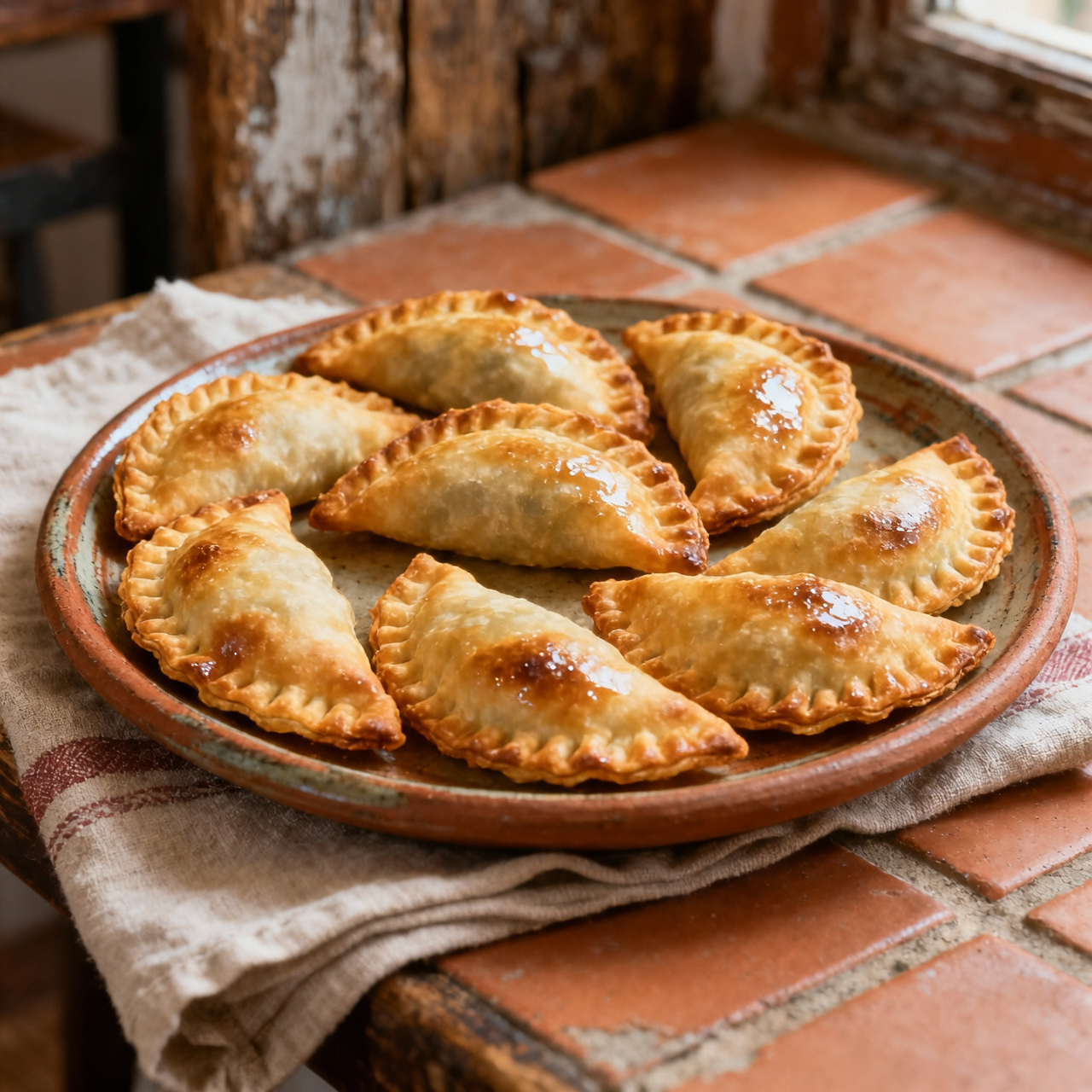
Empanadillas (small turnovers)
I first fell for empanadillas at a sun-warmed plaza in Andalusia, where they were passed around on paper plates like edible confessions of home cooking. These little Spanish turnovers are the quiet heroes of tapas bars and picnic baskets, born from a need to stretch precious ingredients and wrap them in sturdy, portable dough. Today, you will find cheap supermarket packs for around four pounds, but they are a hollow imitation: greasy, paper-thin crusts that shatter into flakes, hiding bland, over-processed fillings that taste of preservatives and regret. Making them from scratch is not just about reclaiming flavour; it is about texture. You get a proper, buttery bite that actually yields, and a filling that sings of real garlic, sweet paprika, and slow-simmered tomatoes. The process is forgiving if you respect a few rules. Overstuffing is the most common sin, guaranteeing a split seam and lost filling in the oil. Rolling your dough too thick traps steam, while too thin invites tearing. Let the dough rest before shaping, seal edges firmly with a fork, and always fry at a steady medium heat so the crust sets before the filling boils. When you batch them, freeze them raw on a tray before bagging; they will hold their shape beautifully and go straight from freezer to hot oil or oven. This is food that rewards patience, not shortcuts. Once you taste the contrast between a properly crisped, hand-cradled turnover and the cardboard discs sold on supermarket shelves, you will never look at the frozen aisle the same way again.
Nutrition
| Per serving | Calories | Protein | Carbs | Fat | Sat fat | Fibre | Sugar | Sodium |
|---|---|---|---|---|---|---|---|---|
| beginner | 380kcal | 14g | 42g | 16g | 4g | 3g | 3g | 520mg |
| intermediate | 560kcal | 24g | 47g | 22g | 7g | 3g | 5g | 610mg |
| expert | 485kcal | 19g | 31g | 29g | 9g | 3g | 4g | 560mg |
Per serving · Ava-estimated — a guide, not a clinical figure.
- 500 gAll-purpose flour— Sifted before mixing
- 100 mlExtra virgin olive oil
- 200 mlWarm water— Approximately 40°C
- 5 gFine sea salt
- 300 gGround pork— Medium fat content preferred
- 150 gYellow onion— Finely diced
- 10 gGarlic clove— Minced
- 30 gTomato paste
- 2 unitHard-boiled egg— Chopped
- 50 gGreen olive— Pitted and chopped
- 3 gSweet smoked paprika— Spanish pimentón dulce
- 1 unitEgg— Beaten for sealing and washing
This beginner-friendly approach strips away the intimidation of traditional laminated doughs by using a straightforward, no-rest oil-and-water pastry that still delivers a satisfyingly crisp shell. You will learn to knead just enough to develop a smooth, pliable dough, then roll it out to a forgiving thickness before filling and sealing with a simple fork crimp. Watch your oil temperature carefully; a quick test drop of dough should sizzle immediately without smoking, ensuring the turnovers cook evenly without absorbing excess fat. Shop-bought empanadillas typically run £3.50 for a pack of six and rely on refined palm oil, artificial stabilisers, and thick, gummy pastry that turns soggy upon reheating. By making them from scratch with basic pantry staples, you gain full control over the fat quality, avoid hidden preservatives, and achieve a light, golden crust that stays shatteringly crisp even after baking or frying from frozen. The technique prioritises consistency over speed, using a gentle press-and-fold method that guarantees tight seals and prevents filling blowouts, making your first batch reliably uniform and freezer-ready.
Equipment
- Large mixing bowl— wide base makes combining easier
- Rolling pin— a clean wine bottle works in a pinch
- Heavy-bottomed skillet— for shallow frying or use a baking sheet for oven baking
- Wire cooling rack(optional)— prevents bottom sogginess after cooking
Method
- 1
Whisk the flour and fine salt together in a wide bowl, then drizzle in olive oil and warm water while stirring with a fork.
Aim for a shaggy, slightly tacky mass, not a sticky paste.
mixing~ 2 min - 2
Turn the dough onto a lightly floured surface and knead by hand until completely smooth and springy.
Stop as soon as it stops sticking to your fingers.
kneading~ 3 min - 3
Roll the rested dough into a uniform three-millimetre sheet and stamp out rounds with an inverted glass or cutter.
Keep the edges even to guarantee a reliable seal later.
rolling~ 5 minTricky bit - 4
Spoon a level tablespoon of your cooled filling onto the centre of each dough circle, carefully avoiding the outer rim.
Overfilling causes messy blowouts during cooking.
portioning~ 4 minTricky bit - 5
Fold the dough over the filling, press the edges together with your fingertips, and trace the entire seam with a fork.
A tight crimp locks in steam and prevents leaks.
crimping~ 6 min - 6
Fry in neutral oil at 170°C until golden brown, or bake on a parchment-lined tray at 200°C for twenty minutes, then cool completely.
Let them rest before freezing to avoid condensation sogginess.
shallow-frying~ 20 minTricky bit
Cooking from frozen
Bake straight from frozen at 200°C for 20 minutes or fry in 170°C oil until crisp.
Storage times are a guide — always use your judgement and store food safely.