
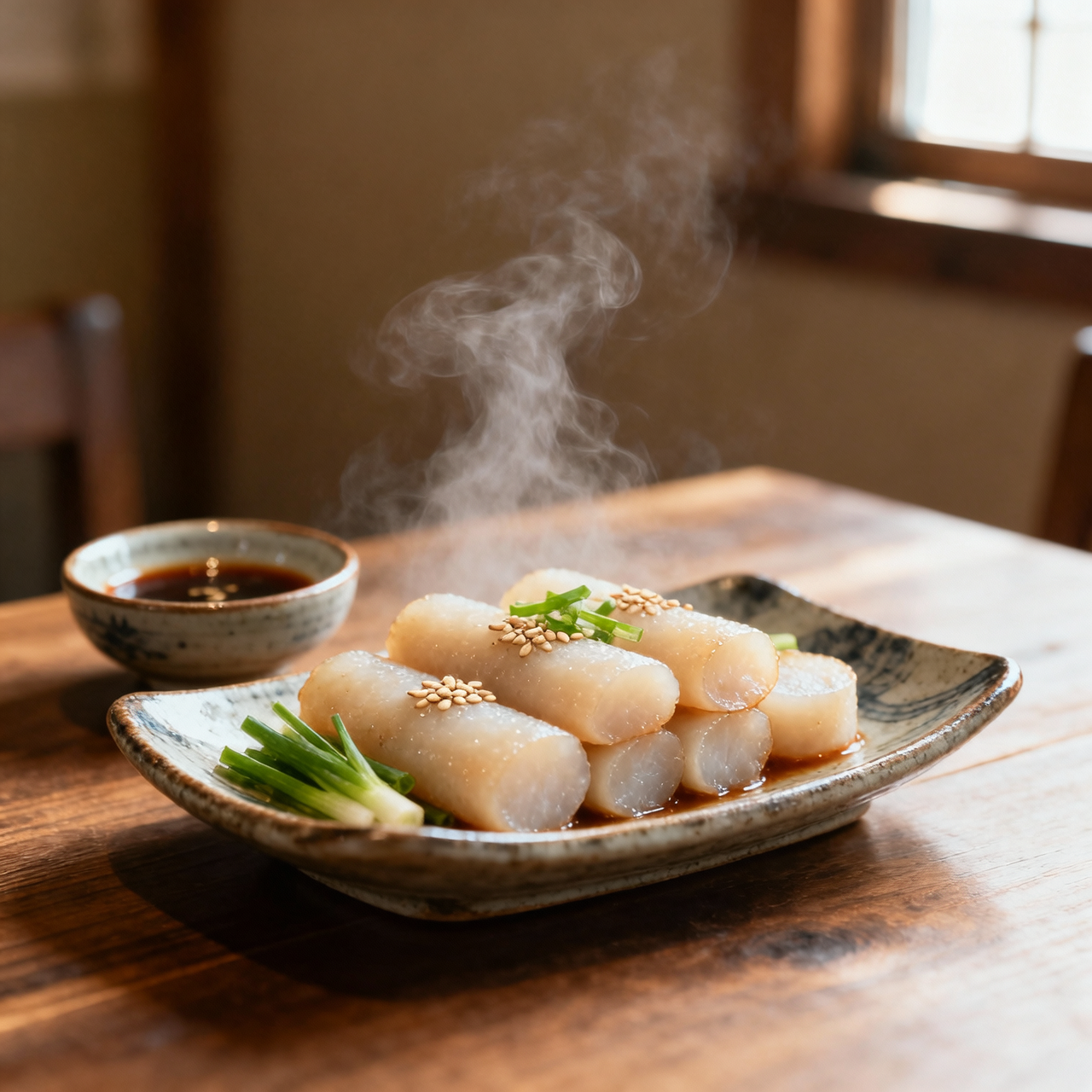
Eomuk (Fish Cakes)
I remember the first time I realized that the pale, rubbery rectangles sold in supermarket aisles were supposed to be eomuk, a cornerstone of Korean street food and home cooking. Traditional eomuk is born from the careful balance of finely ground white fish, starch, and clean broth, pounded until it achieves that signature buoyant snap. Making it from scratch isn’t just a nostalgic exercise; it’s a necessary reclaiming of flavor and texture that the industrialized versions completely sacrifice. A standard pack of frozen sheets runs about four dollars, but you pay for that convenience with a heavy dose of sodium, stabilizers, and a dull, pasty mouthfeel that masks the delicate sweetness of the fish. When you blend fresh pollock or cod with potato starch, a touch of rice wine, and a slow-kneaded binding process at home, the difference is immediate. The pitfalls are easy to stumble into, though. Overmixing the paste develops too much gluten-like structure, making the cakes tough instead of tender. Under-chilling before shaping leads to a crumbly mess that falls apart in the simmering water. And using too much liquid throws off the delicate starch-to-protein ratio, resulting in a mushy rather than springy bite. By keeping the workspace cool, handling the paste just until smooth, and poaching the sheets at a bare simmer, you capture that authentic, clean oceanic flavor. It takes a little patience, but the reward is a versatile, pescatarian-friendly staple that elevates everything from quick weeknight broths to celebratory tteokbokki, proving that some of the best Korean pantry staples simply refuse to be rushed or replaced by factory shortcuts.
Nutrition
| Per serving | Calories | Protein | Carbs | Fat | Sat fat | Fibre | Sugar | Sodium |
|---|---|---|---|---|---|---|---|---|
| beginner | 150kcal | 21g | 9g | 4g | 1g | 1g | 2g | 290mg |
| intermediate | 195kcal | 16g | 22g | 5g | 1g | 2g | 3g | 480mg |
| expert | 150kcal | 18g | 12g | 3g | 1g | 1g | 2g | 390mg |
Per serving · Ava-estimated — a guide, not a clinical figure.
- 500 gWhite fish fillet— Pollock or cod, skin and bones removed
- 100 mlIce water— Must be kept very cold during mixing to maintain paste texture
- 40 gPotato starch— Provides binding and traditional chewy texture
- 30 gEgg white(optional)— Approximately one large egg white, lightly beaten
- 10 gFine salt— Essential for protein extraction and base seasoning
- 15 gGranulated sugar— Balances flavor and aids in browning during cooking
- 10 gGarlic— Fresh cloves, finely minced
- 5 gFresh ginger— Peeled and finely grated
- 20 gScallion— White and light green parts only, finely chopped
- 5 mlToasted sesame oil(optional)— Added at the end for aromatic depth
This beginner-friendly version strips away the intimidation of traditional eomuk without relying on processed shortcuts or pre-mixed pastes. Store-bought fish cake sheets run three to five dollars per pack but are typically loaded with fillers, stabilizers, excessive sodium, and artificial flavor enhancers that mask low-quality fish. By starting from scratch, you gain complete control over the ingredients, yielding a cleaner, springier texture and a pure seafood flavor that elevates any side dish or broth. The key difference here is technique: instead of hand-pounding or fermenting, you will use a food processor to emulsify fresh white fish fillets with ice water, tapioca starch, and simple aromatics. Watch the processor closely, as the paste should turn glossy and hold its shape when scooped, which signals proper protein extraction. Keep everything cold to prevent the emulsion from breaking. Gently poach the shaped cakes in lightly salted broth rather than frying, which keeps them tender and forgiving for first-time makers. Once cooled, these freeze beautifully and slice cleanly for soups, skewers, or banchan platters.
Equipment
- Food processor— Essential for achieving the correct emulsion without hand-pounding
- Heavy-bottomed pan— Maintains steady low heat for gentle poaching
- Fine-mesh sieve(optional)— Optional for straining the poaching liquid into a broth base
Method
- 1
Freeze your white fish fillets for twenty minutes until firm to the touch.
Cold fish prevents the emulsion from breaking during processing.
tempering~ 20 min - 2
Pulse the chilled fish, onion, garlic, ginger, and salt in a food processor until a coarse paste forms.
Scrape down the sides between pulses for even texture.
pulsing~ 1 min - 3
Add ice water and tapioca starch, then process continuously until the mixture becomes smooth, glossy, and sticky.
The paste should hold a distinct peak when the blade stops.
emulsifying~ 2 minTricky bit - 4
Wet your hands and shape the paste into uniform cylinders or oval patties.
Dipping hands in cold water prevents sticking and keeps the surface smooth.
molding~ 3 min - 5
Bring a pot of lightly salted water to a bare simmer and gently lower the shaped cakes into the liquid.
Avoid boiling; vigorous heat will cause the fish cakes to fracture.
poaching~ 8 minTricky bit - 6
Transfer the cooked fish cakes to an ice bath for two minutes, then drain and slice before serving.
Rapid cooling locks in the springy texture and prevents overcooking.
shocking~ 2 min
Cooking from frozen
Thaw in the fridge overnight and gently reheat in simmering broth or a lightly oiled pan to restore their springy texture.
Storage times are a guide — always use your judgement and store food safely.