
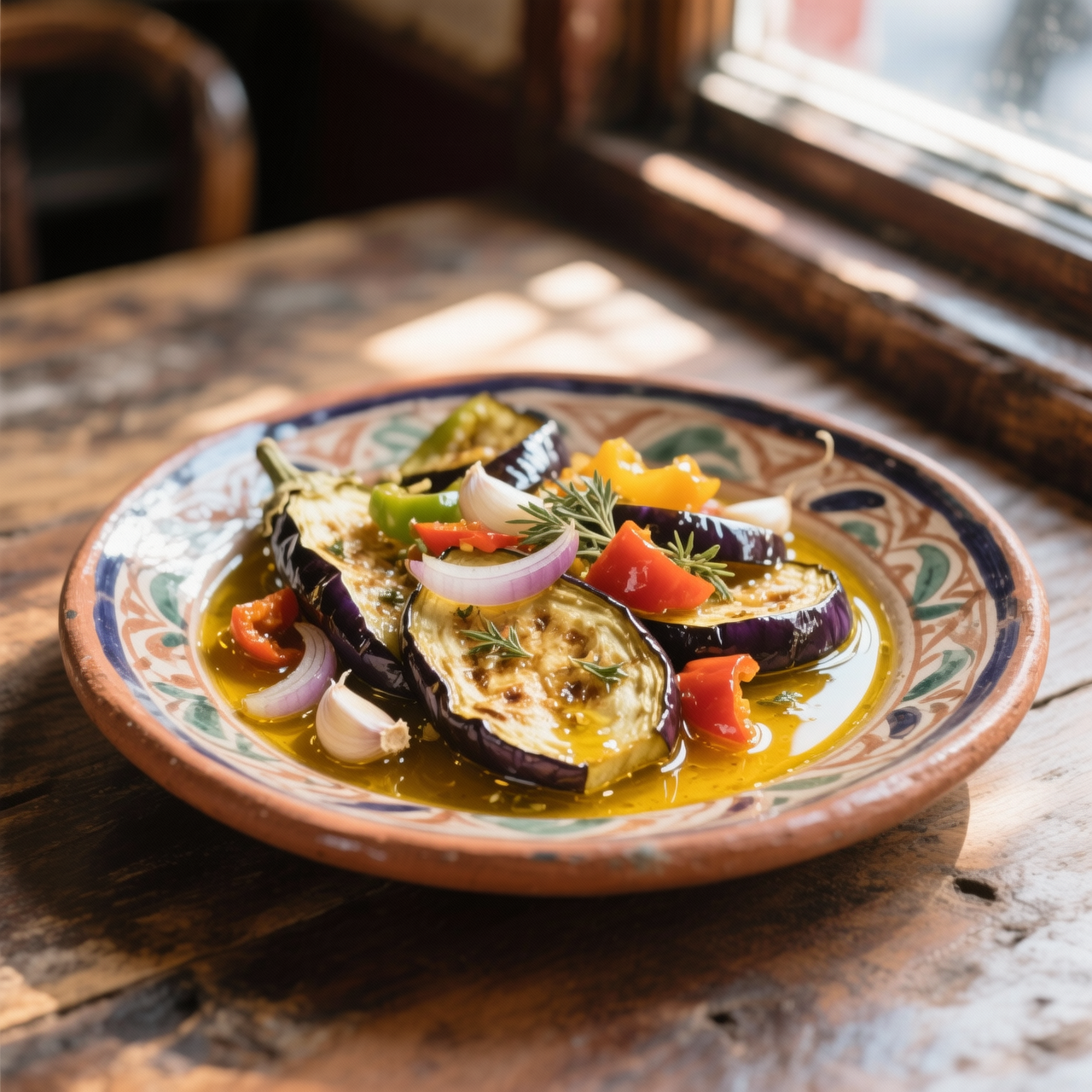
Escabeche de berenjenas
When I think of the vibrant, sun-drenched tables of Argentine gatherings, my mind immediately drifts to this magnificent escabeche de berenjenas. While the technique of preserving vegetables in an acidic, oil-rich marinade traces its roots back to the Moors and the Iberian Peninsula, it was the waves of Spanish and Italian immigrants who brought this beautiful tradition to Argentina, transforming it into a beloved staple of our local culinary landscape. This dish matters to me because it is the ultimate batch hero; it captures the late-summer harvest of eggplants and transforms them into a complex, tangy, and deeply savory condiment that only improves with time. It is a testament to the magic of patience and preservation. However, making a truly exceptional escabeche requires navigating a few common pitfalls. The most frequent mistake I see is under-seasoning the poaching liquid; the eggplants need a robust bath of vinegar, wine, garlic, and herbs to properly penetrate their spongy flesh. Another critical error is rushing the cooling process or skipping the resting period. The eggplants must fully cool in their marinade, and ideally, they should rest in the fridge for at least forty-eight hours before serving. This resting time is non-negotiable, as it allows the sharp edges of the vinegar to mellow and the flavors to marry. Finally, ensure your eggplants are sliced evenly and salted beforehand to draw out any bitter moisture. When done right, this oil-cured treasure becomes a glorious, vegan-friendly centerpiece that will happily keep for weeks, ready to elevate any crusty bread.
Nutrition
| Per serving | Calories | Protein | Carbs | Fat | Sat fat | Fibre | Sugar | Sodium |
|---|---|---|---|---|---|---|---|---|
| beginner | 280kcal | 2g | 12g | 24g | 3g | 5g | 6g | 450mg |
| intermediate | 395kcal | 2g | 12g | 38g | 5g | 5g | 4g | 420mg |
| expert | 310kcal | 3g | 12g | 28g | 4g | 5g | 6g | 410mg |
Per serving · Ava-estimated — a guide, not a clinical figure.
- 1000 geggplant— washed and cut into 1 cm thick rounds or cubes
- 50 gsalt— coarse salt for curing
- 250 mlwhite wine vinegar
- 250 mlwater
- 6 unitgarlic clove— peeled and thinly sliced
- 3 unitbay leaf
- 5 gdried oregano
- 5 gblack peppercorn— whole
- 3 gred pepper flakes(optional)— adjust to taste
- 500 mlolive oil— extra virgin, enough to completely submerge the eggplants
This beginner-friendly version of Argentine escabeche de berenjenas simplifies the traditional oil-cured eggplant process without sacrificing that signature tangy, garlicky punch. We use a shortcut by incorporating a jarred roasted red pepper and garlic paste to instantly build the marinade's base flavor, eliminating the need to slowly confit and blend fresh aromatics from scratch. This approach guarantees a confident first attempt while still delivering that beautiful, preserved quality. Watch the oil temperature when frying the eggplant; you want it golden and tender, not burnt or soggy. The key to a great escabeche is the balance of acidity and oil, so taste your vinegar mixture before pouring it over the eggplant. Remember, this is a batch hero—the flavors meld and improve over a few days in the fridge, and it keeps beautifully for weeks, making it a perfect make-ahead condiment for empanadas, sandwiches, or cheese boards.
Equipment
- Heavy-bottomed pan— non-stick is fine here
- Glass jars with tight-fitting lids— ensure they are sterilized before packing
- Tongs— for safely handling hot eggplant
Method
- 1
Wash, trim, and cut the eggplants into uniform 1-inch cubes, then toss them generously with coarse salt and let them drain in a colander for 15 minutes.
This draws out excess moisture and bitterness.
salting~ 15 min - 2
Rinse the salted eggplant cubes under cold water and pat them completely dry with paper towels.
Removing the salt and moisture ensures they fry properly instead of steaming.
drying~ 5 min - 3
Heat a generous glug of olive oil in a heavy-bottomed pan over medium heat and fry the eggplant cubes in batches until golden brown and tender.
Do not crowd the pan, or the eggplant will steam and become greasy.
pan-frying~ 10 minTricky bit - 4
Transfer the fried eggplant to a paper towel-lined plate to drain, then pack the cubes tightly into your sterilized glass jars along with bay leaves and dried oregano.
Pack them snugly so they hold their shape when the liquid is added.
packing~ 5 min - 5
In a small saucepan, combine white wine vinegar, water, and the jarred roasted pepper and garlic paste, bringing it to a gentle boil before stirring in a final drizzle of raw olive oil.
The jarred paste acts as a quick flavor base, saving you from mincing and sautéing fresh aromatics.
simmering~ 5 min - 6
Carefully pour the hot vinegar mixture over the eggplant in the jars, ensuring the pieces are completely submerged, then seal and let cool before refrigerating.
Wait at least 24 hours before eating to let the flavors fully meld and develop.
pickling~ 2 min
Storage times are a guide — always use your judgement and store food safely.