
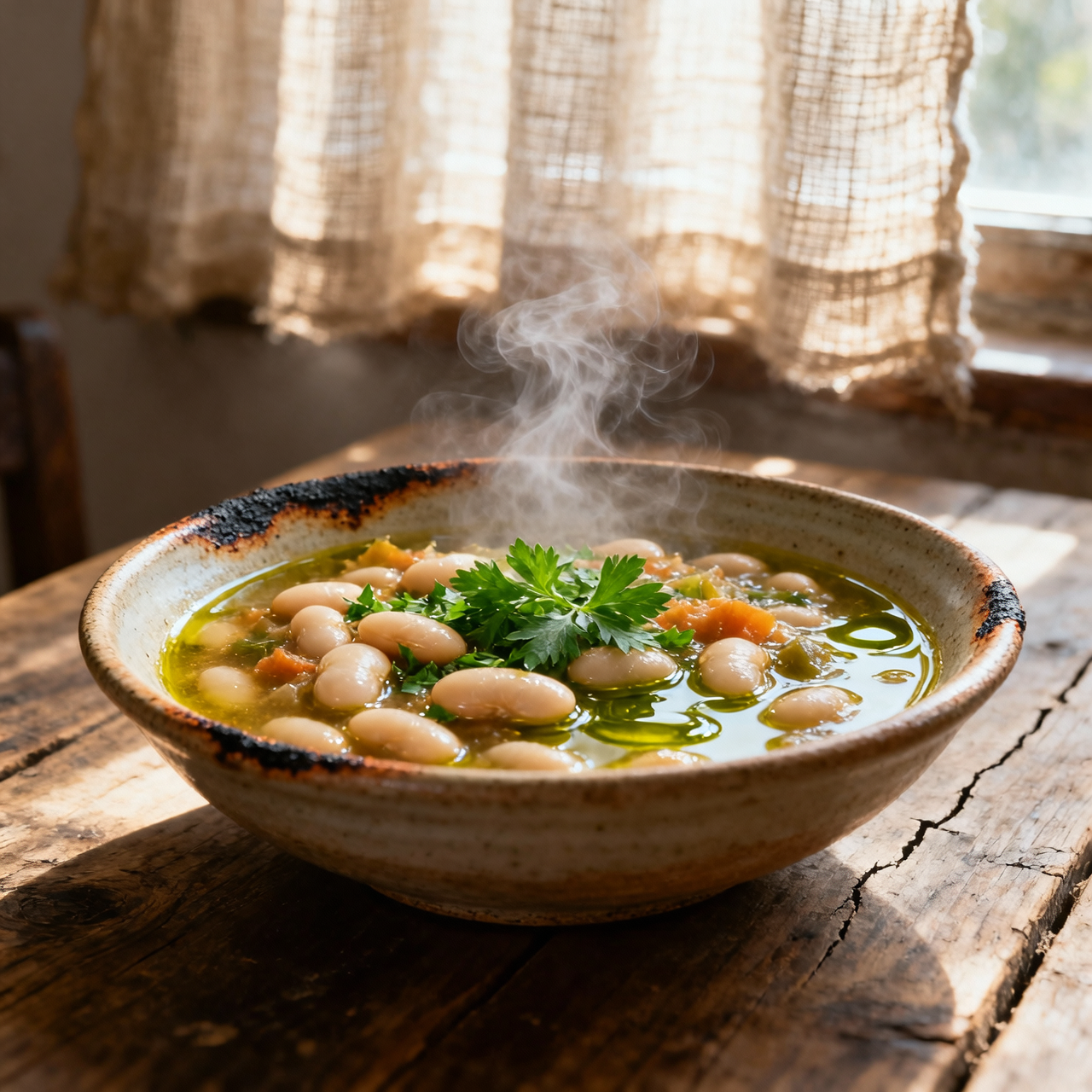
Fasolada
When I first learned to make fasolada, I thought it was merely a bowl of beans, but it quickly revealed itself as Greece’s quiet heartbeat, a dish born from the olive groves and sun-baked hills of antiquity. Historically, this white bean soup sustained farmers and sailors alike, transforming humble pantry staples into profound nourishment. To me, it matters because it refuses pretense. In a world obsessed with culinary excess, fasolada stands as a testament to patience and respect for ingredients. It is inherently vegan, yet it never feels like a compromise; rather, it feels like a homecoming. The magic lies in the slow alchemy of dried beans, ripe tomatoes, aromatic celery, and golden olive oil, all coaxed together over low heat. Yet, I’ve watched countless well-meaning cooks unravel its potential through familiar missteps. Rushing the overnight soak or using ancient, rock-hard beans guarantees a chalky result. Adding acidic tomatoes too early locks the bean skins, preventing that essential creaminess. Some over-stir in a panic, mashing the delicate structure, while others neglect the final drizzle of robust extra-virgin olive oil, which is not a garnish but the very soul of the broth. True fasolada demands stillness. You must let it simmer, undisturbed, until the beans surrender their starch to the liquid and the kitchen fills with the scent of thyme and earth. When done right, it is not just a starter; it is a quiet promise of sustenance.
Nutrition
| Per serving | Calories | Protein | Carbs | Fat | Sat fat | Fibre | Sugar | Sodium |
|---|---|---|---|---|---|---|---|---|
| beginner | 540kcal | 19g | 55g | 28g | 4g | 14g | 7g | 1100mg |
| intermediate | 540kcal | 19g | 55g | 28g | 4g | 14g | 7g | 1100mg |
| expert | 540kcal | 19g | 55g | 28g | 4g | 14g | 7g | 1100mg |
Per serving · Ava-estimated — a guide, not a clinical figure.
- 300 gCannellini bean— dried, soaked overnight
- 120 mlExtra virgin olive oil— cold-pressed, high quality
- 1 pieceYellow onion— finely diced
- 2 pieceCarrot— peeled and chopped
- 2 pieceCelery stalk— sliced thin
- 45 gTomato paste— double concentrated
- 1000 mlVegetable broth— low sodium
- 5 gDried oregano— crushed
- 2 pieceBay leaf— whole
- 10 gSea salt— fine grain
- 3 gBlack pepper— freshly cracked
This pathway is designed for absolute confidence, stripping away intimidation while preserving the soul of the dish. We lean on a pre-measured tomato concentrate and a ready vegetable broth to eliminate guesswork, giving you a reliable flavor foundation without the stress of balancing acidity. The technique prioritizes gentle, consistent heat and frequent visual checks, ensuring you never burn the base or overcook the beans into a broken mash. You will learn to recognize the exact moment the aromatics soften and how to maintain a lazy bubble that keeps the skins intact. Watch closely during the first ten minutes of simmering; this is where starch releases and the broth begins to thicken. If the pot looks too dry, add water in small increments rather than dumping it all at once. The goal here is not perfection, but familiarity. By the end of this version, you will have internalized the rhythm of building a bean soup, understanding how salt, oil, and heat interact. It is a forgiving, hands-on introduction that guarantees a hearty, satisfying result on your very first try.
Equipment
- Heavy-bottomed pan— non-stick coating is acceptable
- Colander— fine mesh preferred
- Wooden spoon— for gentle stirring
Method
- 1
Drain the soaked beans and rinse them thoroughly under cold water.
Discard any floating or discolored beans.
rinsing~ 1 min - 2
Heat half the olive oil in a large pot over medium heat.
Wait until the oil shimmers before adding vegetables.
sautéing~ 2 min - 3
Add the onion, carrot, and celery to the pot and cook until softened.
Stir frequently to prevent sticking.
sweating~ 8 min - 4
Stir in the tomato paste and broth, then add the beans, oregano, and bay leaves.
Bring to a gentle simmer, then reduce heat immediately.
blooming~ 3 minTricky bit - 5
Cover partially and cook until the beans are completely tender.
Check liquid levels every fifteen minutes and add water if needed.
simmering~ 20 min