
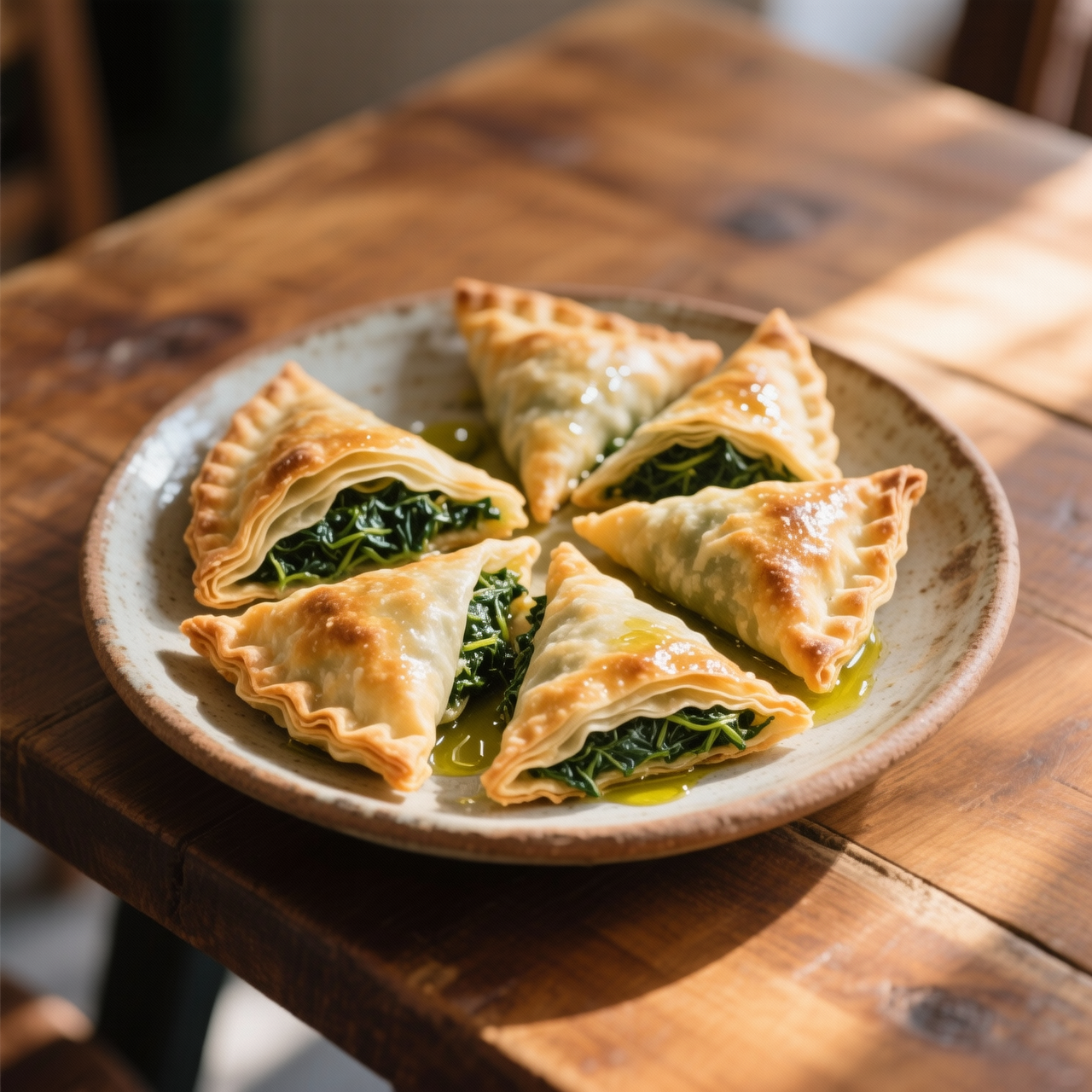
Fatayer (spinach triangles)
I still remember the exact moment I realized why my grandmother’s fatayer tasted so profoundly different from the cardboard triangles I used to buy from the supermarket freezer aisle. Those shop-bought versions usually run around five pounds for a box of twelve, yet they trade depth for convenience by relying on oxidized spinach purée, synthetic flavor enhancers, and pastry laminated with cheap palm oil that shatters into dust instead of flaking. Making them from scratch is my quiet rebellion against that hollow convenience. Rooted in Lebanon’s coastal villages where wild greens and olive oil were pantry staples, these spinach triangles carry a culinary memory that stretches back centuries. They matter because they transform humble, earthy leaves and sharp sumac into something that feels both ancient and immediate, bridging the gap between a quick snack and a shared cultural ritual. The real magic lies in the dough, which must be kneaded with patience until it develops just enough gluten to puff without tearing. The most common pitfall I see home cooks stumble over is overstuffing the wrappers or sealing them too tightly, which causes steam to build and burst the seams during baking. Another frequent misstep is skipping the acid balance in the filling; sumac and lemon juice aren’t just garnish, they are structural necessities that cut through the richness of the olive oil and prevent the spinach from tasting flat or metallic. When you fold each triangle by hand and freeze them raw, you’re not just meal-prepping. You’re preserving a rhythm that connects you to Levantine kitchens, proving that true comfort food doesn’t need a factory line, just time, good oil, and a willingness to get your hands properly floury.
Nutrition
| Per serving | Calories | Protein | Carbs | Fat | Sat fat | Fibre | Sugar | Sodium |
|---|---|---|---|---|---|---|---|---|
| beginner | 560kcal | 14g | 72g | 19g | 3g | 6g | 3g | 380mg |
| intermediate | 420kcal | 9g | 62g | 12g | 2g | 5g | 6g | 480mg |
| expert | 385kcal | 9g | 55g | 13g | 2g | 6g | 8g | 680mg |
Per serving · Ava-estimated — a guide, not a clinical figure.
- 500 gall-purpose flour— Sifted before measuring to ensure accurate hydration
- 7 gactive dry yeast— Can be substituted with fresh yeast at triple the weight
- 5 ggranulated sugar— Used to activate yeast during initial proofing
- 8 gfine sea salt— Divide evenly between dough and spinach filling
- 280 mlwarm water— Heated to 38C to safely activate yeast
- 60 mlextra virgin olive oil— Plus additional for brushing before freezing and baking
- 500 gfresh spinach— Chopped finely and thoroughly dried to prevent soggy pastry
- 150 gyellow onion— Finely diced and salted briefly to draw out excess moisture
- 30 gground sumac— Provides traditional tart flavor profile essential to Lebanese fatayer
- 60 mlfresh lemon juice— Freshly squeezed and strained to remove pulp and seeds
- 2 clovegarlic— Minced or pressed finely for even flavor distribution
This beginner-friendly approach strips away the intimidation of traditional Lebanese pastry-making while strictly avoiding processed shortcuts. Store-bought frozen fatayer typically cost eight to twelve dollars per bag, rely on refined seed oils, contain stale or overly-thick dough, and are packed with preservatives that dull the bright, herbal flavor you are after. Here, you will mix a forgiving, quick-knead yeast dough that only requires a short rest, and prepare a vibrant spinach filling entirely from fresh ingredients. The key difference is technique simplification: instead of rolling paper-thin sheets, you will divide the dough into generous balls, press them flat by hand, and fold them into sturdy triangles that seal easily. Watch closely for two things: ensure your dough balls rest long enough to relax the gluten, or they will spring back and tear during shaping, and drain the cooked spinach thoroughly. Excess moisture is the enemy of a crisp pastry bottom. The result is a reliably flaky, deeply aromatic snack that bakes beautifully straight from the freezer, giving you a healthier, fresher alternative that actually tastes like Lebanon.
Equipment
- Large mixing bowl— glass or stainless steel works best for dough temperature control
- Rolling pin— a clean wine bottle works in a pinch
- Fine mesh strainer— essential for pressing out spinach liquid
- Rimmed baking sheets— line with parchment paper for easy cleanup
Method
- 1
Whisk flour, instant yeast, salt, and a pinch of sugar in a large bowl, then stir in warm water and olive oil until a shaggy mass forms.
Water should feel comfortably warm, not hot enough to kill the yeast.
mixing~ 3 min - 2
Knead the dough on a lightly floured surface for three minutes until smooth, then divide into twenty-four equal portions.
A kitchen scale ensures even baking and consistent portion sizes.
kneading~ 4 min - 3
Cover the dough balls with a damp towel and let them rest for twenty minutes while you prepare the filling.
Resting relaxes the gluten, making the dough easier to roll without shrinking back.
proofing~ 20 min - 4
Sauté chopped onions until soft, add the fresh spinach until fully wilted, then press the mixture through a strainer to remove all excess water.
Squeezing out every drop of liquid prevents soggy pastry bottoms during baking.
wilting~ 10 minTricky bit - 5
Fold the cooled spinach into olive oil, sumac, lemon juice, salt, and black pepper, then stir until evenly combined.
Let the filling cool completely before filling the dough to avoid melting the gluten structure.
seasoning~ 3 min - 6
Roll each dough ball into a four-inch circle, place a tablespoon of filling in the center, and fold into a tight triangle, sealing all edges firmly.
Press the seams twice with your fingers to guarantee a leak-proof seal.
shaping~ 15 minTricky bit - 7
Arrange the triangles on parchment-lined baking sheets, brush lightly with olive oil, and bake until deeply golden and crisp.
Rotate the trays halfway through baking for uniform color and texture.
baking~ 15 min
Cooking from frozen
Bake directly from frozen at 200°C for 18 to 22 minutes until the pastry is deeply golden.
Storage times are a guide — always use your judgement and store food safely.