
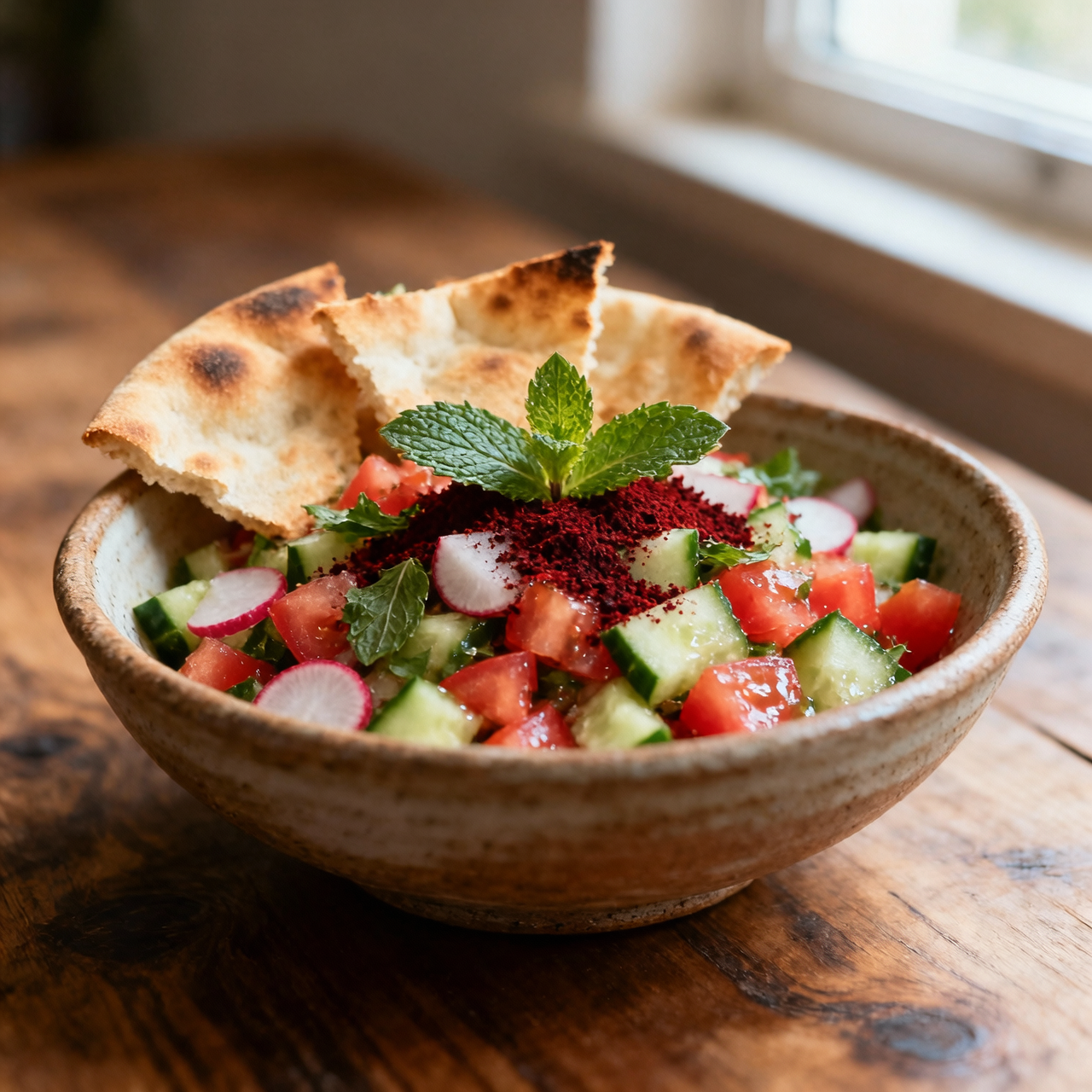
Fattoush
I have always believed that fattoush is the quiet heartbeat of Levantine home cooking, a salad that refuses to be relegated to mere background noise. Born in the sun-drenched hills of Lebanon and Syria, it emerged as a brilliant act of culinary thrift, transforming yesterday’s stale pita and foraged wild herbs into something vibrant and deeply satisfying. To me, it represents more than just a starter; it is a lesson in respecting the land’s seasonal rhythms and honoring the hands that harvest them. When you bite into the crisp shards of toasted bread mingling with sharp radishes, sweet tomatoes, and peppery sumac, you are tasting a history of resourcefulness that still resonates today. Yet, so many stumble when trying to recreate it. The most common pitfall is drowning the greens in a heavy, store-bought dressing that masks rather than elevates the ingredients. Another frequent misstep is using fresh, soft bread instead of properly dried or fried pieces, which instantly collapses into a soggy mess rather than offering that essential textural contrast. I have seen too many versions that forget the soul of the dish: the bright, tangy kiss of sumac and the sharp bite of fresh mint and parsley. Fattoush demands restraint and freshness. It asks you to chop with intention, dress just before serving, and trust that simplicity, when executed with care, will always outshine complexity. This is how I approach it, and why it remains my steadfast favorite.
Nutrition
| Per serving | Calories | Protein | Carbs | Fat | Sat fat | Fibre | Sugar | Sodium |
|---|---|---|---|---|---|---|---|---|
| beginner | 325kcal | 7g | 43g | 15g | 2g | 5g | 9g | 730mg |
| intermediate | 325kcal | 7g | 43g | 15g | 2g | 5g | 9g | 730mg |
| expert | 325kcal | 7g | 43g | 15g | 2g | 5g | 9g | 730mg |
Per serving · Ava-estimated — a guide, not a clinical figure.
- 200 gpita bread— day-old preferred for better texture retention
- 400 groma tomato— firm and ripe, avoid over-soft specimens
- 200 gpersian cucumber— thin-skinned variety preferred
- 100 gradish— small and peppery
- 50 ggreen onion— white and light green parts only
- 15 gfresh mint leaf— washed and thoroughly dried
- 20 gfresh flat-leaf parsley leaf— tender stems removed
- 60 mlextra-virgin olive oil— high-quality, cold-pressed
- 30 mlpomegranate molasses— unsweetened if possible
- 10 gground sumac— vibrant deep red color
- 10 ggarlic clove— firm and fresh
- 5 gsea salt— fine grain
- 2 gblack pepper— freshly cracked
This version prioritizes confidence and speed without sacrificing the soul of the dish. You will use a pre-mixed sumac dressing from the pantry and rely on store-bought pita chips to eliminate the toasting step entirely. The focus shifts to proper assembly and timing, ensuring the vegetables stay crisp while the bread absorbs just enough moisture to soften pleasantly. Watch for overdressing, as commercial blends are often heavily salted and sweetened, so taste before adding the full recommended amount. Tear the herbs by hand rather than chopping to avoid bruising, and keep your tomatoes and cucumbers chilled until the moment they meet the bowl. The goal here is a reliable, stress-free mezze that still delivers the signature tang and crunch. You will learn how to layer textures correctly, understanding that fattoush is built in stages rather than dumped together. By using reliable shortcuts, you remove the intimidation factor of traditional prep while still experiencing the bright, herbaceous finish that defines Lebanese summer tables. Master this baseline, and you will quickly recognize where your palate wants to push toward deeper, more hands-on techniques in future iterations.
Equipment
- large mixing bowl— glass or ceramic works best
- chef knife— sharp edge required for clean cuts
- cutting board— stable and non-slip
- salad tongs(optional)— silicone tipped preferred
Method
- 1
Open the jar of pre-mixed sumac dressing and pour it into a large mixing bowl.
Check expiration date first.
pouring~ 0 min - 2
Dice the tomatoes and cucumbers into uniform half-inch cubes and add them to the bowl.
Keep seeds intact for moisture.
dicing~ 5 min - 3
Slice the radishes and green onions thinly, then scatter them over the diced vegetables.
Use a mandoline only if you have a guard.
slicing~ 2 minTricky bit - 4
Tear the fresh mint and parsley leaves by hand and fold them gently into the mixture.
Avoid bruising the leaves to prevent darkening.
tearing~ 1 min - 5
Toss the store-bought pita chips into the bowl just before serving to preserve their crunch.
Do not let them sit longer than three minutes.
folding~ 1 minTricky bit