
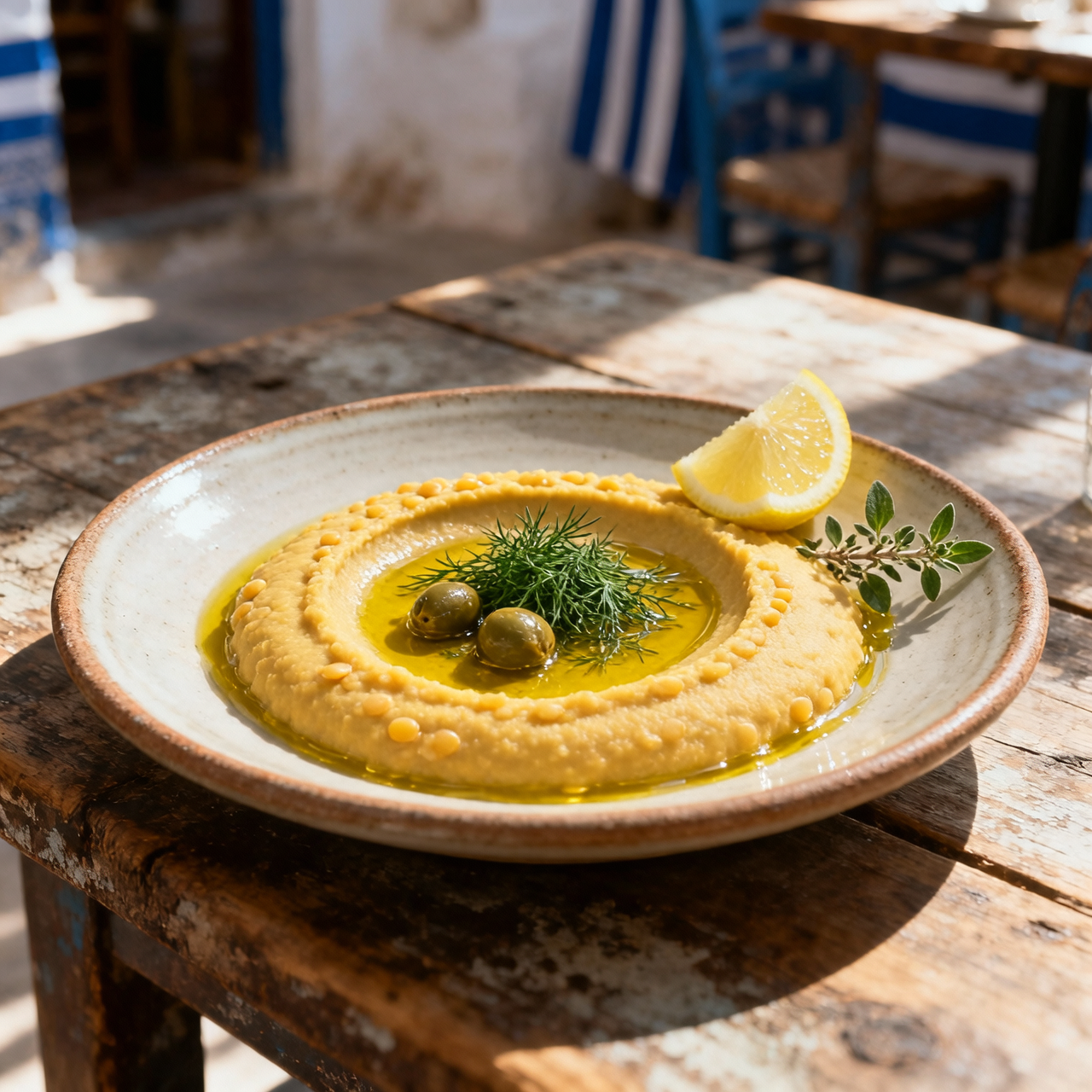
Fava (yellow split pea purée)
I have always found a quiet kind of magic in how a handful of sun-dried yellow split peas transforms into the velvet embrace known as fava. Born from the volcanic soils of Santorini, this humble purée has anchored Greek coastal tables for centuries, long before modern dietary trends labeled it vegan or sought-after. To me, it represents the quiet dignity of Aegean cooking: a dish that demands patience but rewards you with profound comfort. When I prepare it, I am not merely blending legumes; I am honoring generations of island cooks who understood that simplicity, when treated with respect, yields extraordinary depth. The true challenge lies in navigating a few well-worn pitfalls. Many rush the simmer, failing to let the peas break down naturally, which leaves a gritty backbone that no amount of olive oil can mask. Others skip the crucial skimming step, trapping bitter foam that clouds both the texture and the flavor. I have learned that adding your finishing oil too early can actually hinder the blending process, resulting in a greasy, separated mess rather than that signature silky ribbon. It is also easy to over-process the purée, pushing it past luxurious into a gummy paste that loses its rustic soul. I always season at the very end, after the starches have fully hydrated and cooled slightly, because salt added too early toughens the skins and slows the breakdown. When you finally lift that first spoonful to your lips, the reward is unmistakable: earthy, bright, and impossibly smooth, a testament to the fact that the best recipes are rarely complicated, just carefully tended.
Nutrition
| Per serving | Calories | Protein | Carbs | Fat | Sat fat | Fibre | Sugar | Sodium |
|---|---|---|---|---|---|---|---|---|
| beginner | 260kcal | 11g | 34g | 9g | 1g | 10g | 4g | 380mg |
| intermediate | 410kcal | 16g | 44g | 18g | 3g | 10g | 3g | 380mg |
| expert | 340kcal | 16g | 44g | 11g | 2g | 9g | 3g | 290mg |
Per serving · Ava-estimated — a guide, not a clinical figure.
- 300 gyellow split pea— rinsed and drained
- 1200 mlwater— or low-sodium vegetable broth
- 150 gyellow onion— peeled and finely diced
- 80 mlextra virgin olive oil— divided for cooking and finishing
- 30 mllemon juice— freshly squeezed
- 5 gsea salt— adjust to taste
- 20 gcaper(optional)— rinsed and drained
- 2 gdried oregano(optional)— crumbled for garnish
This beginner-friendly approach strips away traditional guesswork, giving you a foolproof path to a luxuriously smooth Santorini-style dip. Instead of toasting whole legumes or hand-mashing aromatics, we use quick-rinse yellow split peas and rely on a reliable immersion blender for effortless emulsification. The biggest difference is pacing: we simmer the peas in a measured amount of water until they completely fall apart, eliminating the need for straining or extended resting. You will watch for the mixture to lose all graininess and turn a pale, uniform yellow before introducing your olive oil. Pour the oil slowly down the side of the pot while blending continuously; this gradual incorporation is the secret to a glossy, restaurant-quality texture without separation. Keep the heat low during this final stage to prevent scorching the bottom. Garnish simply with a drizzle of extra-virgin olive oil, a squeeze of bottled lemon juice, and a handful of briny capers. The result is a consistently silky, deeply comforting purée that freezes beautifully for future weeknight snacks.
Equipment
- Heavy-bottomed saucepan— 2-quart capacity prevents boil-overs
- Immersion blender— standard countertop blender works but requires careful cooling first
- Fine-mesh strainer— for quick initial rinsing
Method
- 1
Rinse the yellow split peas in a fine-mesh strainer under cold running water until the water runs clear.
Removing surface starch guarantees a silky finish rather than a gluey paste.
rinsing~ 1 min - 2
Place the rinsed peas into a heavy pot with measured water and a pinch of salt.
Use a strict 1-to-4 pea-to-water ratio for consistent absorption.
combining~ 2 min - 3
Bring the pot to a gentle simmer over medium heat and cook uncovered until the legumes completely collapse.
Stir every ten minutes to keep the bottom from scorching.
simmering~ 35 min - 4
Submerge an immersion blender directly into the hot mixture and process until all visible grains disappear.
Tilt the pot slightly to catch pockets near the edges.
pureeing~ 2 minTricky bit - 5
Drizzle in the olive oil in a slow, steady stream while blending continuously until fully incorporated.
The slow pour forces the fat to bind with the starch for a glossy emulsion.
emulsifying~ 2 minTricky bit - 6
Transfer the finished purée to a shallow serving bowl and let it rest at room temperature until slightly cooled.
Flavors meld and the dip thickens to its ideal scoopable consistency.
resting~ 5 min
Cooking from frozen
Thaw overnight in the refrigerator, then whisk in a splash of warm water and a generous drizzle of olive oil to restore its silky consistency.
Storage times are a guide — always use your judgement and store food safely.