
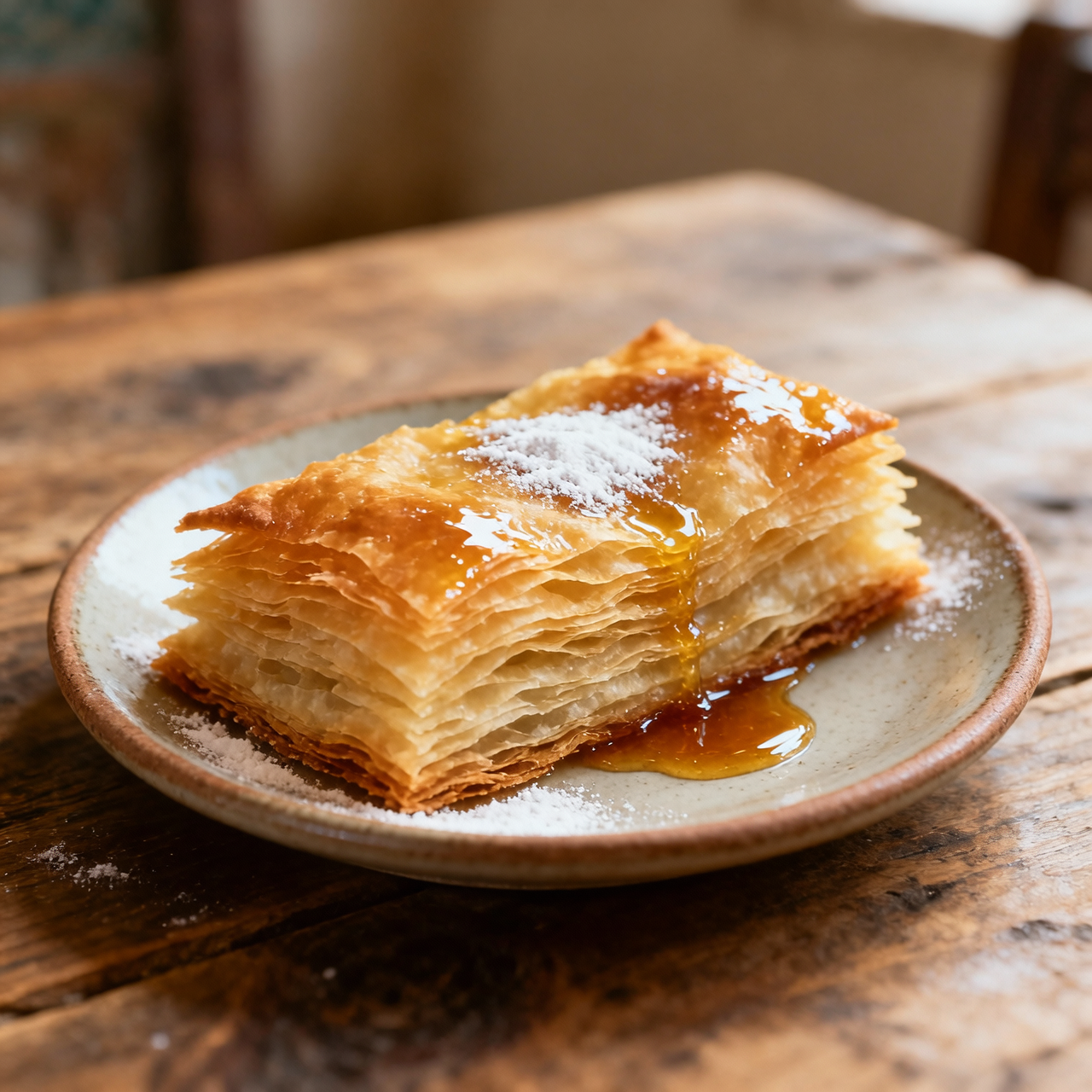
Feteer meshaltet (layered pastry)
I still remember the first time I tasted proper feteer meshaltet in a Cairo bakery, where the baker’s hands moved like a metronome, folding and stretching dough until it surrendered into impossibly crisp, buttery layers. This isn’t just breakfast; it’s a testament to patience and technique, a handmade alternative to the hollow, chemically leavened puff pastry sheets that clutter supermarket freezers. Store-bought versions run anywhere from six to ten dollars a box, yet they deliver a waxy mouthfeel, artificial shortening, and layers that shatter into dust rather than peel apart. Making it from scratch takes time, but the payoff is a living, breathing dough that sings with real butter and flour. The process is essentially Egyptian lamination: you stretch, fold, and rest, letting gluten relax while building hundreds of delicate sheets. The biggest pitfall is rushing the rests. If you pull or roll before the dough has fully relaxed, it will fight back, shrinking and tearing instead of yielding to your hands. Temperature is equally unforgiving; work in a cool room and keep your butter firm but pliable. If the fat melts into the dough, you lose the steam pockets that create the signature lift. Don’t overcomplicate the technique. You don’t need a rolling pin with measurements or a marble slab—just a clean counter, a bit of oil and melted ghee for brushing, and the discipline to wait. Once baked, the pastry emerges golden, flaky, and rich, ready to cradle sweet honey or savory cheese. It’s a quiet rebellion against convenience food, and every torn layer proves why handmade still wins.
Nutrition
| Per serving | Calories | Protein | Carbs | Fat | Sat fat | Fibre | Sugar | Sodium |
|---|---|---|---|---|---|---|---|---|
| beginner | 310kcal | 6g | 41g | 13g | 7g | 2g | 0g | 180mg |
| intermediate | 610kcal | 10g | 54g | 32g | 19g | 2g | 1g | 340mg |
| expert | 540kcal | 9g | 72g | 25g | 16g | 3g | 1g | 280mg |
Per serving · Ava-estimated — a guide, not a clinical figure.
- 500 gall-purpose flour— Sifted
- 240 mlwater— Lukewarm
- 8 gfine sea salt
- 120 gclarified butter— Melted and cooled slightly
- 30 mlneutral vegetable oil— For coating and resting
- 15 mlwhite vinegar— Aids in gluten relaxation
This beginner-friendly approach to feteer meshaltet replaces the intimidating traditional hand-stretching method with a forgiving rolling and folding technique, delivering the same flaky, buttery layers without the stress. Store-bought puff pastry or phyllo sheets typically cost $5 to $7 per package, rely on hydrogenated oils and preservatives, and frequently tear or shrink during baking. Making it from scratch costs under two dollars, yields a fresher, richer flavor, and gives you complete control over texture and ingredients. The key difference here is a slightly higher hydration dough and a single, relaxed resting period that allows gluten to unwind naturally, making the pastry far more cooperative for novice hands. Watch the dough closely after resting: if it springs back aggressively when rolled, it needs five more minutes under a damp towel. Do not rush the folding stage; keeping the fat evenly distributed is what guarantees lift. Bake until the exterior is deeply golden and audibly crisp, then slice immediately to reveal the delicate, honeycomb interior. This simplified lamination builds confidence while preserving the authentic Egyptian character.
Equipment
- Rolling pin— French tapered works best for control
- Pastry brush— silicone bristles clean easily
- Rimmed baking sheet— prevents butter spill-over
Method
- 1
Combine flour, salt, and warm water in a large bowl, then knead until a soft dough forms.
Dough should feel like a soft earlobe, not stiff.
kneading~ 8 min - 2
Cover the bowl with a damp towel and let the dough rest until it feels completely relaxed.
Resting is non-negotiable for easy rolling.
resting~ 20 min - 3
Divide the dough into four equal balls and lightly coat each with neutral oil.
Oil prevents sticking during the next rest.
portioning~ 2 min - 4
Roll each ball into a thin rectangle on a floured surface, then brush the surface generously with melted ghee.
Keep edges intact; tearing is common for beginners.
laminating~ 10 minTricky bit - 5
Fold the oiled rectangle into thirds like a business letter and transfer it to a lined tray.
Chilling is skipped here to keep it beginner-friendly.
folding~ 1 min - 6
Stack the folded pieces, gently press them into a square, and brush the top layer with oil.
Seal edges well to trap steam and create lift.
stacking~ 2 min - 7
Bake the assembled pastry in a hot oven until it turns deeply golden and sounds crisp when tapped.
Listen for the crackle to confirm proper lamination.
baking~ 35 min
Cooking from frozen
Thaw overnight in the fridge, then reheat at 350°F for 8–10 minutes to restore crispness.
Storage times are a guide — always use your judgement and store food safely.