
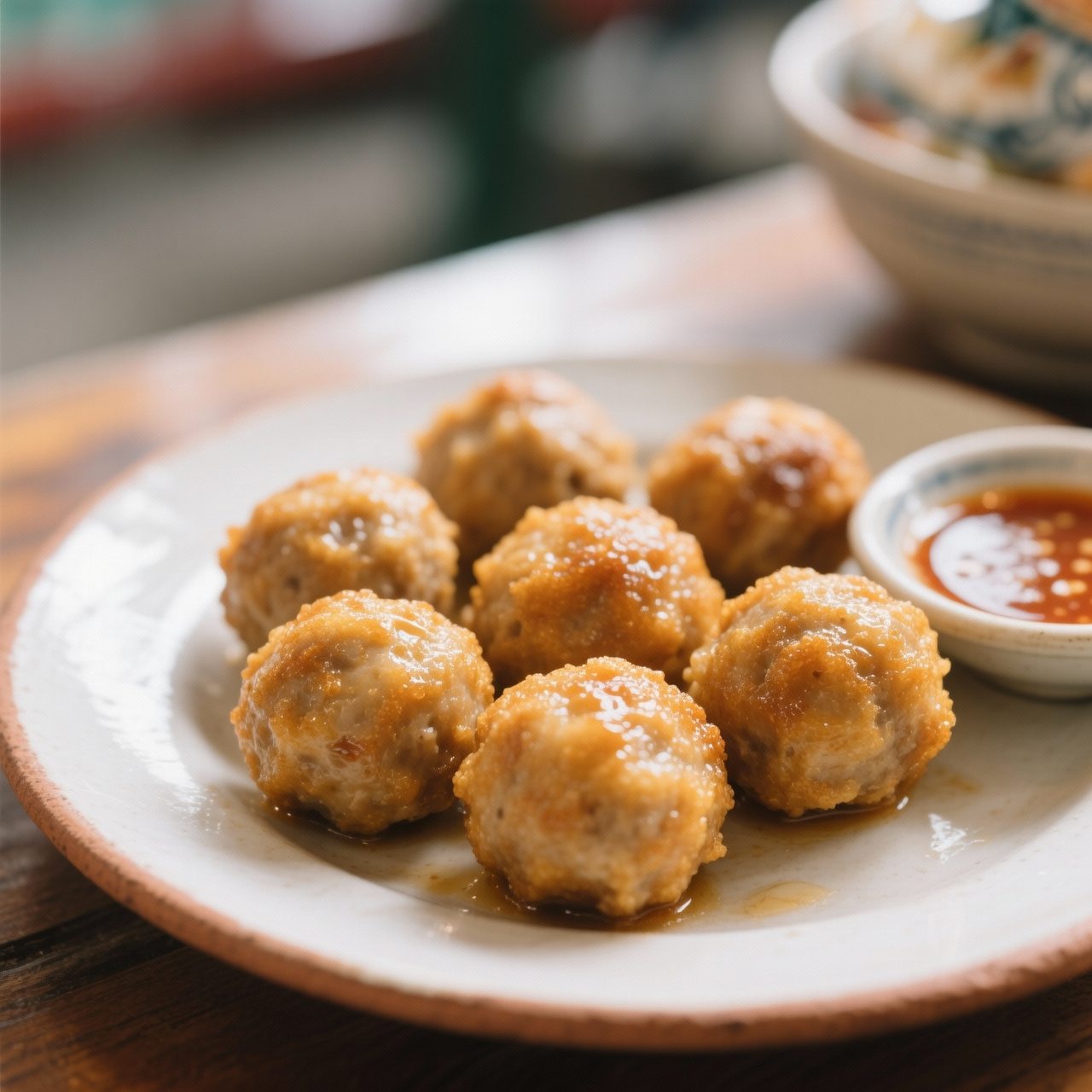
Fish Balls
I still remember the first time I watched a street vendor in Manila drop pale, perfect spheres into a rolling wok of oil. Filipino fish balls are more than just a cheap afternoon snack; they are a masterclass in texture, born from Chinese immigrant techniques but entirely reimagined with our local tilapia and milkfish. Today, you can buy frozen bags of them at every corner store for less than a dollar, but those commercial versions are almost always a disappointing compromise. They rely on heavy starch fillers, artificial bounce enhancers, and a cloying, metallic aftertaste that completely masks the delicate sweetness of real seafood. When you make them from scratch, you are not just chasing nostalgia; you are reclaiming control. The real magic lies in the paste: cold, freshly minced fish, gently folded with tapioca flour, a touch of baking powder, and just enough salt and white pepper to wake it up. The most common pitfall is treating the mixture like ground meat. Overworking it or letting it warm past forty degrees destroys that signature springy bite, leaving you with dense, crumbly pucks instead of buoyant, glossy orbs. I always emphasize the chill. Let the blended paste rest overnight in the fridge before rolling. This hydrates the starch and tightens the proteins so they puff beautifully in hot oil. Since this recipe scales effortlessly, I urge you to double or triple the batch. Roll them all, lay them on a parchment-lined tray, and freeze them raw before transferring to airtight bags. That way, you will always have a stash of honest, unprocessed street food ready to drop straight into the fryer, exactly as it was meant to be enjoyed.
Nutrition
| Per serving | Calories | Protein | Carbs | Fat | Sat fat | Fibre | Sugar | Sodium |
|---|---|---|---|---|---|---|---|---|
| beginner | 265kcal | 22g | 16g | 10g | 2g | 1g | 2g | 480mg |
| intermediate | 315kcal | 27g | 23g | 13g | 2g | 1g | 9g | 540mg |
| expert | 195kcal | 16g | 18g | 6g | 1g | 1g | 1g | 420mg |
Per serving · Ava-estimated — a guide, not a clinical figure.
- 500 gwhite fish fillet— Tilapia, pollock, or dory, skinless and boneless
- 150 gtapioca starch— Provides the signature chewy street-style texture
- 5 gbaking powder— Aluminum-free preferred for cleaner taste
- 10 gsalt
- 15 gsugar— Balances the savory profile
- 2 gground black pepper
- 120 mlice water— Must be near freezing to prevent protein breakdown during mixing
- 5 ggarlic powder(optional)
- 30 gegg white(optional)— Roughly equivalent to one large egg white
Shop-bought Filipino fish balls cost pennies per skewer but rely on heavy starch fillers, artificial binders, and questionable fish paste to keep prices low. This beginner-friendly, from-scratch version strips away the industrial shortcuts while keeping the process forgiving. Instead of worrying about precise protein extraction or ice baths, you will simply pulse firm white fish with a bit of tapioca starch and seasonings in a food processor until a smooth, cohesive paste forms. The key here is temperature control: keep the fish and processor bowl chilled so the emulsion doesn't break during blending. Watch for a glossy, slightly sticky texture that holds its shape when rolled. Drop the formed balls directly into gently simmering water to set their structure before frying. This method guarantees a bouncy, authentic bite without the need for professional kneading or complex temperature management. Freeze the uncooked balls on a tray before bagging them, turning batch prep into a zero-effort snack for later.
Equipment
- Food processor— chilled bowl works best
- Large pot— for poaching
- Baking sheet(optional)— lined with parchment for freezing
Method
- 1
Chill the firm white fish and food processor bowl in the refrigerator for 15 minutes.
Cold ingredients prevent the paste from becoming mushy.
chilling~ 15 min - 2
Pulse the cubed fish, tapioca starch, minced garlic, salt, and ice water until a smooth, glossy paste forms.
Stop scraping down the sides as soon as it pulls together.
pulsing~ 2 min - 3
Roll the paste into uniform 1-inch balls and arrange them on a parchment-lined tray.
Wet your hands lightly to prevent sticking.
shaping~ 8 min - 4
Bring a large pot of lightly salted water to a gentle simmer over medium heat.
Bubbles should barely break the surface.
simmering~ 5 min - 5
Gently drop the raw balls into the water and poach for 5 minutes until they float.
Do not stir vigorously to avoid breaking them.
poaching~ 5 minTricky bit - 6
Transfer the poached balls to a wire rack to drain completely.
Drying them ensures a crisp exterior later.
draining~ 3 min - 7
Heat neutral oil in a heavy-bottomed pan over medium heat until shimmering.
Test with a wooden spoon; bubbles should form around it.
heating oil~ 4 min - 8
Fry the poached balls in batches for 3 minutes until golden and crisp.
Turn occasionally for even browning.
shallow-frying~ 3 min - 9
Drain the finished balls on paper towels and serve immediately with spicy vinegar.
They hold their bounce best when eaten hot.
draining~ 1 min
Cooking from frozen
Thaw overnight in the fridge, then deep-fry or pan-fry until crisp; avoid microwaving to preserve the springy texture.
Storage times are a guide — always use your judgement and store food safely.