
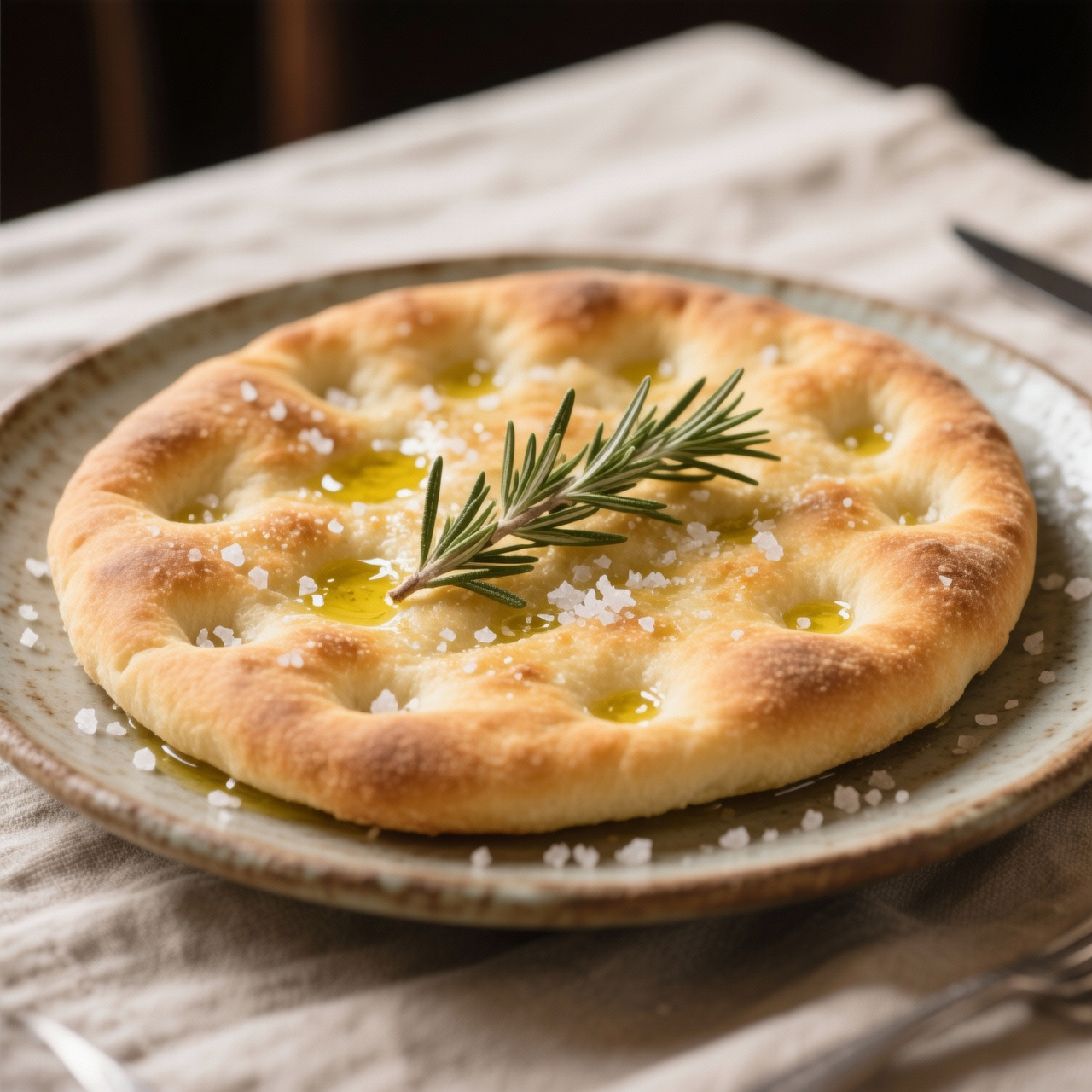
Focaccia
I first learned the quiet magic of Ligurian focaccia watching elders coax dough from flour, water, yeast, and olive oil, a coastal tradition spanning centuries. Today, we casually trade it for shrink-wrapped supermarket loaves that cost nearly four dollars a pack, yet deliver a dry crumb tasting faintly of preservatives. Those packaged slices go stale quickly and completely lack the slow fermentation that builds proper wheaty sweetness. Making this at home isn’t just budget-friendly; it’s a reclamation of patience. I have watched too many bakers rush the rise, drowning the dough in heavy oils too early, or using hot water that shocks the yeast into a flavourless sprint. The pitfalls are almost always born of impatience. This method asks only for time, room-temperature water, good extra-virgin olive oil, and a gentle hand. You will dimple the surface with your fingertips, allowing oil to pool and crisp the crust while the interior stays tender. When you finally tear into it, you will understand why this bread has survived unchanged. It freezes beautifully once sliced, so you can bake in batches and always have a piece of Italy waiting. There are no packet mixes, no artificial enhancers, and absolutely no shortcuts—just honest ingredients and the quiet confidence of knowing exactly what you are serving.
Nutrition
| Per serving | Calories | Protein | Carbs | Fat | Sat fat | Fibre | Sugar | Sodium |
|---|---|---|---|---|---|---|---|---|
| beginner | 485kcal | 11g | 74g | 15g | 2g | 3g | 1g | 490mg |
| intermediate | 420kcal | 10g | 54g | 16g | 2g | 3g | 2g | 650mg |
| expert | 365kcal | 8g | 50g | 13g | 2g | 2g | 1g | 780mg |
Per serving · Ava-estimated — a guide, not a clinical figure.
- 500 gstrong bread flour— High-protein flour ensures optimal gluten development and chewy texture.
- 375 mlwarm water— Ideally around 38°C to activate yeast without killing it.
- 60 mlextra virgin olive oil— Reserve half for greasing the baking pan and drizzling on top.
- 7 gactive dry yeast— Can be substituted with fresh yeast at triple the weight.
- 12 gfine sea salt— Dissolves evenly throughout the dough for consistent seasoning.
- 10 gfresh rosemary— Leaves stripped from woody stems and lightly bruised before adding.
- 5 gflaky sea salt(optional)— Adds a delicate crunch and bursts of salinity to the crust.
This beginner focaccia strips away the intimidation of artisanal bread-making while staying completely from-scratch, skipping the preservative-heavy bakery loaves that cost twice as much and go stale by noon. Store-bought focaccia relies on dough conditioners and cheap oils to mimic tenderness, but this version achieves a pillowy crumb and crisp, golden crust using just flour, water, yeast, and olive oil. The key difference here is a single, forgiving rise at room temperature and a high-hydration dough that requires zero kneading. You will simply stir the wet and dry ingredients in one bowl until a shaggy mass forms, then let gravity and time do the work. Watch closely for the dough’s volume to double and for large, glossy bubbles to form on the surface before baking. When dimpling the dough with oiled fingertips, press firmly until you feel the bottom of the pan but do not tear the surface; the olive oil pooled in those wells will fry the crust as it bakes. Bake until deeply golden, then cool briefly before slicing. The result is a versatile, freezer-friendly side that actually improves with a quick toast from frozen.
Equipment
- Large mixing bowl— glass or stainless steel works best
- 9x13 inch baking pan— metal conducts heat faster for a crispier crust
- Digital kitchen scale(optional)— highly recommended for accurate flour measurement
Method
- 1
Warm the water to roughly 105°F (40°C) and stir in the active dry yeast until it fully dissolves.
If it smells like fresh beer and foams slightly after five minutes, your yeast is viable.
proofing~ 5 min - 2
Add the flour, salt, and olive oil to the yeast water, then stir vigorously with a sturdy spoon until a wet, shaggy dough forms.
Do not knead; the high hydration naturally develops the gluten structure.
hydration~ 2 min - 3
Cover the bowl tightly and let it rest undisturbed in a warm spot until doubled in size and full of large surface bubbles.
A sunny counter or inside an unheated oven with just the interior light on works perfectly.
bulk fermentation~ 60 min - 4
Pour olive oil into a baking pan, gently scrape the risen dough into it, and flip it once to coat both sides evenly.
Handle gently to preserve the delicate air pockets you just spent an hour creating.
transferring~ 1 min - 5
Oil your fingertips and press firmly into the dough to create deep, evenly spaced dimples, then scatter the rosemary and coarse salt over the top.
Press until your knuckles nearly touch the pan bottom, but stop immediately before the dough tears.
dimpling~ 2 minTricky bit - 6
Let the dough rest uncovered for fifteen minutes while the oven preheats to 425°F (220°C).
This short second rise relaxes the gluten for a more open, tender crumb.
resting~ 15 min - 7
Bake on the center rack until the edges are deeply browned and the top sounds hollow when tapped.
Rotate the pan halfway through the bake to prevent uneven browning.
baking~ 25 min
Cooking from frozen
Thaw at room temperature for thirty minutes, then warm in a 375°F oven until the crust recrisps.
Storage times are a guide — always use your judgement and store food safely.