
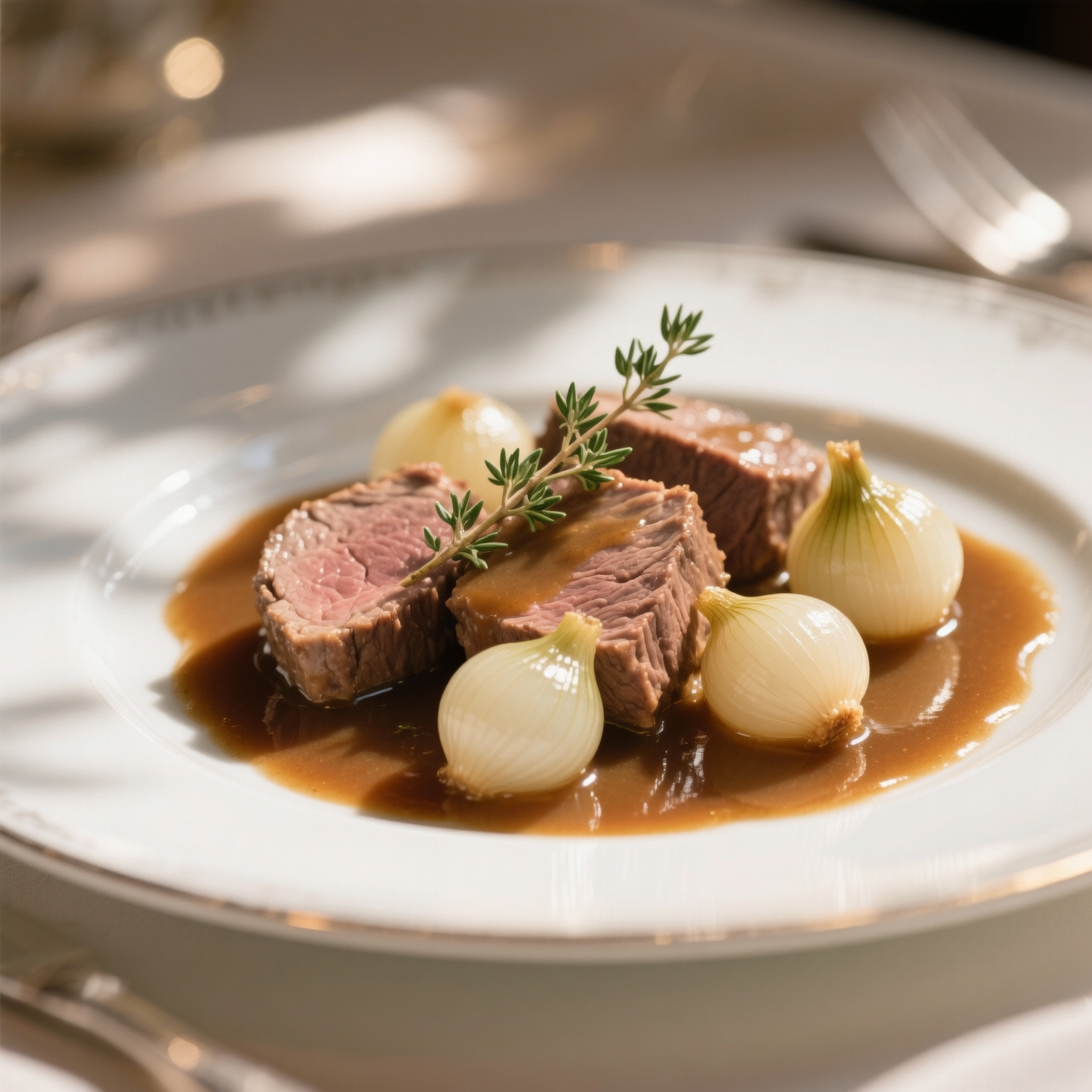
Fond de veau (veal stock)
I’ve spent more hours than I care to admit hovering over copper pots, coaxing liquid gold from roasted bones, and I can tell you that fond de veau is the quiet architect of French cuisine. Born in the grand kitchens of nineteenth-century France, this stock was never meant to be a standalone dish; it’s the invisible foundation that gives sauces like espagnole, demi-glace, and velouté their profound depth and silk. When you take the time to properly roast veal bones with a mirepoix and tomato paste, you’re participating in a culinary lineage that values patience over speed. The magic lies in the slow extraction of collagen and gelatin, which transforms into a rich, mouth-coating texture that defines professional French cooking. Yet, it’s so easy to undermine your own efforts. The most common pitfall I see is boiling the stock aggressively instead of maintaining a gentle, almost lazy simmer. A rolling boil will emulsify the fat and proteins, leaving you with a cloudy, greasy liquid that lacks clarity and elegance. Another frequent misstep is neglecting to skim the scum during the first critical hour, which locks in impurities that no amount of straining can fix. And please, resist the urge to rush the roasting; pale bones yield a pale, anemic flavor. If you treat this process with respect, you’ll end up with a deeply savory, gelatin-rich broth that will elevate every sauce, braise, and reduction you touch. It’s a batch hero, after all, meant to be frozen in cubes and deployed whenever your kitchen needs that quiet, foundational power.
Nutrition
| Per serving | Calories | Protein | Carbs | Fat | Sat fat | Fibre | Sugar | Sodium |
|---|---|---|---|---|---|---|---|---|
| beginner | 65kcal | 4g | 3g | 2g | 1g | 0g | 2g | 520mg |
| intermediate | 45kcal | 6g | 2g | 1g | 1g | 0g | 1g | 320mg |
| expert | 28kcal | 4g | 1g | 1g | 0g | 0g | 1g | 90mg |
Per serving · Ava-estimated — a guide, not a clinical figure.
- 2000 gveal bone— Knuckle or marrow bones, roasted until deeply caramelized
- 300 gonion— Unpeeled and roughly chopped
- 200 gcarrot— Roughly chopped
- 100 gcelery stalk— Roughly chopped
- 30 gtomato paste(optional)— Adds color and depth
- 50 ggarlic head— Halved horizontally
- 2 piecebay leaf— Dried
- 3000 mlcold water— Enough to just cover the bones
This beginner-friendly approach skips the traditional twelve-hour bone roast and replaces it with a high-quality jarred veal or beef demi-glace concentrate, giving you a deeply savory foundation in under an hour. The goal here is confidence, not perfection. You will quickly sweat down a simple mirepoix, bloom tomato paste to unlock its natural sweetness, and use the jarred base to deliver rich gelatin and roasted depth instantly. Watch your heat closely; a stock should only ever barely simmer. Vigorous boiling will emulsify fats into the liquid, leaving you with a cloudy, greasy result instead of a clear, glossy sauce base. If you notice any foam rising to the surface, simply skim it away with a spoon for a cleaner finish. Because this version relies on a concentrated base, it reduces beautifully and scales effortlessly. Once cooled, pour it into ice cube trays and freeze. Each cube is a ready-made flavor bomb for pan sauces, risottos, or braises, letting you skip the long prep next time while still achieving restaurant-level depth at home.
Equipment
- Heavy-bottomed pan— non-stick is fine here
- Fine-mesh strainer— essential for clarity
- Silicone spatula(optional)— for scraping the pan bottom
Method
- 1
Sweat diced onion, carrot, and celery in neutral oil until translucent.
Do not let them brown; you want pure sweetness.
sweating~ 5 min - 2
Stir in tomato paste and your jarred veal stock concentrate until deeply fragrant.
Cook just until the paste darkens slightly.
blooming~ 2 min - 3
Pour in dry white wine and vigorously scrape up the browned bits from the pan bottom.
Let it reduce by half before adding water.
deglazing~ 2 minTricky bit - 4
Add cold water, a bay leaf, and a few sprigs of thyme, then bring to the barest simmer.
Adjust heat immediately if bubbles break the surface.
simmering~ 5 minTricky bit - 5
Maintain a gentle simmer for twenty minutes, skimming any surface foam, then strain.
Use a fine-mesh sieve for a perfectly clear liquid.
skimming~ 20 min - 6
Cool the strained liquid completely, then pour into ice cube trays for freezing.
Label clearly once frozen solid.
portioning~ 1 min
Cooking from frozen
Thaw overnight in the refrigerator, then warm gently on the stovetop until fully liquid.
Storage times are a guide — always use your judgement and store food safely.