
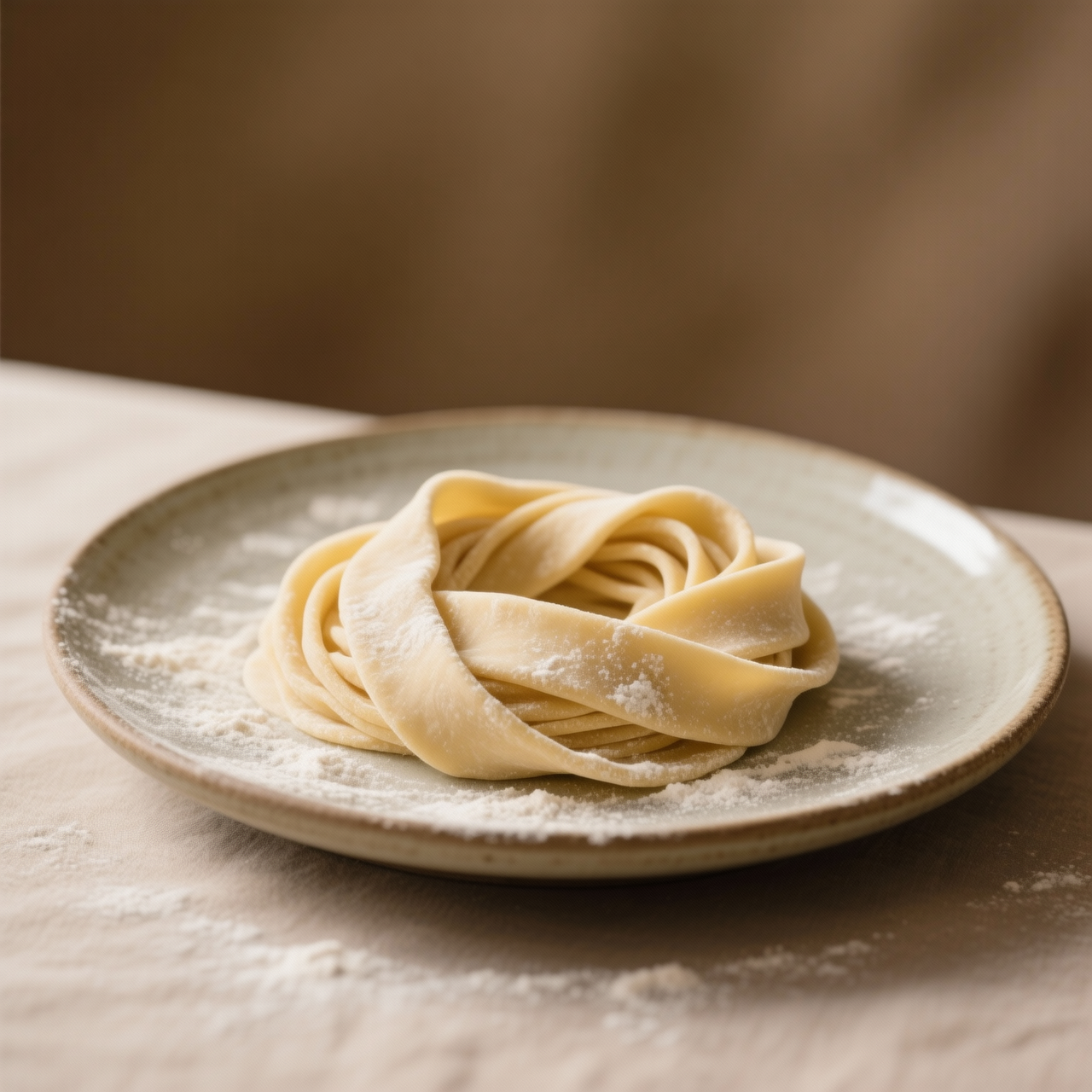
Fresh pasta dough
There is a profound magic in transforming a humble mound of flour and a few golden eggs into sheets of silky, fresh pasta. While Italy, specifically the Emilia-Romagna region, claims the undisputed crown for this egg-based dough, the technique has beautifully transcended borders to become a universal culinary staple. Making it from scratch matters because it completely eclipses the shop-bought alternatives. A standard box of dried or mass-produced fresh pasta from the supermarket might cost a few dollars, but it is fundamentally flawed. Those commercial versions rely on high-temperature extrusion and inferior durum wheat that strips away the delicate, tender bite you get at home, often padding the ingredient list with preservatives or artificial driers to extend shelf life. When you make it yourself, you control the quality, achieving a luxurious, melt-in-the-mouth texture that simply cannot be replicated in a factory. The most common pitfalls I see are adding too much flour too quickly, resulting in a stiff, unyielding dough, or under-kneading, which leaves the gluten underdeveloped and the final pasta prone to tearing. You must trust the process, kneading until the dough feels as smooth and supple as an earlobe, and resting it adequately to relax those gluten strands. It is a labor of love, yes, but the reward is a vibrant, deeply flavored foundation that elevates any sauce, proving that the simplest ingredients, when treated with respect, yield the most extraordinary results.
Nutrition
| Per serving | Calories | Protein | Carbs | Fat | Sat fat | Fibre | Sugar | Sodium |
|---|---|---|---|---|---|---|---|---|
| beginner | 470kcal | 17g | 85g | 6g | 2g | 4g | 1g | 72mg |
| intermediate | 420kcal | 14g | 70g | 7g | 2g | 3g | 1g | 75mg |
| expert | 360kcal | 16g | 52g | 9g | 3g | 2g | 1g | 45mg |
Per serving · Ava-estimated — a guide, not a clinical figure.
- 200 gflour— 00 flour or all-purpose flour, plus extra for dusting
- 2 largeegg— room temperature
- 2 gsalt— fine sea salt
- 5 mlolive oil(optional)— adds elasticity to the dough
Shop-bought dried pasta costs a mere dollar or two, but it often yields a brittle, chalky texture and lacks the rich, luxurious mouthfeel of true fresh egg pasta. This beginner version bypasses the intimidating traditional well method, opting for a much more forgiving bowl-mixing technique using a simple two-egg to one-cup flour ratio. You will achieve a silky, tender bite that clings beautifully to sauces, completely transforming a humble side dish. While the technique is simplified, do not skip the resting period, as it relaxes the gluten and makes rolling significantly easier. Watch your dough's hydration closely: if it feels crumbly, add water by the drop; if it sticks, dust with flour sparingly. Knead until it feels like smooth playdough, roll it out as thinly as your arm allows, and cut into your favorite shapes. This approach guarantees a confident first attempt at fresh pasta, proving that from-scratch cooking is both accessible and vastly superior to the boxed alternative.
Equipment
- Mixing bowl— medium size for combining flour and eggs
- Rolling pin— a standard wooden one works fine if you lack a pasta machine
- Large pot— for boiling the pasta
Method
- 1
Combine 2 cups of all-purpose flour and 1/2 teaspoon of salt in a medium mixing bowl, then create a small well in the center and crack in 3 large eggs.
Using a bowl instead of a messy countertop well makes this much easier for beginners.
mixing~ 2 min - 2
Vigorously whisk the eggs with a fork, gradually incorporating the surrounding flour until a shaggy dough forms.
Keep the fork in the center to prevent the eggs from spilling over.
kneading~ 3 min - 3
Turn the dough out onto a lightly floured surface and knead firmly with the heel of your hand for 8 to 10 minutes until completely smooth and elastic.
The dough should feel like smooth playdough and bounce back when poked.
kneading~ 9 minTricky bit - 4
Wrap the dough tightly in plastic wrap and let it rest at room temperature for at least 30 minutes.
This crucial step relaxes the gluten, preventing the dough from shrinking back when rolled.
resting~ 30 min - 5
Divide the dough into four pieces, flatten one piece, and roll it out as thinly as possible using a rolling pin, dusting with flour as needed to prevent sticking.
You should be able to see the shadow of your hand through the dough.
rolling~ 5 minTricky bit - 6
Dust the rolled sheet lightly with flour, fold it loosely into a flat cylinder, and slice crosswise into 1/4-inch ribbons, then unfurl and toss with a little extra flour.
Cook immediately in boiling salted water for 2 to 3 minutes, or freeze in loose nests for later.
cutting~ 3 min
Cooking from frozen
Drop directly into boiling salted water from frozen; add an extra minute to the cooking time.
Storage times are a guide — always use your judgement and store food safely.