
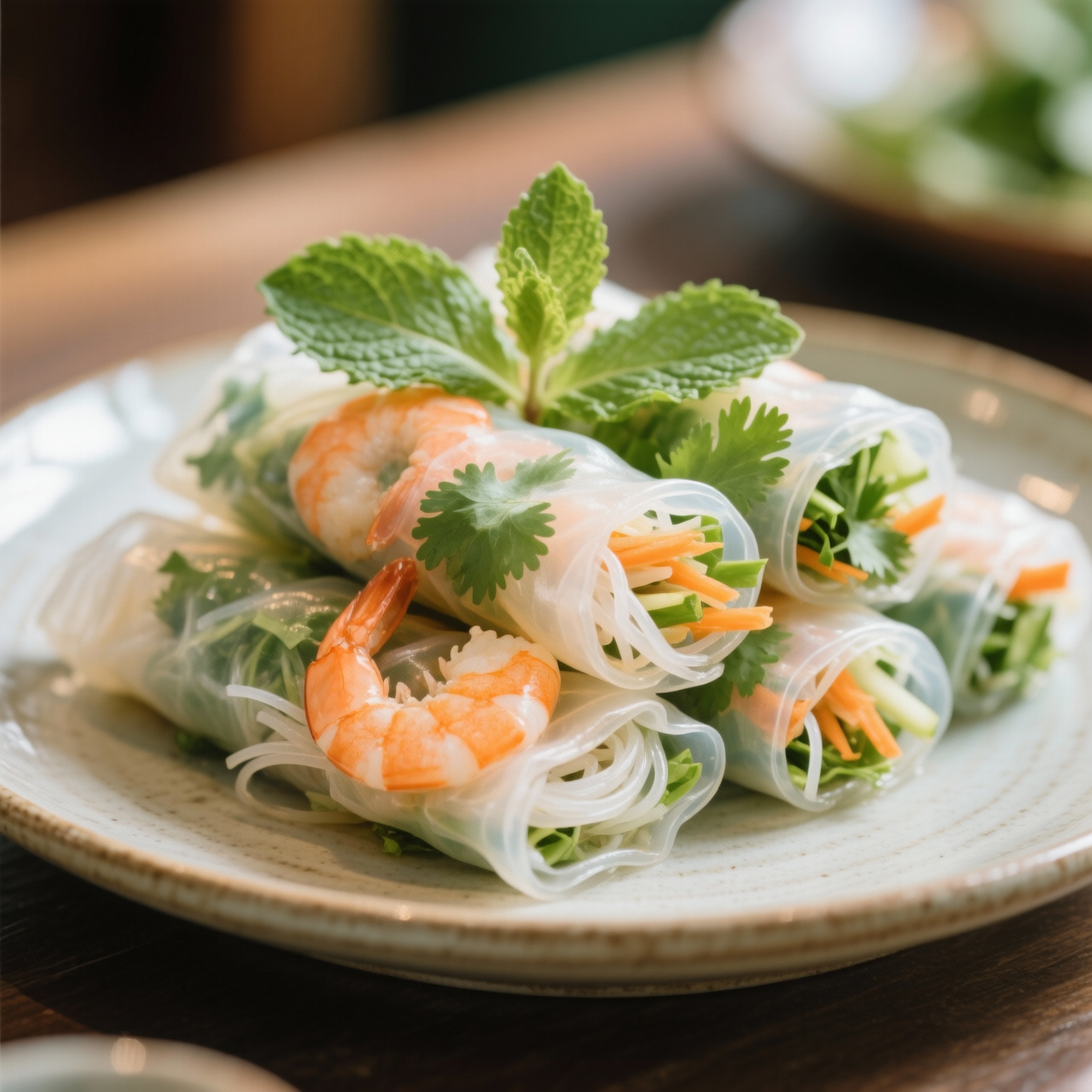
Fresh Spring Rolls (Goi Cuon)
When I first learned to make gỏi cuốn in a bustling Vietnamese kitchen, I quickly realized these translucent parcels are less about complex technique and more about mindful assembly. Born from a street food tradition where freshness is non-negotiable, they offer a bright, pescatarian-friendly alternative to heavy, fried appetizers. You will often find mass-produced versions in supermarket chillers, usually priced around six to eight dollars for a plastic tub, but they are a profound disappointment. The rice paper becomes gummy and tough, the fillings are drenched in artificial preservatives, and the delicate crunch of fresh herbs is entirely absent, replaced by a dull, uniform paste. Making them at home restores the integrity of each ingredient, turning a simple snack into a celebration of texture and balance. The true magic lies in the contrast: cool, slippery noodles against the snap of raw vegetables and the vibrant punch of mint and cilantro. Yet, pitfalls abound for the uninitiated. Overfilling the wrappers guarantees tears, while skipping the brief dip in lukewarm water leaves them brittle and unworkable. Rolling too tightly compresses the herbs, bruising their essential oils, whereas rolling too loosely means they unravel the moment you dip them. I have spent years perfecting a gentle, quarter-fold method that respects the rice paper’s delicate structure. When you approach the assembly with patience, treating each roll as a miniature canvas rather than a rushed chore, the result is impossibly light, deeply satisfying, and infinitely superior to anything you will ever buy pre-packaged.
Nutrition
| Per serving | Calories | Protein | Carbs | Fat | Sat fat | Fibre | Sugar | Sodium |
|---|---|---|---|---|---|---|---|---|
| beginner | 185kcal | 9g | 28g | 5g | 1g | 2g | 4g | 320mg |
| intermediate | 165kcal | 12g | 26g | 3g | 1g | 2g | 5g | 420mg |
| expert | 285kcal | 18g | 38g | 4g | 1g | 4g | 6g | 590mg |
Per serving · Ava-estimated — a guide, not a clinical figure.
- 10 sheetsRice paper wrapper— Store in a cool, dry place and soften in warm water just before rolling
- 200 gShrimp— Peeled, deveined, and poached until pink, then halved lengthwise
- 100 gRice vermicelli— Cooked according to package directions, rinsed with cold water, and drained
- 80 gButter lettuce leaf— Washed, thoroughly dried, and large leaves separated for wrapping
- 20 gFresh mint leaf— Rinsed and patted completely dry before use
- 20 gFresh cilantro sprig— Rinsed and patted completely dry before use
- 50 gCucumber(optional)— Seeds scooped out and cut into thin matchsticks
- 50 gCarrot(optional)— Peeled and cut into thin matchsticks
Store-bought fresh spring rolls cost around eight to ten dollars for a pack of four, yet they arrive wrapped in tough, plastic-like rice paper and rely on heavy preservatives and overly salty, sugar-laden dipping sauces. Making them at home halves the cost while delivering a truly hydrating, crisp bite that highlights fresh herbs and sweet shrimp. This beginner-friendly approach skips complicated knife work by using a simple, forgiving assembly line. Instead of soaking the rice paper until it collapses, you will learn the thirty-second dip technique that keeps the wrappers pliable without tearing. We avoid processed shortcuts entirely; the peanut dipping sauce is whisked together from basic pantry staples like crushed peanuts, lime juice, and a touch of honey, giving you complete control over the salt and sugar levels. Watch your moisture levels closely. Overfilling is the most common beginner mistake, so measure your fillings with a light hand. Keep a damp kitchen towel nearby to prevent the wrappers from drying out while you work. Roll tightly but gently, tucking the sides inward like an envelope, and you will have restaurant-quality rolls that stay fresh for hours.
Equipment
- Large shallow bowl— for hydrating rice paper evenly
- Sharp chef's knife— for slicing herbs and shrimp cleanly
- Damp kitchen towel— covers unused wrappers to prevent cracking
Method
- 1
Boil a small pot of water and cook the vermicelli noodles according to package instructions, then rinse under cold water and drain thoroughly.
Cold rinse stops cooking and prevents sticking.
rinsing~ 5 min - 2
Whisk together crushed roasted peanuts, lime juice, honey, and water until the mixture forms a loose, pourable dipping sauce.
Adjust honey to balance the acidity.
whisking~ 2 min - 3
Dip one round of rice paper into a large bowl of warm water for exactly three seconds until it softens, then lay it flat on your work surface.
The wrapper will continue to soften on the counter, so do not over-soak.
hydrating~ 0 minTricky bit - 4
Place a small bundle of noodles, two halves of cooked shrimp, and a pinch of herbs in the lower third of the wrapper, leaving a two-inch border on the sides.
Keep the filling light to prevent tearing.
portioning~ 1 min - 5
Fold the bottom edge over the filling, tuck in the sides tightly, and roll forward firmly until the wrapper seals.
Roll snugly but do not squeeze, or the rice paper will split.
envelope rolling~ 0 minTricky bit
Storage times are a guide — always use your judgement and store food safely.