
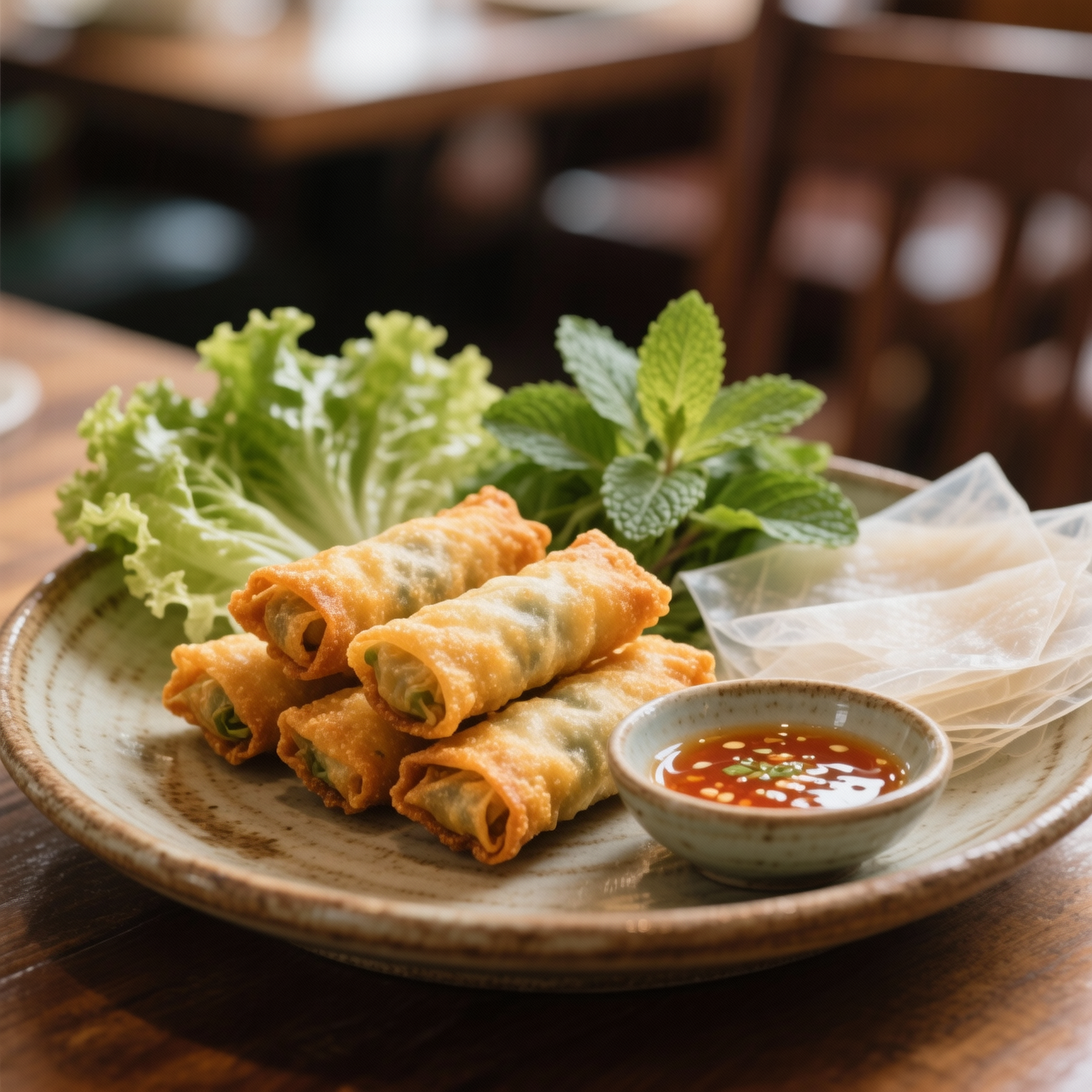
Fried Spring Rolls (Cha Gio)
I remember watching my grandmother in a cramped Saigon kitchen, her hands moving rhythmically as she wrapped delicate rice paper around a savory core of ground pork, wood ear mushrooms, and glass noodles. That was my introduction to cha gio, a beloved snack now routinely reduced to a soggy, greasy afterthought in supermarket freezers. Buying those pre-packaged rolls means paying nearly three pounds for a box that tastes overwhelmingly of stale oil, cheap starch fillers, and artificial seasoning, with brittle wrappers that split the moment they touch hot fat. Making them from scratch reclaims the dish entirely. The true magic lies in textural contrast: a shatteringly crisp shell giving way to a fragrant, moist interior that breathes with fish sauce, black pepper, and earthy soaked fungi. Yet home cooks consistently stumble at the rolling stage. Overstuffing guarantees messy ruptures during frying, while wrapping too tightly squeezes out the steam needed for a tender filling. Many also rush the oil temperature, yielding heavy, oil-logged rolls instead of a light, audible crunch. I approach every batch with deliberate patience, knowing careful prep translates directly to a perfect golden finish. When you commit to grinding fresh aromatics, soaking your own noodles, and shaping each cylinder by hand, you abandon the convenience trap entirely. You honor a culinary lineage that demands respect, and that is precisely where authentic flavor lives.
Nutrition
| Per serving | Calories | Protein | Carbs | Fat | Sat fat | Fibre | Sugar | Sodium |
|---|---|---|---|---|---|---|---|---|
| beginner | 340kcal | 18g | 26g | 16g | 4g | 2g | 3g | 720mg |
| intermediate | 390kcal | 20g | 26g | 23g | 7g | 3g | 4g | 650mg |
| expert | 485kcal | 24g | 31g | 29g | 9g | 3g | 4g | 710mg |
Per serving · Ava-estimated — a guide, not a clinical figure.
- 300 gGround pork— Preferably an 80/20 lean-to-fat ratio for moisture and flavor
- 50 gMung bean vermicelli— Soaked in warm water until pliable, then cut into short lengths
- 25 gWood ear mushroom— Dried variety, rehydrated and finely minced
- 100 gCarrot— Peeled and finely grated
- 100 gJicama— Peeled and finely grated to add crunch
- 1 largeEgg— Lightly beaten to bind the filling ingredients
- 15 mlFish sauce— Traditional Vietnamese type preferred for authentic umami
- 10 gGranulated sugar— Balances the saltiness of the fish sauce
- 30 gShallot— Finely minced for aromatic depth
- 15 sheetsRice paper wrapper— Round or square, 22cm diameter, keep dry until assembly
- 1000 mlNeutral oil— Vegetable or canola oil for deep frying
Store-bought cha gio costs around $8–$12 per box and relies on preservatives, excessive sodium, and thick, gummy wrappers that turn greasy. This beginner-friendly version keeps the process strictly from scratch but streamlines the technique for confidence and consistency. You will skip complex traditional folding methods in favor of a straightforward burrito-style roll that guarantees tight seals without tearing. The filling relies on fresh, finely minced pork shoulder, crisp mung bean noodles, and earthy wood ear mushrooms, all bound simply with fresh egg. Watch your oil temperature closely; a steady 340°F ensures the wrappers blister and crisp evenly without absorbing excess fat. Roll generously, place them seam-side down on a tray, and freeze them raw before transferring to bags for effortless future frying. Keep your knife sharp for uniform mincing, and avoid overmixing the filling to maintain a light, airy bite. With just a few mindful steps, you will achieve the signature glassy crunch and savory depth that makes cha gio a beloved staple, entirely free from the artificial shortcuts of commercial frozen versions.
Equipment
- Heavy-bottomed skillet— cast iron or stainless steel holds steady frying heat
- Instant-read thermometer— critical for maintaining safe oil temperature
- Wire cooling rack— prevents soggy bottoms after frying
Method
- 1
Soak dried mung bean noodles and wood ear mushrooms in warm water until pliable, then drain and chop finely.
Squeeze out excess moisture to prevent a soggy filling.
rehydrating~ 10 min - 2
Combine finely minced pork shoulder, chopped aromatics, ground black pepper, and a lightly beaten egg in a large bowl.
Keep everything cold to maintain proper fat distribution.
binding~ 5 min - 3
Gently fold the mixture until just combined, avoiding vigorous stirring to keep the final texture light.
Overmixing develops too much protein and makes the rolls dense.
folding~ 2 min - 4
Place a wrapper on a damp cloth, add a measured portion of filling, fold the sides inward, and roll tightly into a cylinder.
Seal the final edge with a dab of water to prevent bursting in hot oil.
rolling~ 8 minTricky bit - 5
Heat neutral oil to 340°F and carefully lower the rolls seam-side down into the pan.
Do not overcrowd the pan to maintain consistent oil temperature.
deep-frying~ 2 min - 6
Fry until uniformly golden and crisp, turning occasionally to ensure even browning.
Listen for a steady sizzle; rapid bubbling means the oil is too hot.
turning~ 10 min - 7
Transfer the cooked rolls to a wire rack set over paper towels and rest for three minutes before serving.
Resting allows internal steam to escape and maximizes crunch.
resting~ 3 min
Cooking from frozen
Thaw completely in the fridge overnight, then bake at 200°C until piping hot to restore the crisp exterior.
Storage times are a guide — always use your judgement and store food safely.