
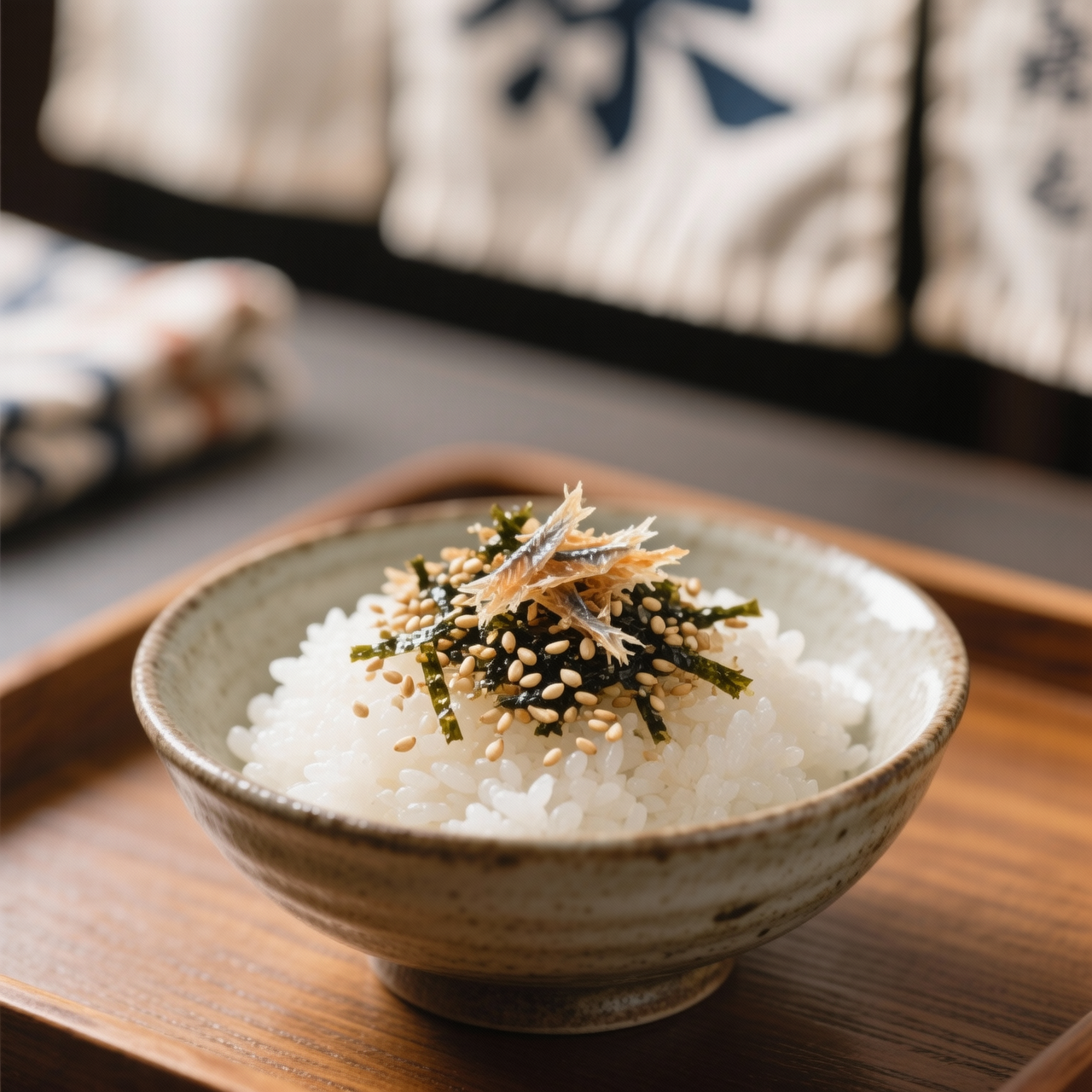
Furikake (Rice Seasoning)
When I first encountered furikake, I was struck by how such a humble blend could completely transform plain steamed rice into something deeply comforting. Born in early twentieth-century Japan as a clever solution to iodine deficiency, this seasoning evolved from a simple seaweed-and-salt mixture into a vibrant pantry staple that bridges generations. What makes it matter to me isn’t just its umami punch, but the way it teaches restraint and balance. Every element has a purpose: toasted sesame seeds bring nutty warmth, crumbled nori delivers oceanic depth, and a whisper of bonito or shiso ties it all together. Yet, the most common pitfall I see is rushing the toasting process. If your sesame seeds burn or your nori isn’t properly crisped before crumbling, the entire blend turns bitter or soggy. Another frequent mistake is over-salting the base ingredients or using stale flakes that have lost their aromatic volatility. Furikake thrives on dryness and patience. You must cool every component completely before combining them in a sealed jar, or residual heat will trap moisture and ruin that delicate, shatteringly crisp texture. I always remind myself that this isn’t a sauce or a paste; it’s a dry condiment meant to be sprinkled, never drowned. When stored away from direct light and humidity, it rewards you with months of reliable flavor. Making it at home strips away the anti-caking agents found in commercial versions, leaving behind a pure, customizable sprinkle that respects both the rice it crowns and the hands that prepare it. It’s a quiet lesson in how minimal ingredients, treated with care, can elevate the everyday.
Nutrition
| Per serving | Calories | Protein | Carbs | Fat | Sat fat | Fibre | Sugar | Sodium |
|---|---|---|---|---|---|---|---|---|
| beginner | 145kcal | 7g | 4g | 12g | 2g | 2g | 0g | 290mg |
| intermediate | 75kcal | 4g | 6g | 5g | 1g | 2g | 3g | 320mg |
| expert | 42kcal | 2g | 3g | 3g | 0g | 1g | 2g | 140mg |
Per serving · Ava-estimated — a guide, not a clinical figure.
- 10 sheetsnori sheet— Toast lightly until crisp before tearing or cutting into small pieces
- 30 gwhite sesame seed— Dry-toast in a skillet until fragrant and lightly golden
- 15 gblack sesame seed— Dry-toast briefly to enhance aroma
- 20 gbonito flake— Finely shaved katsuobushi works best; keep dry
- 5 gsalt— Fine sea salt or kosher salt
- 5 ggranulated sugar(optional)— Adjust to taste; balances savory and umami notes
- 5 gdried kombu(optional)— Finely minced or processed into powder after brief toasting
This beginner-friendly approach to furikake relies on high-quality, ready-to-use components like store-bought toasted sesame seeds, pre-packaged bonito flakes, and crisp roasted nori sheets. The main goal is learning how to gently toast and combine these dry ingredients without burning the delicate oils in the sesame or turning the seaweed chewy. Watch closely during the pan step; low heat is your absolute best friend here, and constant stirring prevents bitter, scorched flavors that can ruin the entire batch. Once the mixture turns fragrant and lightly golden, you must spread it out on a cool plate and let it rest completely before transferring it to an airtight jar. Skipping traditional grinding and homemade dashi powder, this shortcut method delivers a reliable, shelf-stable seasoning in under an hour. Perfect for sprinkling over warm rice, roasted vegetables, or simple noodle bowls, this recipe scales effortlessly and stays fresh for weeks. Trust your nose—if it smells deeply nutty and oceanic, you have successfully nailed it.
Equipment
- Heavy-bottomed skillet— non-stick works well for even low-heat toasting
- Airtight glass jar— must be completely dry before filling to prevent moisture buildup
- Large mixing bowl— wide rim makes folding and cooling easier
Method
- 1
Place the sesame seeds in a dry skillet over low heat.
Keep the heat gentle; sesame burns in seconds.
dry-toasting~ 3 min - 2
Stir constantly until the seeds turn golden and release a nutty aroma.
Remove from heat immediately once fragrant to prevent carryover cooking.
toasting~ 2 minTricky bit - 3
Transfer the toasted seeds to a large mixing bowl to stop the cooking process.
Spreading them out on a cool surface prevents scorching.
cooling~ 1 min - 4
Tear the nori sheets into small, bite-sized pieces and add them to the bowl.
Use kitchen shears for uniform, crisp pieces.
tearing~ 2 min - 5
Fold in the bonito flakes and a pinch of fine sea salt until evenly distributed.
Handle the bonito gently to keep the flakes light and airy.
folding~ 1 min - 6
Allow the mixture to cool completely before funneling it into an airtight glass jar.
Trapped steam will make the seasoning chewy and spoil quickly.
storing~ 5 minTricky bit
Storage times are a guide — always use your judgement and store food safely.