
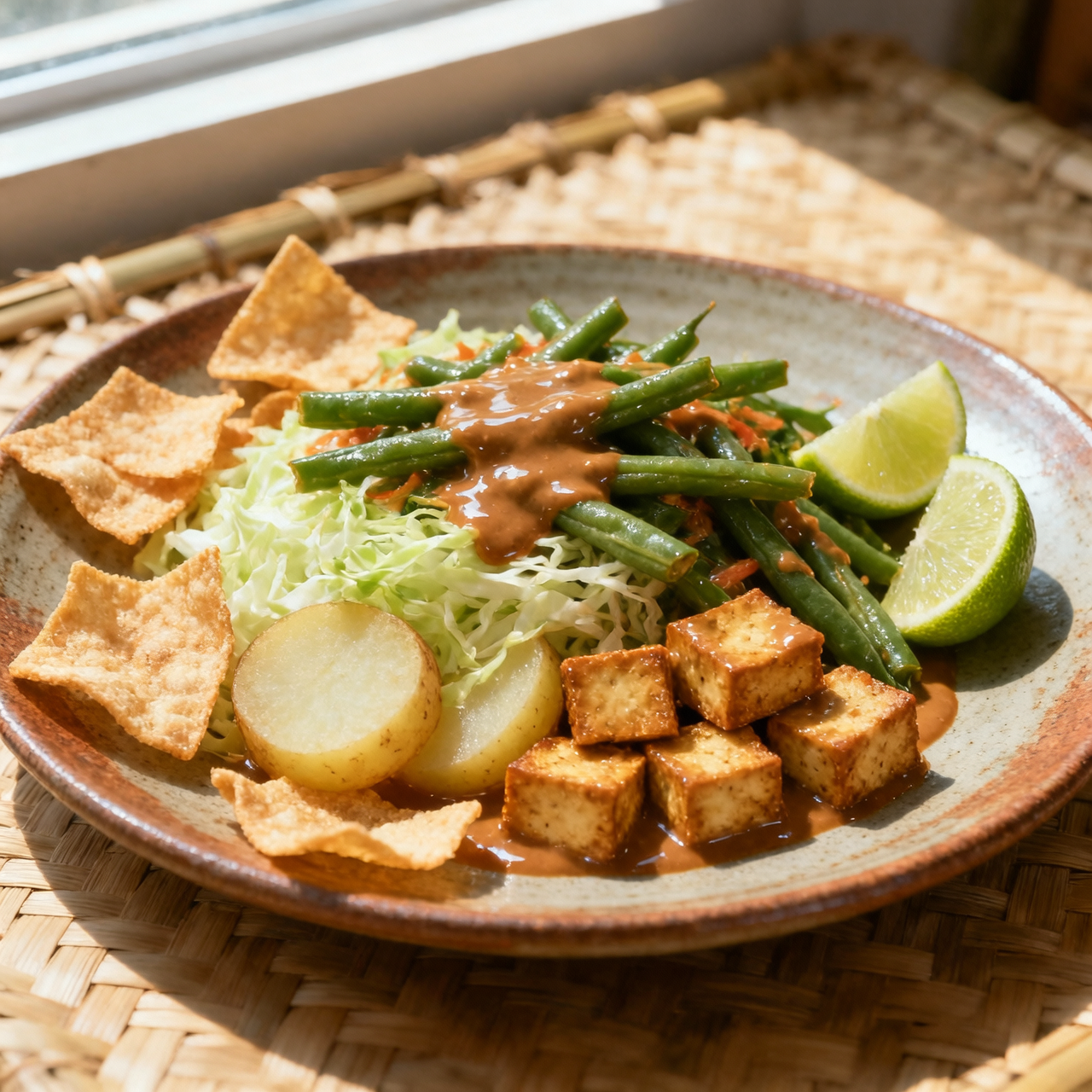
Gado-Gado
When I first encountered gado-gado, I thought it was merely a salad, but I quickly learned it is a living archive of Indonesia's culinary soul. Born in the bustling streets of Jakarta and refined across the archipelago, its name literally translates to mixed, yet the harmony it achieves is anything but haphazard. I have always believed this dish matters because it transforms humble, earthbound ingredients into something profoundly elegant. It teaches us that balance is not accidental; it is earned through careful layering of textures, temperatures, and the slow roasting of peanuts into a velvety, deeply savory sauce. In my own kitchen, I treat gado-gado as a meditation on patience and precision. The most common mistake I see is treating it like an afterthought, blanching vegetables until they surrender their crunch, rushing the peanut paste with store-bought shortcuts, or drowning everything in a sauce that leans too heavily on palm sugar. A true gado-gado demands that each component retain its integrity, from the crisp bite of blanched beans to the earthy resilience of tempeh and tofu, all bound by a sauce that has been toasted, ground, and simmered until it coats the back of a spoon. When the balance tips, the dish collapses into muddiness. But when respected, it becomes a vibrant, deeply nourishing centerpiece that honors both the soil and the hands that prepare it. I make it not just to feed myself, but to remember how plant-based food can hold a culture together.
Nutrition
| Per serving | Calories | Protein | Carbs | Fat | Sat fat | Fibre | Sugar | Sodium |
|---|---|---|---|---|---|---|---|---|
| beginner | 750kcal | 29g | 58g | 50g | 17g | 12g | 20g | 590mg |
| intermediate | 750kcal | 29g | 58g | 50g | 17g | 12g | 20g | 590mg |
| expert | 750kcal | 29g | 58g | 50g | 17g | 12g | 20g | 590mg |
Per serving · Ava-estimated — a guide, not a clinical figure.
- 200 graw peanut— unsalted, skin-on
- 50 gred chili— fresh, stems removed
- 60 gshallot— peeled
- 15 ggarlic clove— peeled
- 20 ggalangal root— fresh, not dried
- 15 gtamarind paste— seedless concentrate
- 30 gpalm sugar— finely grated
- 250 mlcoconut milk— full-fat, unsweetened
- 4 pcslime leaf— fresh, torn
- 150 glong bean— trimmed into 5cm pieces
- 200 gcabbage— core removed, cut into wedges
- 300 grusset potato— peeled and sliced into rounds
- 200 gfirm tofu— drained and cubed
- 100 gbean sprout— tails removed
- 50 grice cracker— vegan-certified
- 30 mlvegetable oil— neutral flavor
- 5 gsalt— fine sea salt
This version prioritizes confidence and speed by embracing reliable shortcuts without sacrificing flavor. Instead of grinding peanuts and aromatics from scratch, you will use a high-quality, pre-mixed gado-gado paste as your foundation. The focus here is entirely on execution and assembly. You will learn to properly temper the sauce with warm coconut milk to achieve a silky consistency, then gently fold it into your prepared vegetables. Watch closely for the sauce to thicken slightly as it warms; if it splits, the heat was too aggressive. Blanch your vegetables just until crisp-tender to preserve their structural integrity and vibrant color. Overcooking is the most common beginner mistake, as it turns the dish into a soggy mush rather than a textural mosaic. I recommend tasting your sauce before combining it with the vegetables, adjusting with a touch of extra lime juice if it feels too heavy. Keep your prep station organized, and work methodically through each component. By the end, you will understand the essential balance of this dish and have a reliable template to build upon as you grow.
Equipment
- microwave-safe bowl— for warming sauce
- small saucepan— stainless steel preferred
- steamer basket— fits over a standard pot
- sharp knife— 8-inch chef's knife
- cutting board— stable surface
Method
- 1
Bring a large pot of salted water to a rolling boil.
Water should taste like seawater to season the vegetables evenly.
boiling~ 2 min - 2
Drop the potatoes and long beans into the boiling water and cook until fork-tender.
Potatoes first, beans after five minutes.
blanching~ 7 minTricky bit - 3
Remove the vegetables with a slotted spoon and immediately plunge them into an ice bath.
Halts cooking instantly and locks in color.
shocking~ 1 min - 4
Warm the pre-mixed peanut paste with coconut milk in a small saucepan over low heat.
Stir constantly to prevent scorching at the bottom.
tempering~ 3 minTricky bit - 5
Toss the drained vegetables with the warm sauce until every piece is evenly coated.
Work gently to avoid bruising the tender greens.
tossing~ 2 min - 6
Plate the mixture and scatter the rice crackers over the top before serving.
Add crackers at the very last second for maximum crunch.
plating~ 1 min