
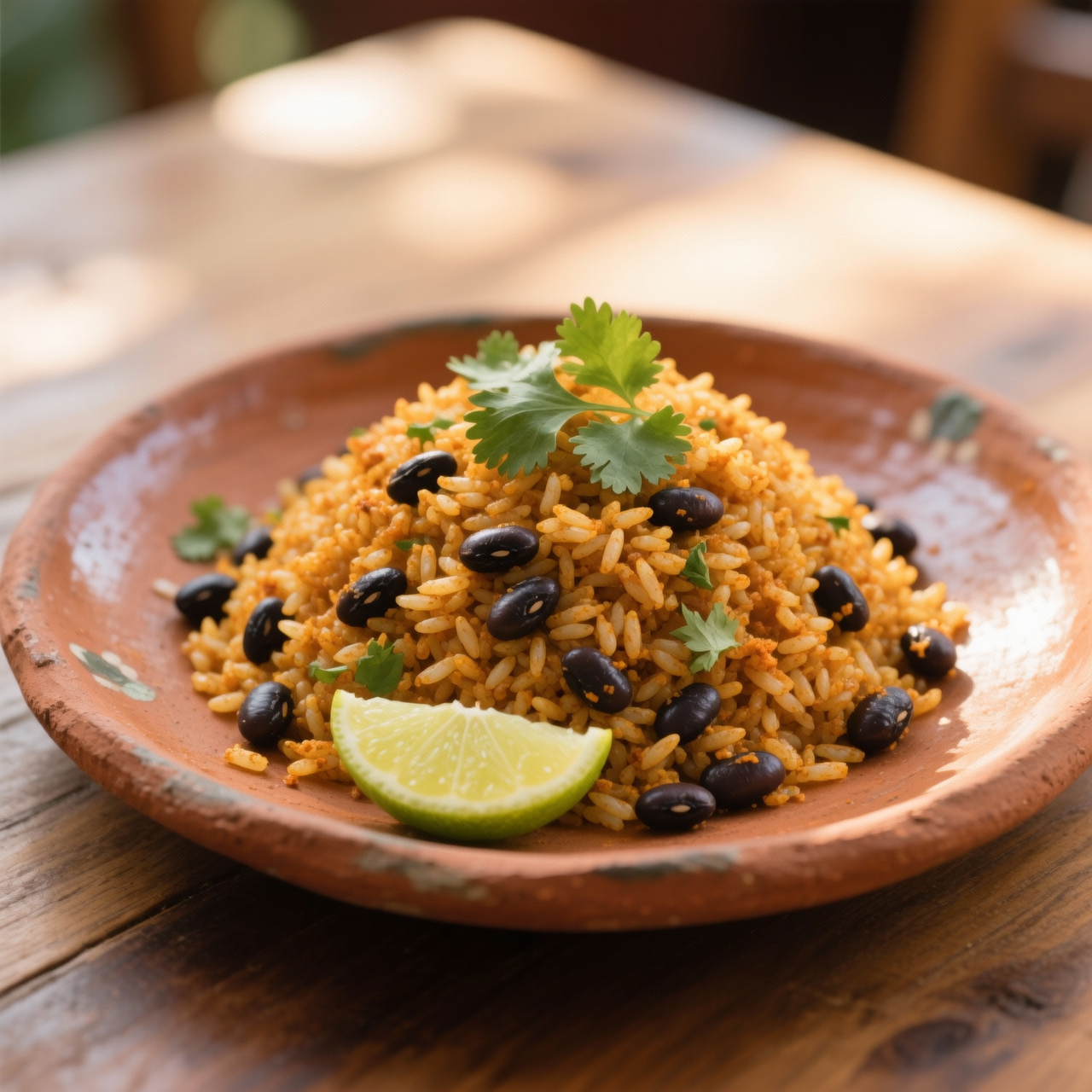
Gallo Pinto
I’ve always believed that breakfast shouldn’t just fuel the body; it should anchor you to a place and a people, and that’s exactly why I keep coming back to gallo pinto. Born from the practical, humble kitchens of Costa Rica and Nicaragua, this dish is essentially a love letter to resourcefulness. The name itself, meaning “spotted rooster,” comes from the beautiful contrast of black beans and white rice mingling together, but its true origin lies in generations of cooks who transformed yesterday’s leftovers into today’s most comforting meal. What matters most to me about gallo pinto isn’t just its naturally vegan simplicity or its earthy, deeply satisfying flavor profile, but how it embodies the Central American rhythm of life: slow-cooked beans, cooled rice, and the patience to let them marry properly in the pan. Too often, though, I see people rush the process. The biggest pitfall is using freshly cooked, still-hot rice, which turns the dish into a gummy mess instead of achieving those distinct, slightly crisp grains. Another common mistake is under-toasting the aromatics or skipping the slow fry of the beans, which robs the dish of its signature depth. When you take the time to properly cool your rice, gently warm your sofrito, and let everything simmer until the flavors truly fuse, you aren’t just making breakfast—you’re participating in a quiet, daily tradition that has sustained communities for centuries. It’s unpretentious, deeply nourishing, and entirely honest.
Nutrition
| Per serving | Calories | Protein | Carbs | Fat | Sat fat | Fibre | Sugar | Sodium |
|---|---|---|---|---|---|---|---|---|
| beginner | 520kcal | 15g | 91g | 10g | 2g | 12g | 3g | 575mg |
| intermediate | 520kcal | 15g | 91g | 10g | 2g | 12g | 3g | 575mg |
| expert | 520kcal | 15g | 91g | 10g | 2g | 12g | 3g | 575mg |
Per serving · Ava-estimated — a guide, not a clinical figure.
- 300 gwhite rice— cooked and chilled overnight for optimal texture
- 400 gblack bean— cooked, with 100 ml cooking liquid reserved
- 150 gyellow onion— finely diced
- 100 gred bell pepper— finely diced
- 15 ggarlic clove— peeled and minced
- 30 gachiote paste— also known as recado rojo
- 30 mlvegetable oil— neutral high-heat variety
- 20 gfresh cilantro— stems removed, leaves roughly chopped
- 5 gkosher salt— adjust to taste
- 2 gground black pepper— freshly cracked preferred
This version embraces smart shortcuts to guarantee a stress-free first attempt without sacrificing the dish’s essential character. Use a high-quality store-bought achiote paste and pre-cooked beans, saving prep time while achieving authentic flavor. Moisture control is critical. Canned beans and jarred pastes vary in salt and liquid, so taste continuously. Watch for the moment the oil shimmers and onions soften completely; this signals when to add the paste and bloom it, unlocking deep earthy notes. Fold rice gently rather than stirring aggressively to prevent mush. Add a splash of water if the pan dries out. Do not rush the final simmer; resting off heat allows grains to firm while absorbing seasoning. Keep heat at medium-low to avoid scorching, and use a non-stick skillet. Trust the process, follow the visual cues, and you will produce a vibrant breakfast that tastes professionally crafted.
Equipment
- Large non-stick skillet— essential for preventing sticking with shortcut ingredients
Method
- 1
Heat vegetable oil in a skillet over medium-low heat until it begins to shimmer.
Shimmer, not smoke.
heating~ 1 min - 2
Sauté diced yellow onion and red bell pepper until completely translucent.
Stir frequently to prevent browning.
sweating~ 5 min - 3
Add minced garlic and store-bought achiote paste to the pan.
Cook until fragrant and deeply aromatic.
blooming~ 2 min - 4
Fold in drained black beans and reserved cooking liquid.
Keep beans slightly whole for better texture.
combining~ 2 min - 5
Gently incorporate chilled cooked rice into the mixture using a folding motion.
Avoid aggressive stirring to protect grain structure.
folding~ 3 min - 6
Season with kosher salt and ground black pepper, then remove from heat.
Taste carefully before adding extra salt.
seasoning~ 1 minTricky bit - 7
Fold in chopped fresh cilantro and let the pan rest for five minutes before serving.
Resting allows residual heat to meld the flavors.
resting~ 5 min