
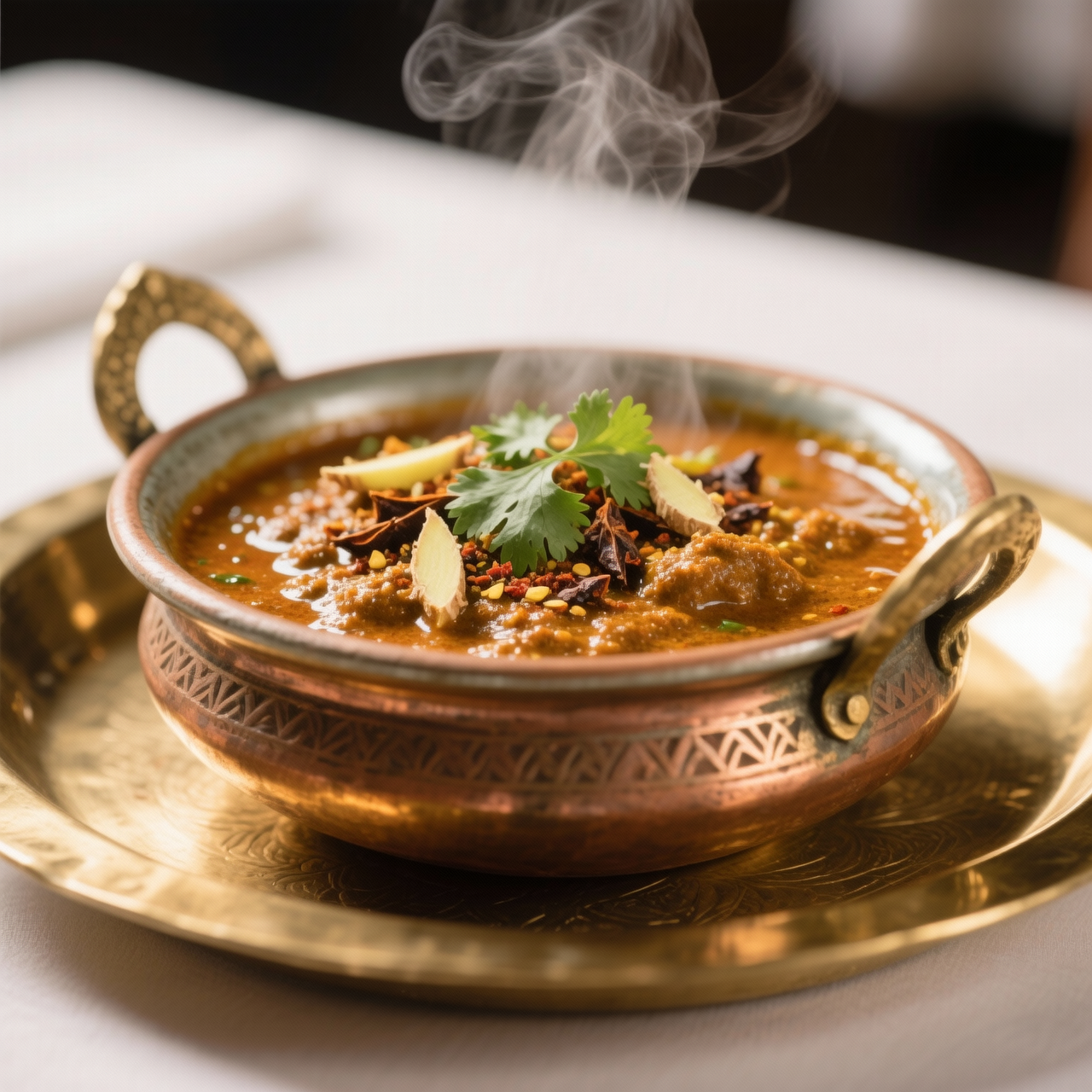
Garam Masala
I have spent years chasing the exact balance of warmth and complexity that defines a proper garam masala, and I can tell you it is less a recipe than a philosophy of patience. The name itself translates to a warming spice, a reference not to heat on the tongue but to the slow, radiant glow it brings to winter broths, lentil pots, and roasted vegetables. Historically rooted in the royal kitchens of Mughal-era northern India, this blend was never meant to be a blunt instrument of pungency. It is a finishing touch, a whisper of toasted cumin, cardamom, cloves, cinnamon, black pepper, and nutmeg that elevates rather than overwhelms. What matters most is respecting the ingredients natural volatility. The most common mistake I see is buying pre-ground spices and calling it a day, or worse, skipping the toast. Raw spices taste flat and medicinal, while over-toasted ones turn bitter and acrid within seconds. I always heat them in a heavy pan over medium-low, listening for the exact moment the cumin goes fragrant and the coriander turns a shade darker, then immediately tipping them onto a cool plate to arrest the cooking. Grinding must happen only when cool, and ideally in small batches to preserve the delicate essential oils. Store-bought versions lose their soul to shelf life, but a freshly toasted and ground batch, kept tightly sealed in a dark glass jar, will perfume your kitchen for months. It is a ritual, yes, but one that pays dividends in every single dish it touches.
Nutrition
| Per serving | Calories | Protein | Carbs | Fat | Sat fat | Fibre | Sugar | Sodium |
|---|---|---|---|---|---|---|---|---|
| beginner | 28kcal | 1g | 6g | 1g | 0g | 4g | 0g | 10mg |
| intermediate | 22kcal | 1g | 4g | 1g | 0g | 2g | 0g | 5mg |
| expert | 25kcal | 1g | 4g | 1g | 0g | 2g | 1g | 5mg |
Per serving · Ava-estimated — a guide, not a clinical figure.
- 45 gcoriander seed— Whole seeds
- 20 gcumin seed— Whole seeds
- 15 gblack peppercorn— Whole dried berries
- 12 ggreen cardamom pod— Whole pods
- 10 gclove— Whole dried buds
- 10 gcinnamon stick— Broken into pieces
- 8 gblack cardamom pod— Whole smoked pods
- 5 gnutmeg— Whole nut
- 3 gbay leaf— Dried leaves
- 5 gfennel seed— Whole seeds
- 2 gmace— Whole dried aril blades
Focus on a beginner-friendly approach that prioritizes consistency and safety over traditional precision. Instead of hunting for rare whole spices, this version relies on accessible, pre-measured pantry staples. You will gently toast the spices together in a single dry pan to awaken their essential oils, relying on clear visual and olfactory cues rather than strict timers. Watch for a light golden hue and a deeply fragrant aroma, but immediately remove the pan from heat if you see any wisps of smoke, as high heat will instantly turn these delicate compounds bitter. Once cooled completely, transfer everything to a clean spice grinder or food processor and pulse in short, controlled bursts until you achieve a fine, uniform powder. This streamlined method skips complex individual toasting and sifting, making it incredibly easy to scale up for batch storage. Keep your finished blend in a tightly sealed glass jar away from direct sunlight and moisture. By mastering this gentle, low-stakes technique, you will build a reliable, aromatic foundation for countless Indian-inspired dishes without the intimidation of advanced spice craftsmanship.
Equipment
- Heavy-bottomed dry skillet— Non-stick or stainless steel works best for even heat distribution
- Electric spice grinder or clean coffee mill— Dedicated to spices only to avoid flavor transfer
- Fine-mesh sieve(optional)— Ensures a smooth, clump-free texture
- Airtight glass jar— Amber or dark-tinted glass preserves potency longer
Method
- 1
Measure all whole and pre-ground spices into a large mixing bowl.
Double-check measurements to avoid overpowering the blend.
mise en place~ 1 min - 2
Spread the spices evenly across a cool, dry skillet and place it over low heat.
Never use oil for dry toasting.
dry toasting~ 3 minTricky bit - 3
Gently shake the pan every thirty seconds until the seeds darken slightly and release a deep, nutty aroma.
Remove from heat immediately at the first sign of smoke.
aroma development~ 4 minTricky bit - 4
Transfer the toasted spices to a wide plate and let them cool completely for ten minutes.
Grinding warm spices traps moisture and causes clumping.
cooling~ 10 min - 5
Pulse the cooled spices in a dedicated spice grinder until they form a fine, uniform powder.
Use ten-second bursts to prevent overheating the blades.
pulse grinding~ 2 min - 6
Sift the powder through a fine-mesh sieve into a clean, dry jar and discard any large fragments.
Store the finished blend in a dark cupboard to preserve volatile oils.
sifting~ 1 min
Cooking from frozen
Thaw completely at room temperature before opening to prevent condensation from clumping the powder.
Storage times are a guide — always use your judgement and store food safely.