
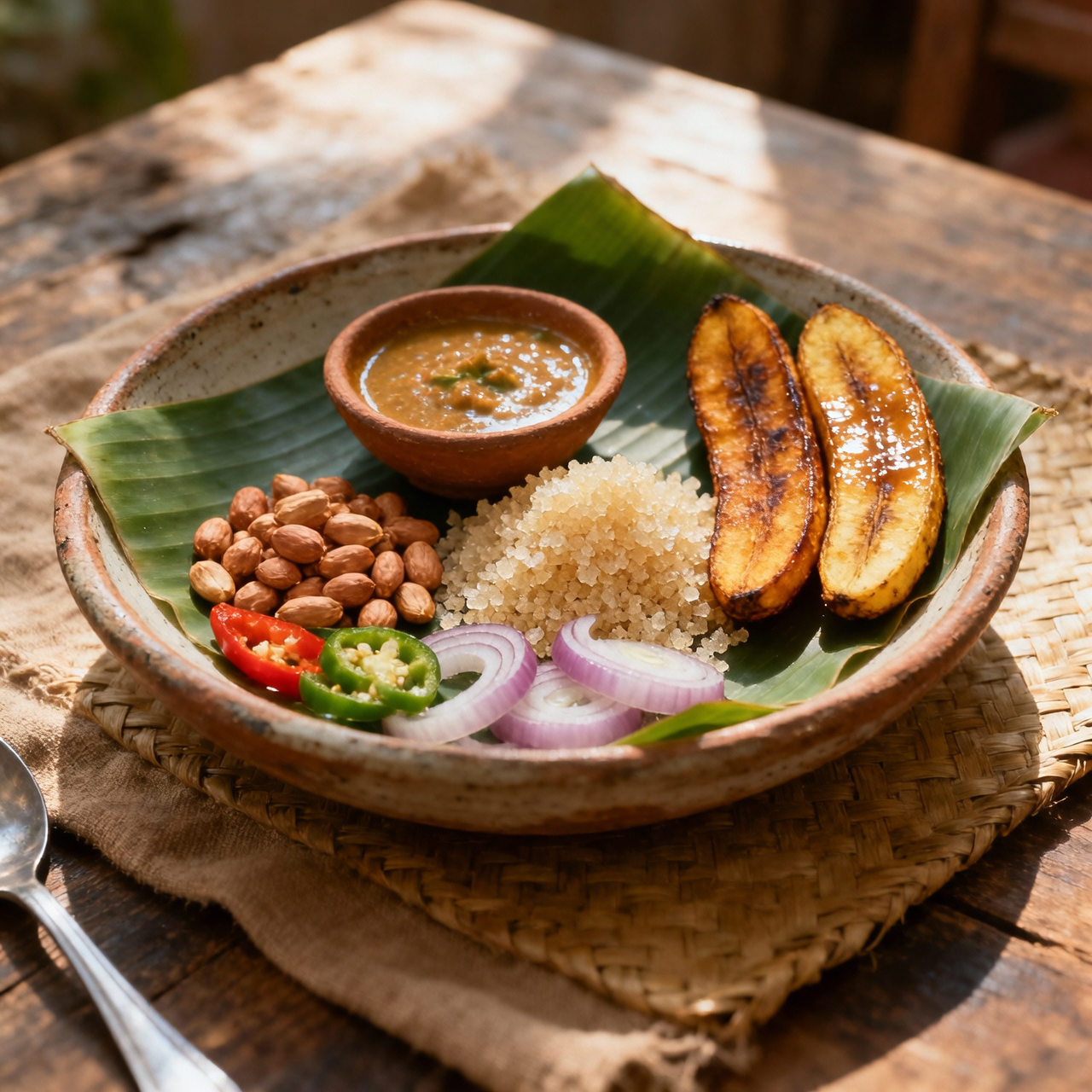
Garri (cassava granules)
When I first tasted proper garri as a teenager, it was a revelation of patience and transformation. Born in the Yoruba heartlands of Nigeria, these fermented, toasted cassava granules are far more than a quick pantry staple; they are the edible archive of West African resilience. Making them from scratch means respecting the slow alchemy of peeling, grating, fermenting, pressing, and dry-toasting fresh tubers. It matters because the bagged versions lining supermarket shelves often cost upwards of ten pounds for a modest kilo, arriving stale, sometimes laced with anti-caking agents, and stripped of the delicate sour tang that proper fermentation yields. I’ve seen too many home cooks rush the pressing stage or skip the low, patient toast, ending up with gritty, raw-tasting crumbs or scorched bitterness. The pitfall lies in treating it like instant couscous; garri demands you listen to the heat and feel the moisture leave the grits until they turn a pale, toasted gold. When you take the time to do it right, the granules puff slightly when soaked, carrying a clean, earthy sourness that elevates everything from simple sugar-and-milk bowls to rich stews. This is a batch hero that rewards you with months of dry storage, but only if you respect the fermentation window and the gentle roasting pan. I always tell beginners to trust their nose over the clock—the moment that sharp, lactic scent mellows into something warm and toasty, it’s done.
Nutrition
| Per serving | Calories | Protein | Carbs | Fat | Sat fat | Fibre | Sugar | Sodium |
|---|---|---|---|---|---|---|---|---|
| beginner | 495kcal | 2g | 116g | 1g | 0g | 4g | 2g | 12mg |
| intermediate | 265kcal | 2g | 62g | 1g | 0g | 3g | 1g | 8mg |
| expert | 350kcal | 1g | 85g | 1g | 0g | 2g | 2g | 8mg |
Per serving · Ava-estimated — a guide, not a clinical figure.
- 2000 gcassava root— fresh, peeled, and grated
- 1500 mlwater— for fermentation and pressing
- 30 mlpalm oil(optional)— for traditional yellow variety
- 5 gsalt(optional)— to enhance flavor during toasting
This beginner-friendly approach demystifies traditional garri production by focusing on a streamlined, single-day ferment and simplified drying technique that still delivers authentic sour notes and crisp texture. Store-bought garri costs under three dollars per bag but often lacks proper fermentation, relying on artificial citric acid for tang and sometimes containing unwanted preservatives or inconsistent grain sizes that turn gummy when soaked. By making it from scratch, you control the fermentation window, yielding a cleaner, naturally tangy profile that stays light and granular. At this level, we skip the heavy-duty hydraulic presses and multi-stage sifting; instead, you will use a clean cloth bundle and steady hand-pressure to extract moisture, followed by a wide-pan dry-toast that requires frequent stirring rather than precise temperature control. Watch the cassava closely during the toasting phase—low heat is essential to prevent burning the delicate starch while driving off residual moisture. The grits should clump slightly when squeezed but fall apart easily, signaling the perfect hydration level. Once cooled, store in an airtight container for months. This method respects the traditional craft while removing the most intimidating equipment barriers, ensuring a reliable, pantry-ready staple on your first attempt.
Equipment
- Food processor or box grater— stainless steel blades prevent oxidation
- Clean cotton muslin bag— must be breathable for proper drainage
- Heavy-bottomed skillet— wide surface area prevents scorching
Method
- 1
Peel the fresh cassava roots thoroughly and grate them into a coarse pulp using a food processor or box grater.
Ensure all brown skin and fibrous cores are completely removed.
grating~ 5 min - 2
Pack the pulp tightly into a clean cotton bag, twist the top securely, and place a heavy weight on top to press out the liquid.
Drain over a sink for twelve hours to develop the signature tang.
dewatering~ 720 min - 3
Break the pressed cake apart with your hands and pass the resulting crumbs through a medium sieve.
Discard any long fibers and return the uniform granules to a bowl.
sifting~ 5 min - 4
Spread the granules evenly in a heavy-bottomed pan and toast over low heat while stirring constantly until completely dry and lightly golden.
Keep the heat gentle to prevent scorching the natural starches.
toasting~ 30 minTricky bit - 5
Transfer the finished grits to a wire rack and stir occasionally until they reach room temperature before sealing.
Test for dryness by squeezing a handful; it should crumble easily without clumping.
cooling~ 15 min
Cooking from frozen
Thaw overnight in the fridge, then knead with a splash of hot water to restore pliability before serving.
Storage times are a guide — always use your judgement and store food safely.