
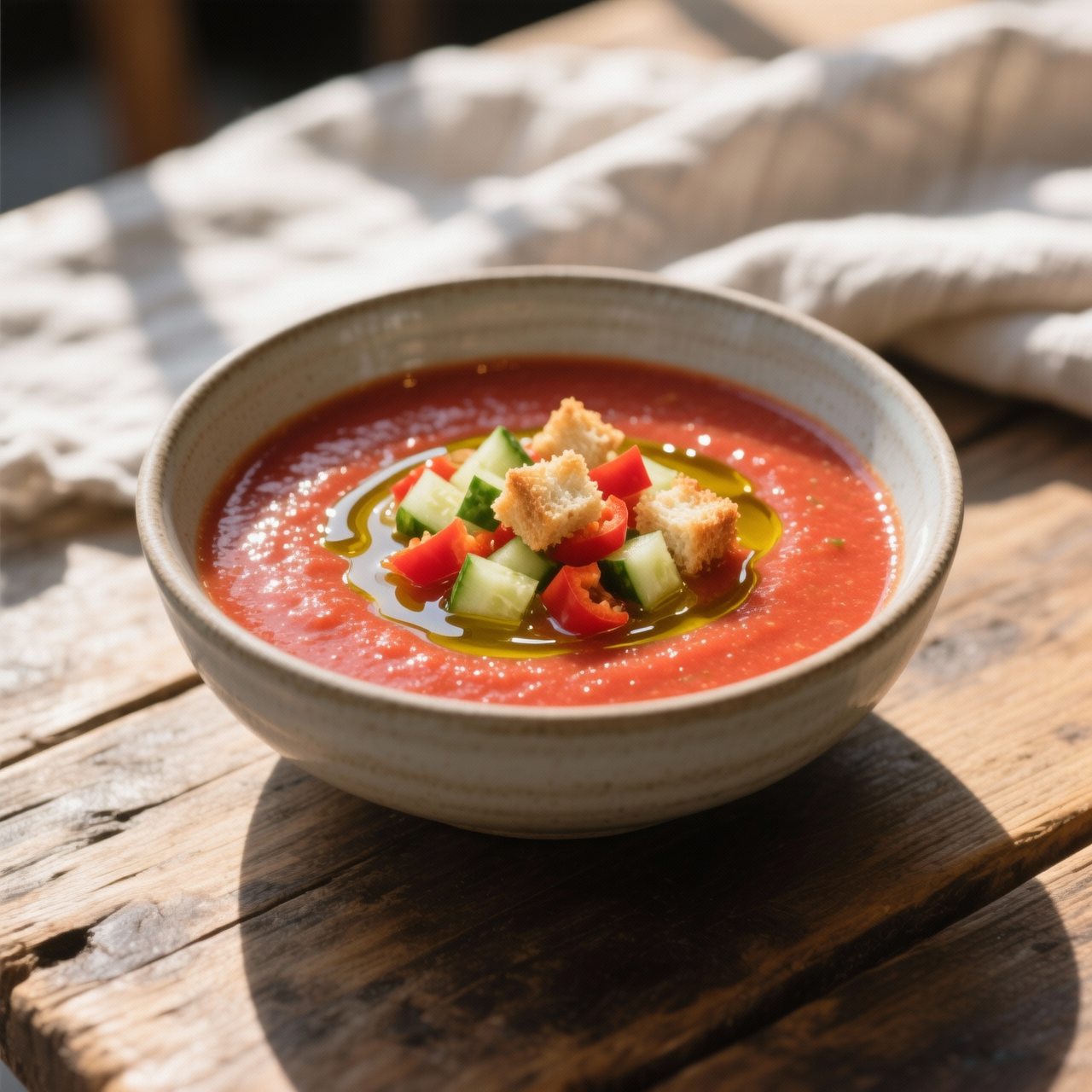
Gazpacho
I’ve always believed that gazpacho is less of a recipe and more of a seasonal promise. Born in the sun-baked fields of Andalusia, it began as a humble peasant dish, a way to stretch scarce ingredients into something cooling and sustaining during Spain’s relentless summers. Long before modern refrigeration, farmers and laborers relied on the ancient technique of emulsifying stale bread, crushed garlic, olive oil, and vinegar to create a portable, revitalizing meal. When tomatoes finally crossed the Atlantic and found their way into Spanish kitchens in the sixteenth century, the dish transformed into the vibrant, ruby-red soup we recognize today. I care deeply about preserving its authenticity because gazpacho isn’t just food; it’s a cultural archive, capturing the rhythm of harvest, the patience of slow preparation, and the quiet dignity of resourcefulness. Yet so many modern versions betray its roots. The most common pitfall is treating it like a simple vegetable smoothie—over-blending until the texture turns frothy and lifeless, or drowning it in cheap vinegar that masks the natural sweetness of ripe produce. Another mistake is skipping the resting period. Gazpacho needs time in the fridge for the flavors to marry and the bread to fully hydrate, creating that signature silkiness. If you rush it, you get a disjointed, acidic slurry. Respect the tomatoes, use only the ripest summer fruit, let the olive oil carry the flavor rather than overpower it, and above all, let it breathe before serving. When done right, it’s not just a cold soup. It’s a moment of summer, captured in a bowl.
Nutrition
| Per serving | Calories | Protein | Carbs | Fat | Sat fat | Fibre | Sugar | Sodium |
|---|---|---|---|---|---|---|---|---|
| beginner | 405kcal | 6g | 29g | 28g | 4g | 5g | 10g | 1090mg |
| intermediate | 405kcal | 6g | 29g | 28g | 4g | 5g | 10g | 1090mg |
| expert | 405kcal | 6g | 29g | 28g | 4g | 5g | 10g | 1090mg |
Per serving · Ava-estimated — a guide, not a clinical figure.
- 1000 gtomato— ripe and vine-ripened preferred
- 200 gcucumber— peeled and seeded
- 150 gbell pepper— red variety only
- 100 gonion— sweet white type
- 10 ggarlic clove— firm and un-sprouted
- 100 grustic bread— stale, crust removed
- 120 mlextra virgin olive oil— high-quality, fruity
- 30 mlsherry vinegar— aged minimum three years
- 10 gfine sea salt— for seasoning
This version prioritizes accessibility without sacrificing the soul of the dish. Instead of wrestling with raw vegetables, we leverage a high-quality jarred tomato base to guarantee consistent acidity and sweetness on your first try. The focus here is on proper emulsification and seasoning, which are the true markers of a good gazpacho. You will use a standard countertop blender rather than a mortar or high-end processor, so expect a slightly looser texture that still delivers refreshing flavor. Watch closely when adding olive oil; pour it in a slow, steady stream while the machine runs to prevent the soup from splitting or turning greasy. Chilling is non-negotiable, so plan ahead and let it rest in the refrigerator for at least two hours before serving. Taste it right after blending, then again once cold, as low temperatures mute salt and acid. Adjust with a splash of vinegar or a pinch more salt if it tastes flat. The goal is confidence: a reliable, vibrant soup that proves you can master Spanish summer cooking without specialized tools or perfect produce.
Equipment
- standard blender— plastic or glass pitcher works
- measuring cups— for accurate oil ratios
Method
- 1
Combine jarred tomato base, diced cucumber, bell pepper, onion, and garlic in a standard blender.
Ensure all vegetables are roughly chopped for even blending.
prepping~ 3 min - 2
Blend on medium speed until the mixture becomes uniformly liquid.
Pulse initially to avoid splashing.
pureeing~ 1 min - 3
Stream in olive oil while the blender runs, then add soaked bread crumbs.
Watch the vortex to ensure proper incorporation.
emulsifying~ 1 minTricky bit - 4
Transfer to a pitcher, stir in sherry vinegar and salt, then refrigerate for at least two hours.
Taste and adjust seasoning after chilling.
chilling~ 2 min